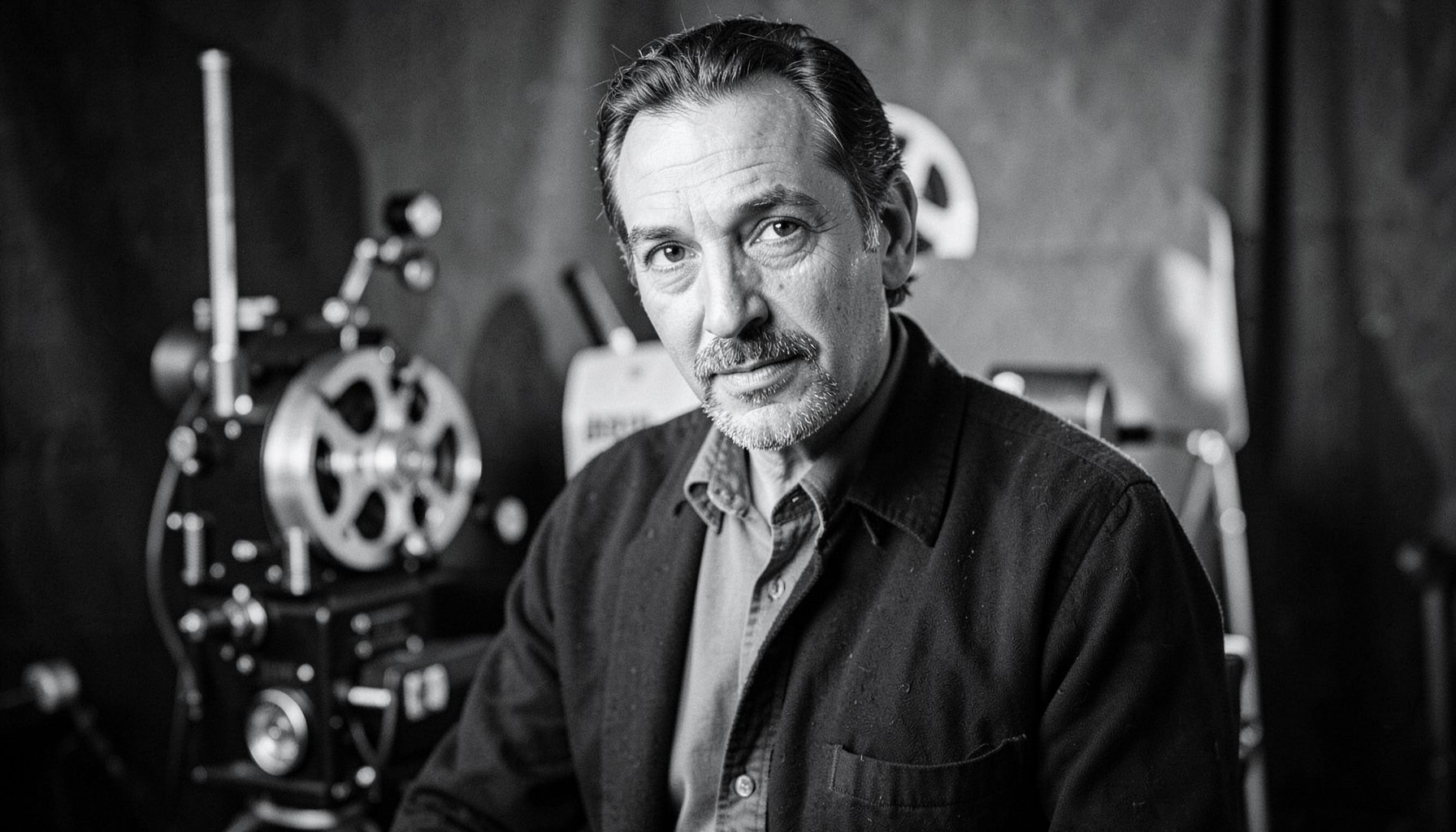

Seeing gender change through Shagrir's camera
The Shagrir Collection places Micha Shagrir's work as photographer, filmmaker, producer and journalist within the institutions that shaped Israeli life: the army, family, workplaces, the media and public argument. Its negatives, prints, films, recordings and papers span several decades, revealing how people around him negotiated changing expectations of femininity and masculinity.
Read as a connected archive, Shagrir's work complicates a simple story of progress. Women entered paid employment, universities and compulsory military service, yet domestic duties remained unequally distributed. Men were expected to be providers, protectors and public spokesmen, while changing employment and family arrangements unsettled those roles. His images and documentaries can show both the enduring pressure of convention and the moments when it is tested, resisted or quietly rewritten.
Photography and the changing public sphere
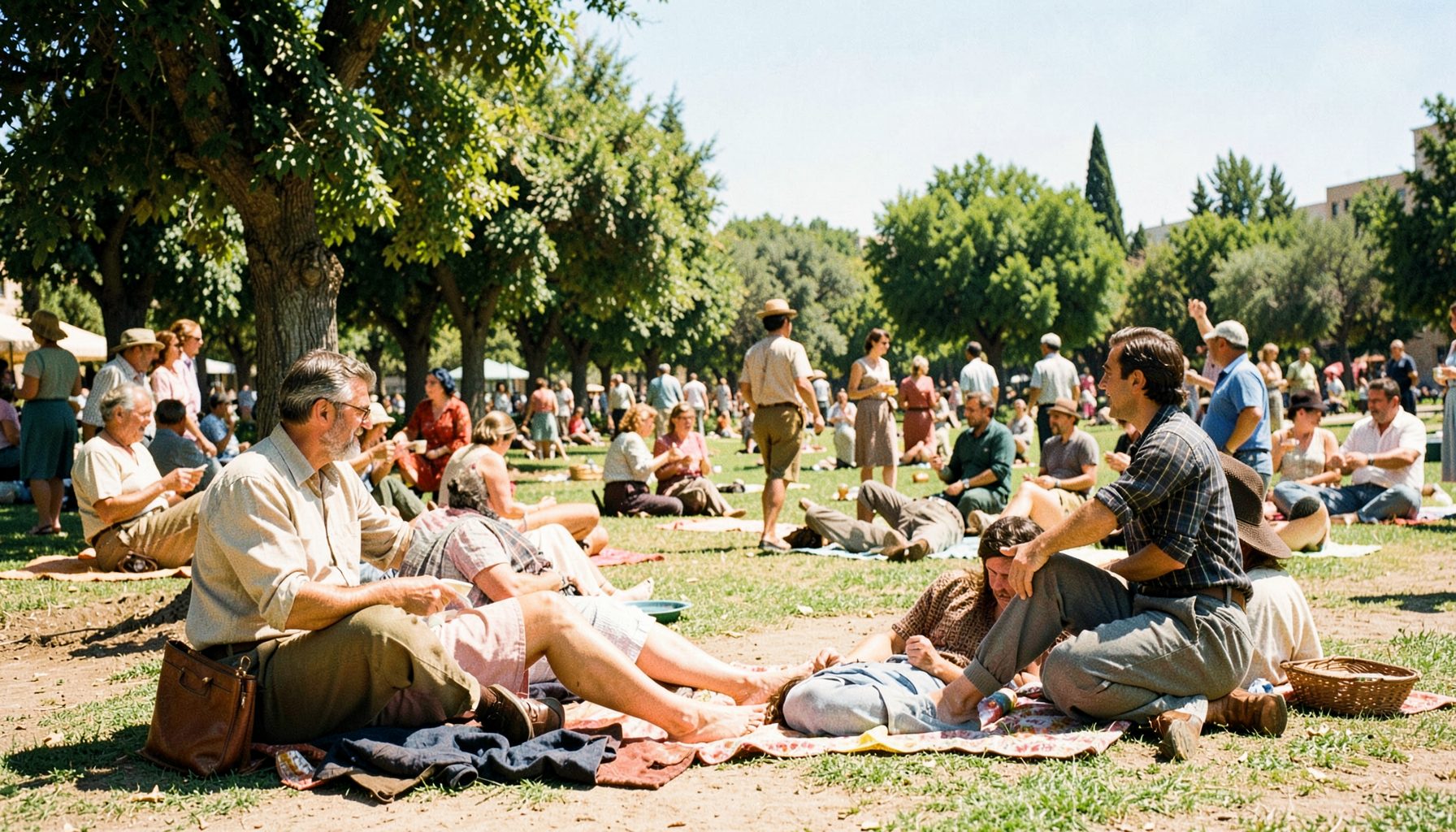
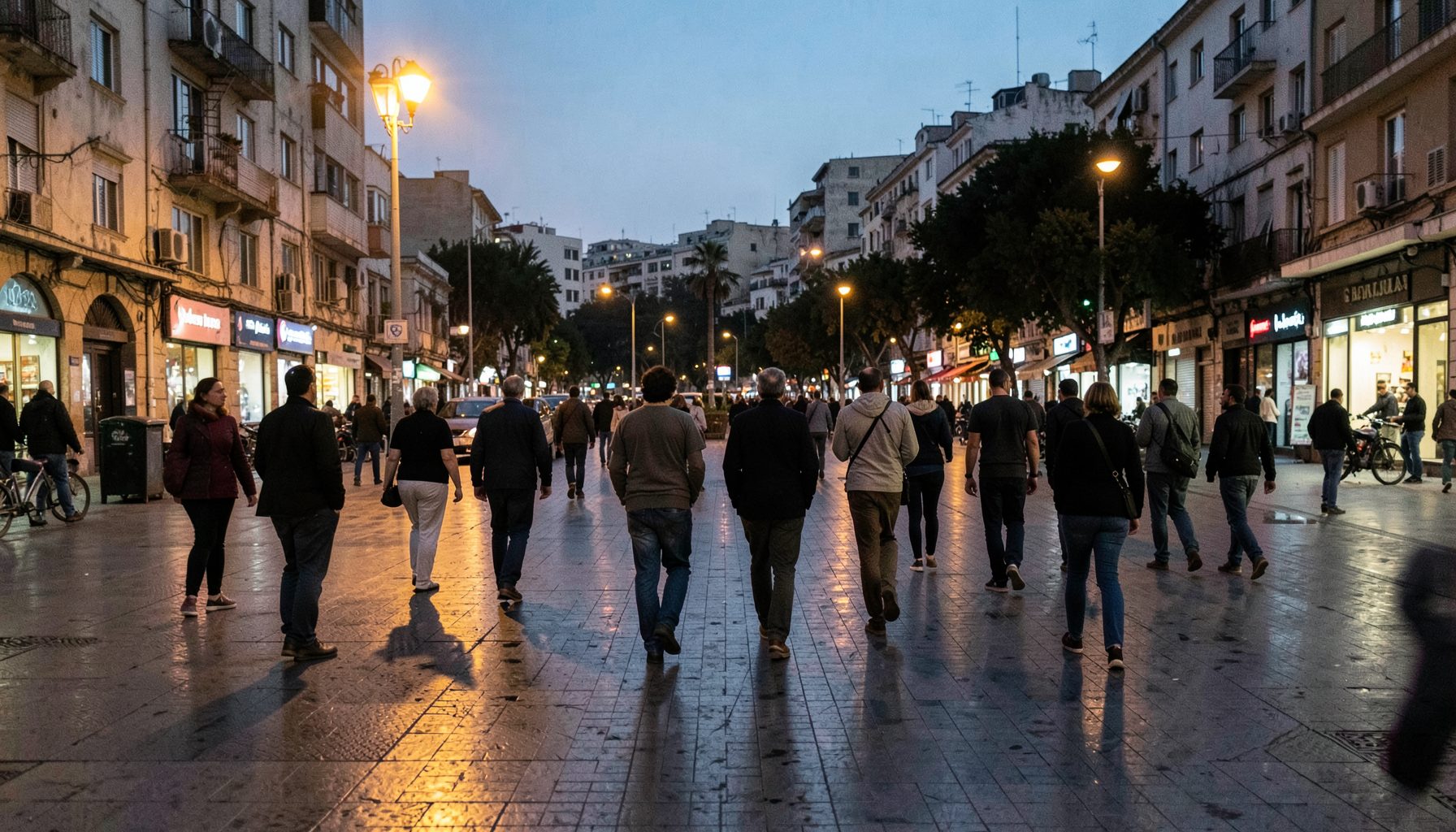
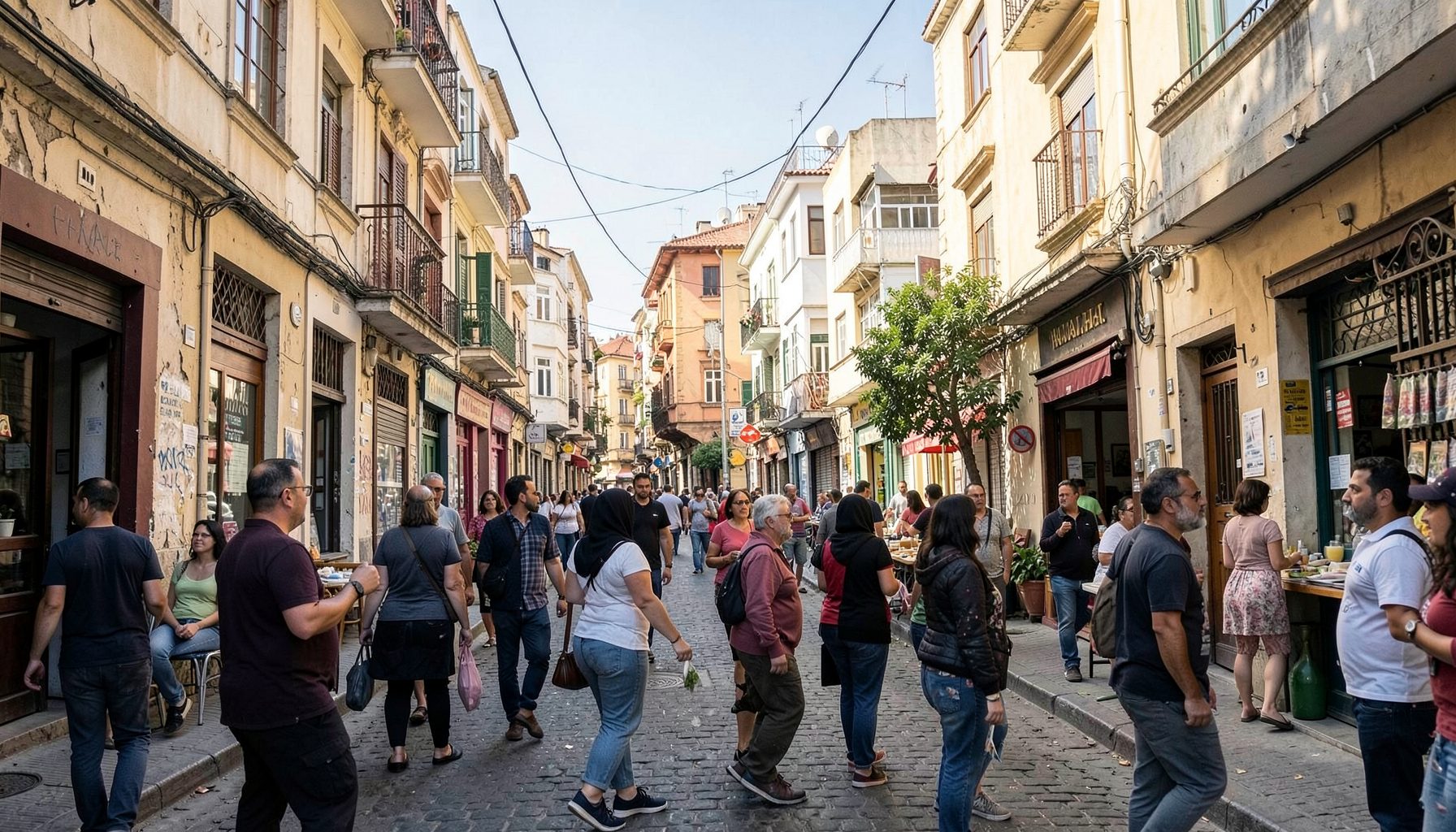
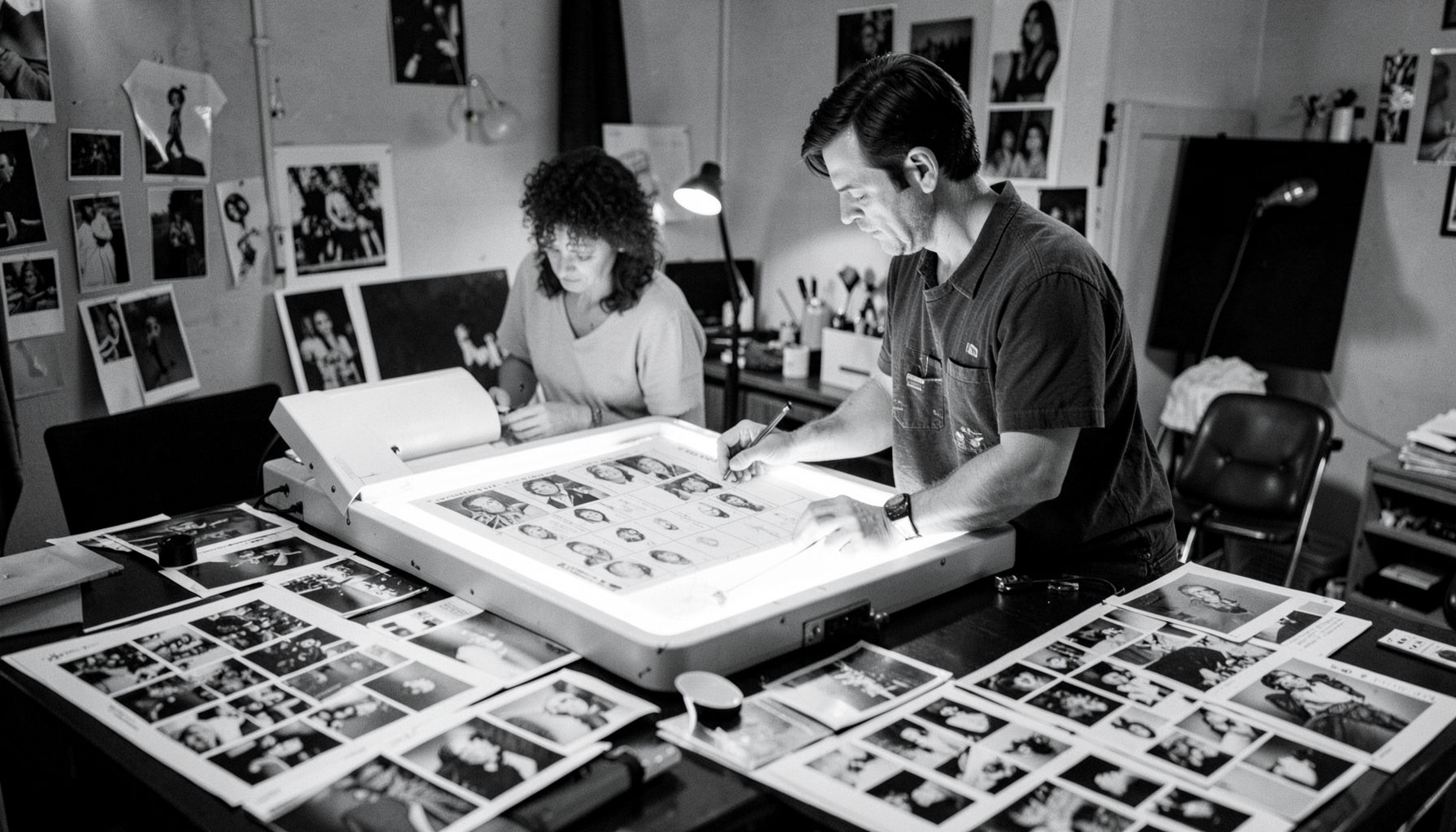
Shagrir's camera often entered places where official histories preferred broad statements: streets, homes, workplaces and gatherings. The archive's value lies partly in sequence. Contact sheets, alternative takes and discarded frames retain gestures that a finished publication or broadcast may omit. Gender becomes visible in who appears, who directs, who waits, who works, who speaks and who tends to others.
That method supports a layered account of Israeli gender roles. A woman carrying a tool may be a worker, a mother, a soldier, a protester or several at once. A man beside official maps may be exercising authority or being shown as vulnerable to it. A man caring for a child or showing grief can complicate the same binary. The same photograph can carry a traditional role and an unstable detail, allowing viewers to read beyond labels.
Several visual clues sharpen close reading:
- who occupies the centre of the frame
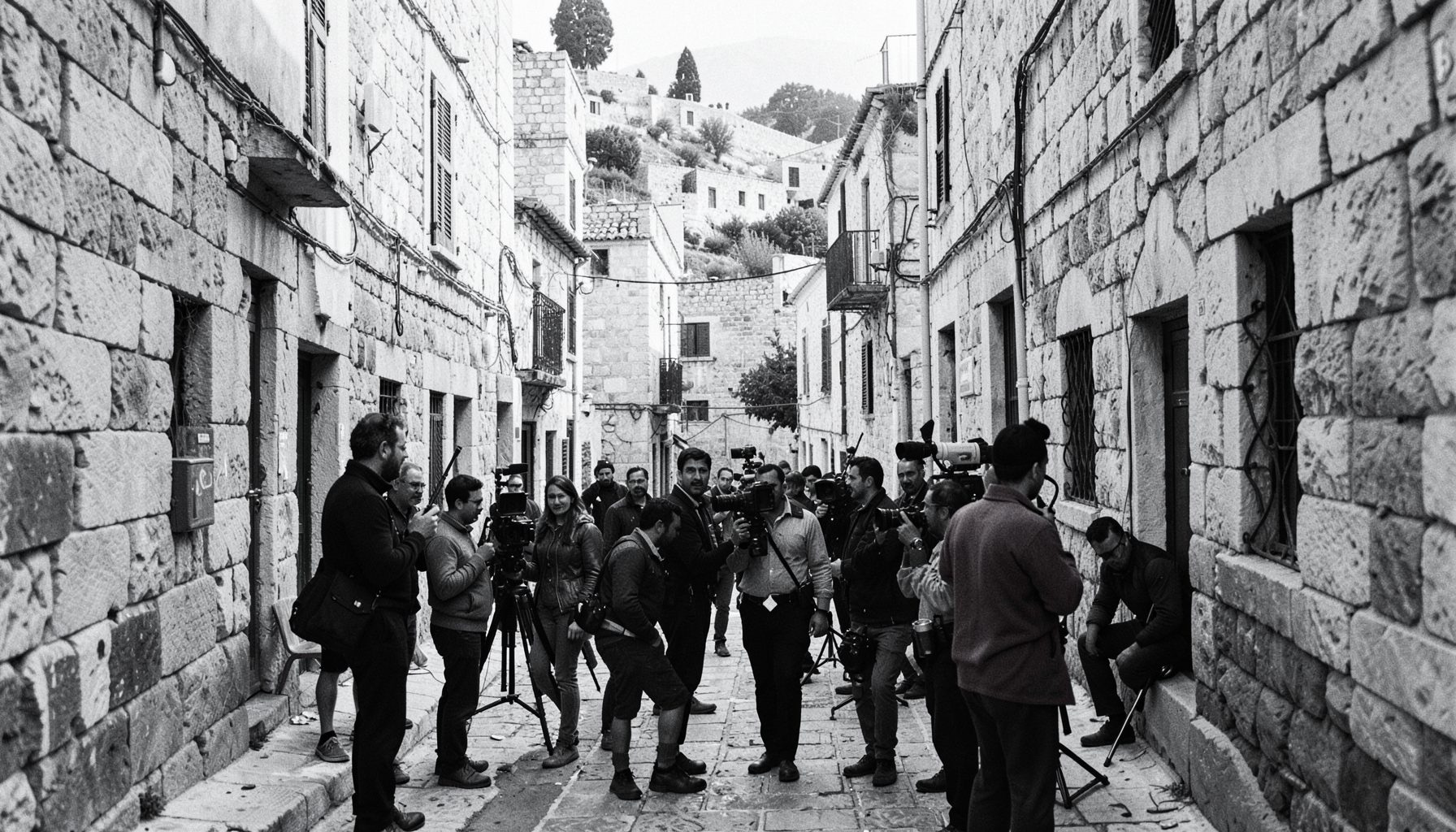
- who controls equipment or directs a scene
- how paid work and domestic work are divided
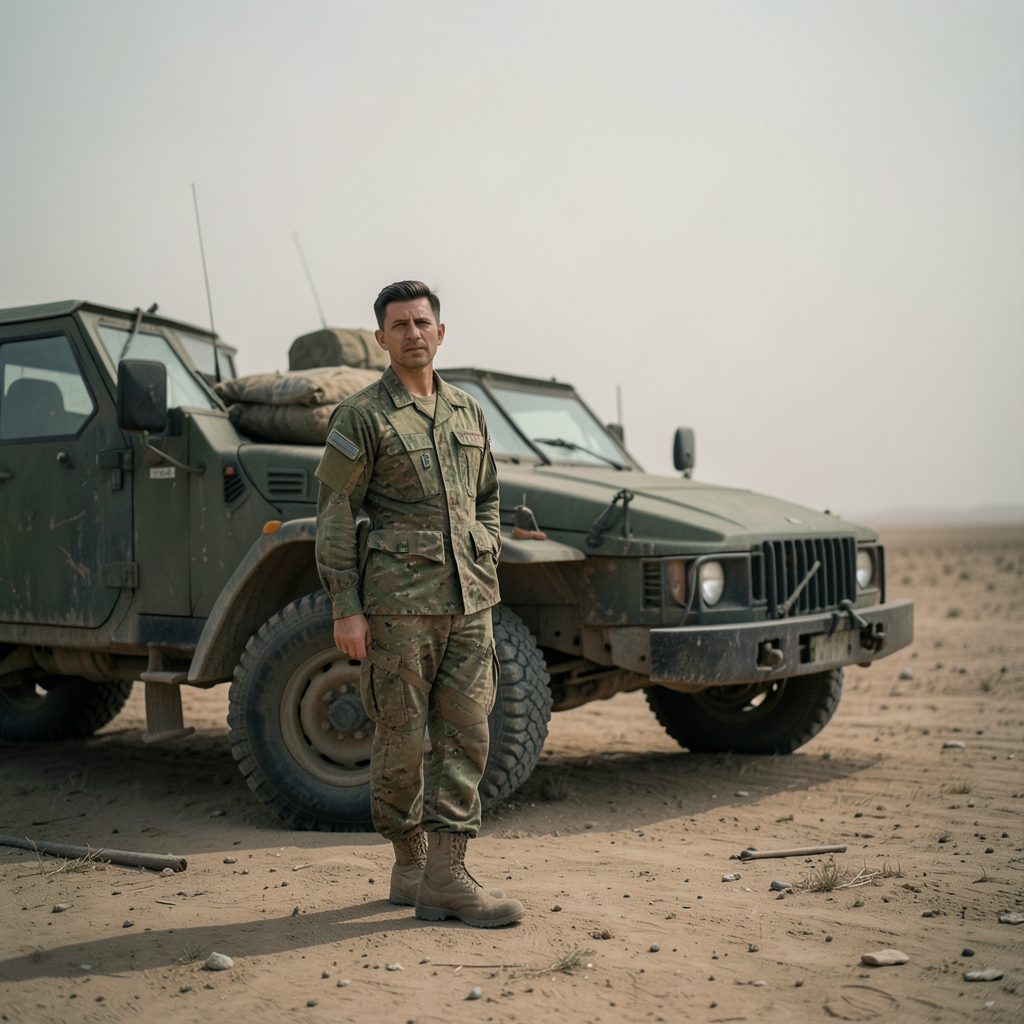
- whether uniforms conceal or announce rank
- which bodies are allowed to move freely through space
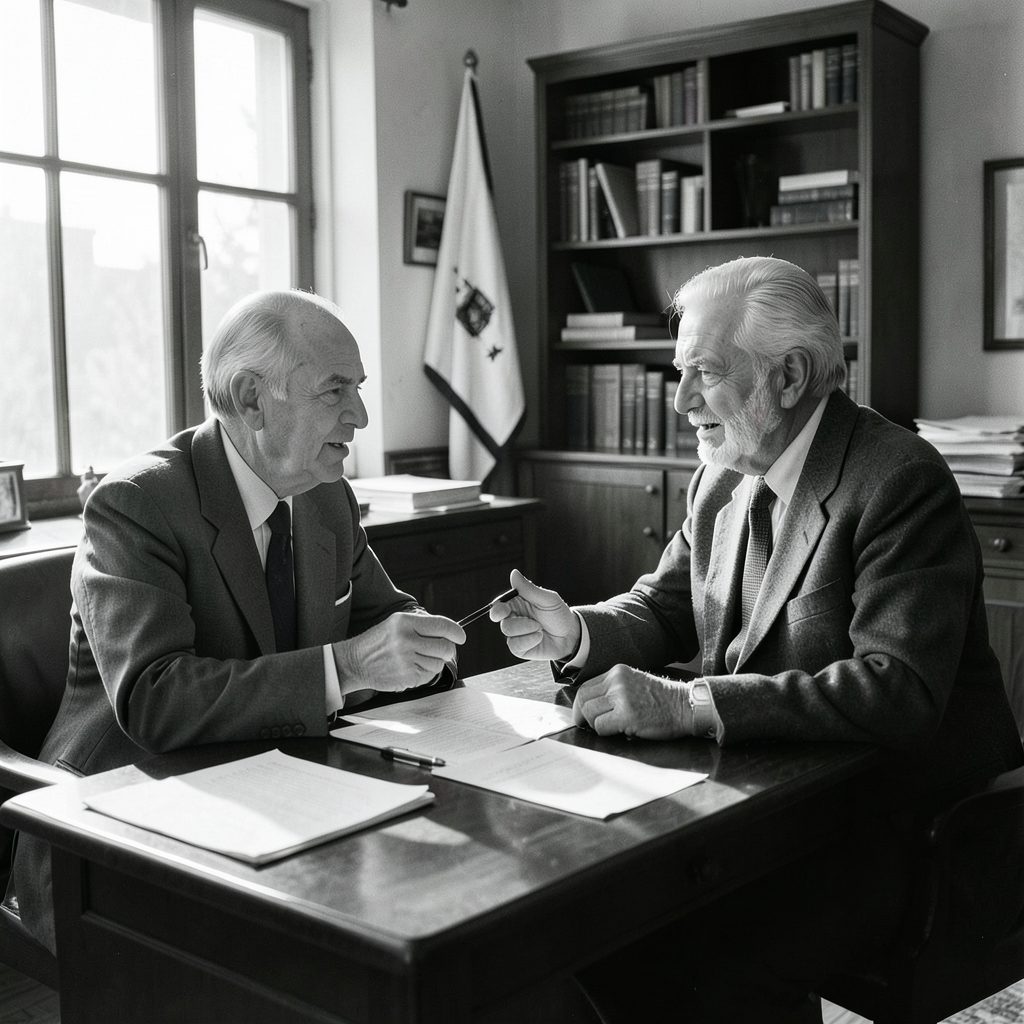
A conversation with Shagrir's collaborator adds a productive layer. It shows how another participant can alter the meaning of material associated with Shagrir where authorship was collaborative or the surviving record privileges one voice. This matters for gender history because production was never solitary: editors, camera crews, interviewees, printers and archivists shaped what entered public view.
Work, family and military service
Across Shagrir's working life, Israel treated family and national service as tests of belonging. In kibbutz labour and urban workplaces, military units and household routines, women carried paid responsibilities while still being judged by reproductive and domestic expectations. Women's compulsory service, introduced in the early 1950s, altered their public image without erasing older ideas about authority. Feminist organising from the 1970s onward made institutional contradictions harder to conceal.
The archive is especially revealing where work and family overlap. Repetitive tasks—cooking, cleaning, caring for children and maintaining a home—can appear as background even when they consume the time that makes other work possible. Looking at who stands at a doorway, who is called away, or who receives recognition reveals the household as a workplace. It also shows that gender roles changed unevenly: employment expanded faster than the sharing of care, and military access opened some doors more visibly than others.
Archival captions and translated oral histories require equal care. A guide to preserving haiku's rhythm explains why cadence, implication and feeling can disappear in a literal rendering; the same risk applies when testimony crosses language or class divisions. Preserving vocal textures can reveal authority, hesitation and humour that a summary would erase.
An Australian comparison starts with everyday organisation. A household in outer Sydney might combine long train commutes with shared childcare, while one in inner Melbourne might plan around tram routes and nearby schools. Australia has no universal conscription obligation, and debates about paid parental leave, superannuation and domestic violence sit within a different legal and policy framework from Israel's. Changing roles appear in schedules and policies as much as they do in photographs.
Documentary ethics and contested memory
Documentary images feel immediate, but they are made through decisions about framing, sequence, translation and permission. Shagrir's archive allows researchers to compare films with photographs, notes and recordings rather than treating a published image as self-explanatory. Such comparison is crucial for gender history because the labour of arranging a scene can hide or amplify the people whose roles were conventionally made invisible.
The collection's educational programs for schools show the public value of this approach. Young people can examine a photograph as evidence, ask who made it and why, then compare it with a film sequence or interview. The exercise teaches that archives require visitors to test partial records, recognise archival silences and relate past decisions to present debates. It also prevents a single frame from standing in for an entire community.
There is no single female experience in Israel to recover. Jewish and Arab Israeli communities, Palestinian citizens, immigrant families, Orthodox communities and secular groups have followed different histories, while class, age and sexuality shaped women's access to work and representation. Shagrir's breadth places these differences in view. His work shows female agency emerging through negotiation with institutions, rather than as a separate story beside them.
Routes, borders and the politics of movement
The collection's map of Shagrir's travel routes across the Middle East provides more than geographical context. Lines between cities and regions reveal how documentary work depended on roads, borders, checkpoints and local networks. They also make movement a gendered question: a soldier, journalist, family man and unaccompanied woman may pass through the same checkpoint yet encounter different expectations about purpose, dress and permission.
Travel footage can expose systems while appearing simply to cross them. Soldiers, officials, hosts and guides show who controls access, while people being filmed move through a landscape already ordered by others. Men and women crossing borders for work, family, migration or political activity reveal expanding opportunities alongside new forms of surveillance. Restoring the journey to the images makes Shagrir's itinerant perspective visible.
Restoring the journey also prevents a map from looking merely administrative. Australian viewers accustomed to checking a route on a phone before a train or road trip may recognise the convenience of lines and nodes; Shagrir's material shows what those lines conceal—borders, surveillance, dependence and danger.
Public access and Australian relevance
Preservation matters because a camera can survive while its context disappears. The personal site of Deepali Gupta offers a useful comparison: an individual practice can place work, biography and interpretation in public view. The equivalent task for the Shagrir Collection is to digitise fragile negatives and magnetic media, catalogue papers, describe uncertain identities and make results searchable without flattening them into decorative images.
Australian audiences encounter history through a distinctive media market: public galleries, independent cinemas and bookshops, community radio, photography festivals, and cultural programming from the ABC and SBS. These channels can bring Shagrir's work to people who may never have visited Israel, while local familiarity changes reception. Public exhibitions can place his photographs beside films, recordings and documents, allowing visitors to compare public performance with private evidence.
Access also raises legal questions. Australia's Commonwealth Freedom of Information Act 1982 governs access to federal records, while states and territories use separate access laws. The Privacy Act 1988 and state and territory regimes influence handling of personal information; the Copyright Act 1968, including its treatment of photographs and moral rights, shapes reproduction in Australian publications. The overseas collection is not automatically governed by these laws, but Australian hosts can use the framework to negotiate consent, attribution and the limits of fair dealing. An Australian exhibition or classroom can turn these questions into practical learning outcomes:
- pairing a contact sheet with its final printed image
- listening to an interview beside the photographs made during filming
- distinguishing photographer, editor, producer and subject
- tracing shifts in women's employment alongside family-policy dates
- annotating uncertain names, absent context and contested interpretations
- discussing privacy and copyright before public reproduction
The work is as interpretive as it is technical. Each returns the archive to its central social purpose: showing how people made lives within institutions that often described them in fixed terms. Shagrir's camera gives changing Israeli gender roles a durable form, while its papers and recordings allow that form to be questioned rather than accepted as proof.