Shagrir's Rally Tapes: Preserving the Sound of Israeli Public Life
The Shagrir Collection is an online archive built around the working life of Micha Shagrir, the Israeli filmmaker, producer, photographer and journalist whose negatives, prints, films, recordings and personal papers span several decades of Israeli public life. The catalogue lets visitors move from a single reel of tape to the negatives shot on the same afternoon.
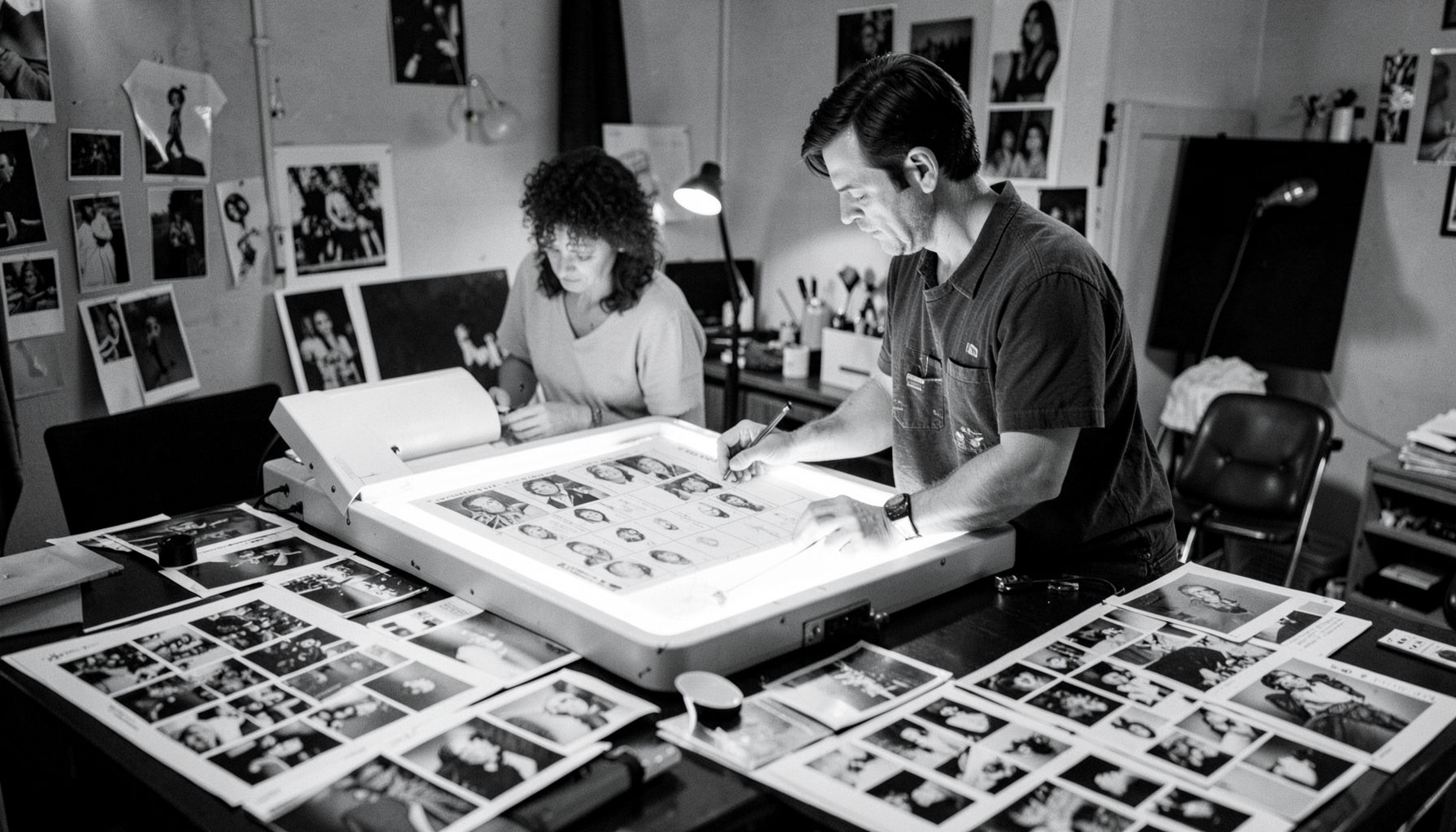
Among the sound holdings is a body of recordings made at political rallies: speeches delivered from platforms, chants and whistles from assembled crowds, press conferences held afterwards, and short interview grabs taken in the churn around the edges of events. These tapes sit beside the photographic and film material in a way that changes how each is read. A photograph freezes a crowd; a recording lets a researcher hear its scale.
Rallies are among the most perishable things a microphone can capture. The event ends, the platform is struck, and what remains is often a fragment: half a sentence, a truncated chant, a tape labelled only in a hurried hand. Kept at length, those fragments accumulate into an acoustic portrait of a country arguing with itself in public, and of the people who chose to record that argument for a living.
For Australian researchers, broadcasters and students, this material offers an unusually rich comparative case. The National Film and Sound Archive of Australia in Canberra holds decades of Australian rally sound, from trade union halls to peace demonstrations, and the ABC's radio archives preserve the same kind of material in spoken form. Hearing Shagrir's tapes alongside Australian holdings shows how much political oratory is local, and how much travels.
What the Rally Tapes Contain
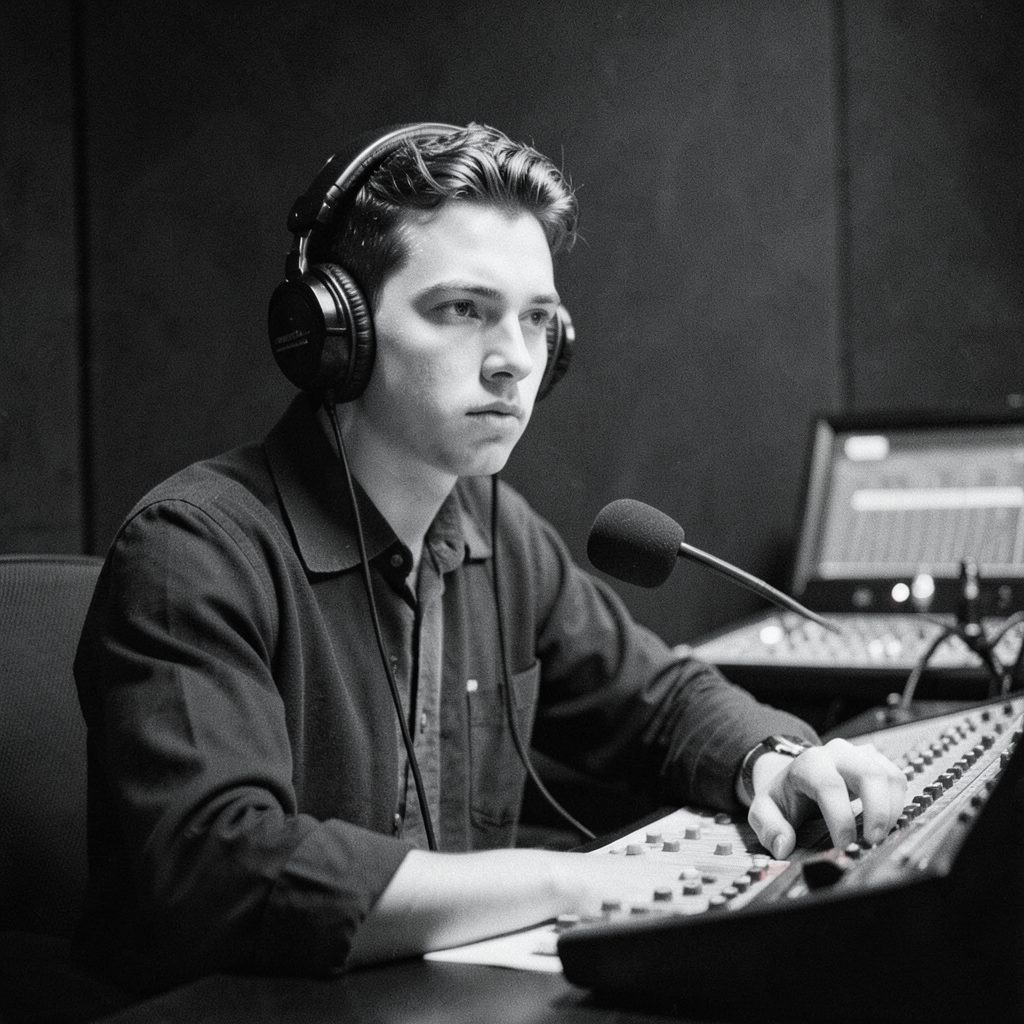
The recordings vary as much as the rallies themselves. Some are clean feeds lifted from a public address system, with the crack of a microphone and the flat compression of a PA speaker. Others were captured on location with a portable recorder, picking up background traffic, bicycle bells and the shuffle of a crowd on gravel. A handful preserve the aftermath: an interview on the way to the next rally, a late-night studio session, a voice reading notes into a tape before a deadline.
Format matters too. Open reel, quarter-inch and cassette each leave their own signature on the sound, from tape hiss at the bottom of the range to a gentle loss of top end where the oxide has begun to shed. The catalogue records these conditions, and the condition of a reel says a great deal about the state of the archive itself.
Listening is therefore an interpretive act as much as an archival one. What a listener hears is a mix made at the time: the balance between loudspeaker and crowd, the cut-downs that shaped broadcast versions, the silences where a speaker hesitated and someone in the front row coughed. The tapes preserve decisions, not only events.
Street Politics and the Microphone in Israeli Public Life
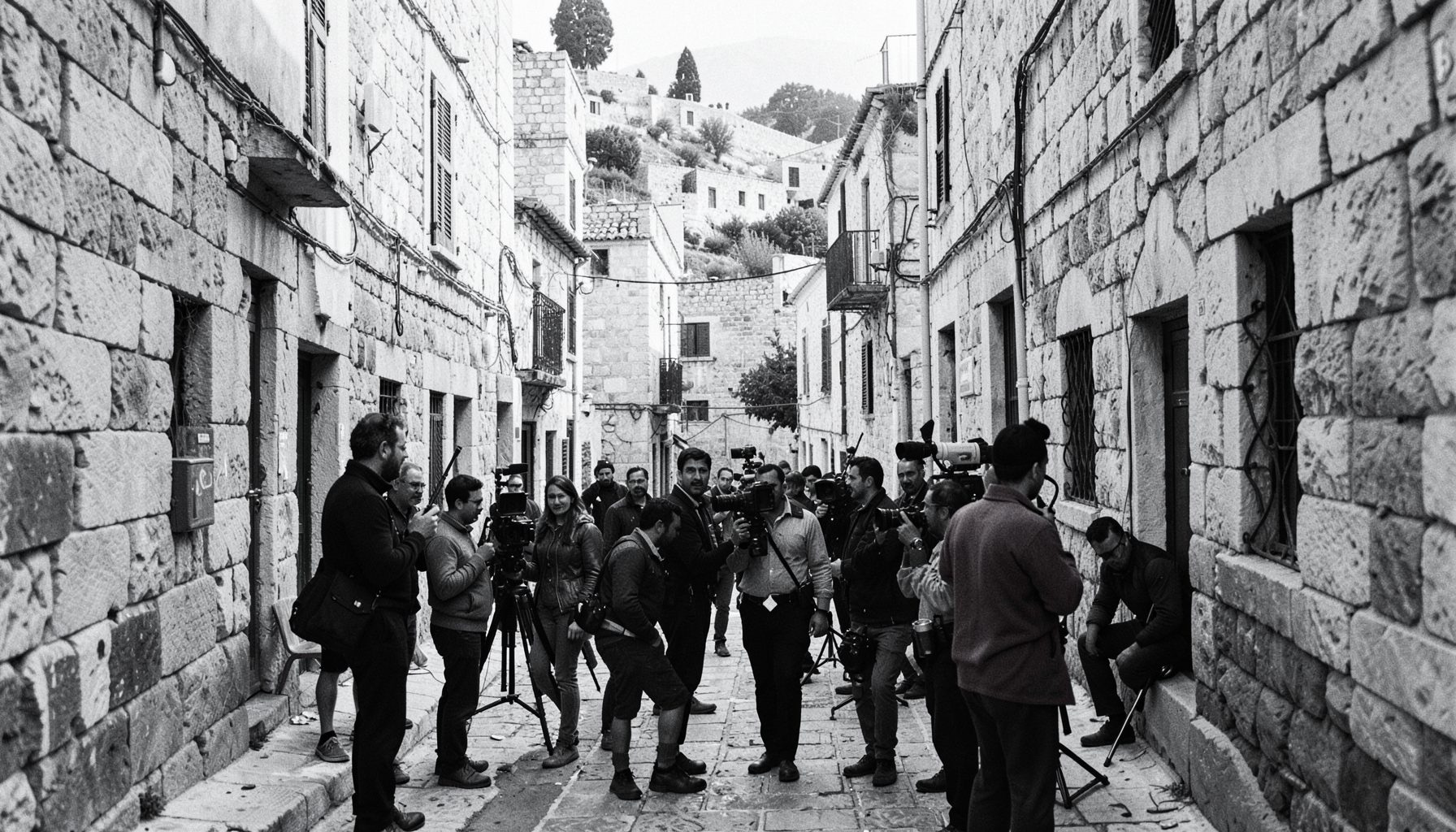
Rally culture ran deep in Israeli political life through the second half of the twentieth century, from the crowded flag-bearing meetings of the 1950s and 1960s through the protest movements of the 1970s and 1980s. Shagrir moved through that world as a cameraman and reporter, and his sound recordings sit inside it rather than above it, the perspective of someone on the job, working in the same crowd and subject to the same crush of bodies.
His work was never confined to news. The archive documents Israeli theatre collaborations and a shared interest in how a group voice becomes a performance, which is exactly what a rally platform is: an amplified chorus, a rehearsed speaker, a crowd tuned to cue. Listening for that dimension in the tapes is useful, because the chants have meter and the pauses between slogans are placed as carefully as any line of dialogue.
Australians recognise the sound even when the language changes. A union picket in an industrial suburb of Melbourne or a climate rally in central Sydney produces the same architecture, with call-and-response, a chant passed back through the crowd and applause arriving in waves rather than as a single block. Australian public speech carries its own informality: an organiser in Adelaide will call a meeting an arvo session and promise to sort the catering, and that informality can conceal an extremely well-rehearsed performance.
Preserving Magnetic Tape and the Handling of Fragile Media
Magnetic tape is chemically unstable. Fibres in the backing absorb moisture and turn sticky, and the oxide coating can flake away, leaving a dead band across a reel. Playback heads deposit their own residue. A tape can look perfect in its box and lose minutes of audio on the first pass, which is why a preservation decision made in 1990 cannot simply be revisited decades later.
The workflow tends to run in predictable stages: inspect and bake out suspect tape, capture the audio at a high sample rate on a machine calibrated for the format, clean and restore the signal, then store the result as a preservation master on robust media with redundant backups. Specialist laboratories, including Kif Limally, handle this kind of transfer work, where the difference between a usable file and a damaged hiss depends on equipment and technique as much as on software.
Storage conditions matter just as much as scanning. Around 18 to 21 degrees Celsius and 35 to 40 per cent relative humidity keeps acetate and polyester bases stable, and fluctuations cause worse damage than absolute levels. Where the original cannot be kept cool, the accepted fallback is to digitise everything that survives and to preserve the physical reel as evidence of its own history.
- Inspect each reel for sticky-shed syndrome and shed oxide before any playback attempt.
- Capture at a high sample rate with a calibrated, properly aligned transport.
- Record machine settings, tape format and dropouts in the preservation metadata.
- Store masters on redundant drives held in more than one location.
- Keep the original reel in a stable, cool environment with limited handling.
Listening Rooms, Festivals and Educational Reach
An archive of sound becomes useful when someone builds a listening space around it. The Shagrir Collection pairs the recordings with exhibitions, educational programmes and research access, and the effect differs from a document archive: visitors hear a rally in sequence, then read the transcript, then look at the negatives taken from the same platform.
Shagrir's own correspondence with filmmakers abroad shows how widely his networks ran, and it points to the collaborators who find their way into an audio holding, including translators, editors, sound mixers and scholars working in other countries with different archival rules. Their letters describe practical questions: who holds the negative, who owns the tape, who may copy it, and how a master travels.
In Australia the pathways are familiar. Festival programmers at the Melbourne International Film Festival and the Sydney Film Festival book documentaries about political sound, public broadcasters such as the ABC and SBS commission archival audio features, and regional galleries and university libraries in Canberra, Hobart and Darwin host listening events. The market for physical media still moves through second-hand dealers, weekend car boot sales and online listings, and a collector seeking a reel will find the price follows format, condition and provenance.
- Listening sessions held alongside the National Film and Sound Archive in Canberra.
- Transcribed excerpts in English for classroom use in Israeli studies.
- Podcast partnerships with public radio producers and regional community stations.
- Documentary commissions from Australian festival programmers.
- Touring exhibitions with audio stations rather than rows of display cases.
War, Conscience and the Limits of the Record
Shagrir covered the 1973 war as a working journalist, and the archive holds a Yom Kippur War interview in which he discusses that experience and the choices involved. It is a reminder that the same man who recorded a rally platform also recorded a front, and that both kinds of work ask similar questions of a microphone: when to press the record button, when to stay silent, and what a listener is owed afterwards.
Sound also outlives its context unusually well. A chant recorded in a moment of unity can be heard later as something else entirely, and the voices of assembled crowds have been edited and re-broadcast so often that a listener may meet the same three seconds in four different versions. Historians working with these tapes have to ask who made the copy, who cut it and why.
Australian archives confront the same problem with material of their own, from protest footage and industrial disputes to crowds at football grounds that sound identical in triumph and in alarm. The Shagrir Collection's rally recordings add a dimension, because they arrive alongside the photographs, films and papers of a man who was there as participant and witness at once. Preserved properly, they do more than document the politics of a period. They keep the texture of public argument, including the timing, the echo and the moment a crowd decides whether to believe a speaker.