
Micha Shagrir’s Photographs and Ethiopian Jewish Absorption
Micha Shagrir’s photographs of Ethiopian immigrants in 1980s Israel offer a close view of migration as lived experience. They record arrival, waiting, family reunification, temporary accommodation, government services, work, schooling and the gradual effort to establish a secure home. Rather than presenting immigration as a single rescue narrative, the images can be read as evidence of people negotiating a demanding transition between communities, languages and institutions.
The Shagrir Collection places this visual record within a broader archive of Israeli social and political history. Its negatives, prints, films, recordings and papers help researchers consider how documentary images were made, circulated and remembered. For Australian audiences familiar with migration stories from Europe, Asia, Africa and the Middle East, these photographs provide a valuable case study in the relationship between humanitarian action, public policy and personal dignity.
A community in motion
The Ethiopian Jewish migration to Israel unfolded through clandestine journeys, refugee camps and organised airlifts. Operation Moses, conducted mainly in 1984 and 1985, brought thousands of Ethiopian Jews from Sudan to Israel, while later operations continued the movement of families separated by war, famine and political restrictions. The arrival scenes were often shaped by urgency: exhausted passengers, officials, interpreters, medical teams and relatives searching for one another.
Photography makes these circumstances visible through small details. A suitcase, a child’s expression, a borrowed coat or a group gathered around a telephone can communicate the uncertainty of beginning again. Shagrir’s camera was positioned within a rapidly changing society, where new arrivals were being absorbed into a state whose institutions had been designed around other migration histories.
Beyond the rescue image
Public accounts of Ethiopian Jewish immigration have sometimes focused on dramatic rescues and aircraft landing at Ben Gurion Airport. Those moments carry genuine historical importance, yet they are only the opening scenes. Absorption continued in transit centres, boarding schools, hospitals, housing estates and employment offices, where families faced unfamiliar systems and social expectations.
The photographs are especially significant when they move beyond spectacle. An image of a family sitting indoors, a classroom adjusting to different educational backgrounds, or residents waiting for assistance can reveal the slow pace of settlement. Such photographs encourage viewers to ask who had power, who was being observed and how everyday choices were constrained by bureaucracy, poverty and language barriers.
Settlement, identity and belonging
Absorption in 1980s Israel involved more than finding accommodation. New immigrants had to navigate Hebrew-language instruction, employment programs, health services, religious authority and schooling. Many Ethiopian Jews also encountered assumptions about race, Jewish practice and cultural competence. Their lives were interpreted through institutions that did not always understand the communities they claimed to serve.
Shagrir’s documentary approach can preserve the tension between official policy and individual experience. A group portrait may suggest solidarity, while the surrounding setting hints at isolation. A public ceremony may express welcome, even as a person’s posture or distance from the crowd indicates uncertainty. These visual layers matter because belonging is rarely achieved at the same moment that a person receives legal status or a new address.
The responsibilities of documentary photography
Photographs of refugees and immigrants raise ethical questions about consent, privacy and representation. Children may appear in images whose historical value becomes clearer decades later, while families photographed during distress may have had little control over how their faces were published. The archive therefore needs to retain captions, dates, assignments and publication history alongside the visual material.
Shagrir’s wider practice offers a useful point of comparison. His ethics of war photography encourages viewers to consider the photographer’s position and the consequences of turning suffering into a public image. The same discipline applies to migration photography: context should accompany emotion, and subjects should be recognised as people with agency rather than reduced to symbols of crisis.
An archive with many voices
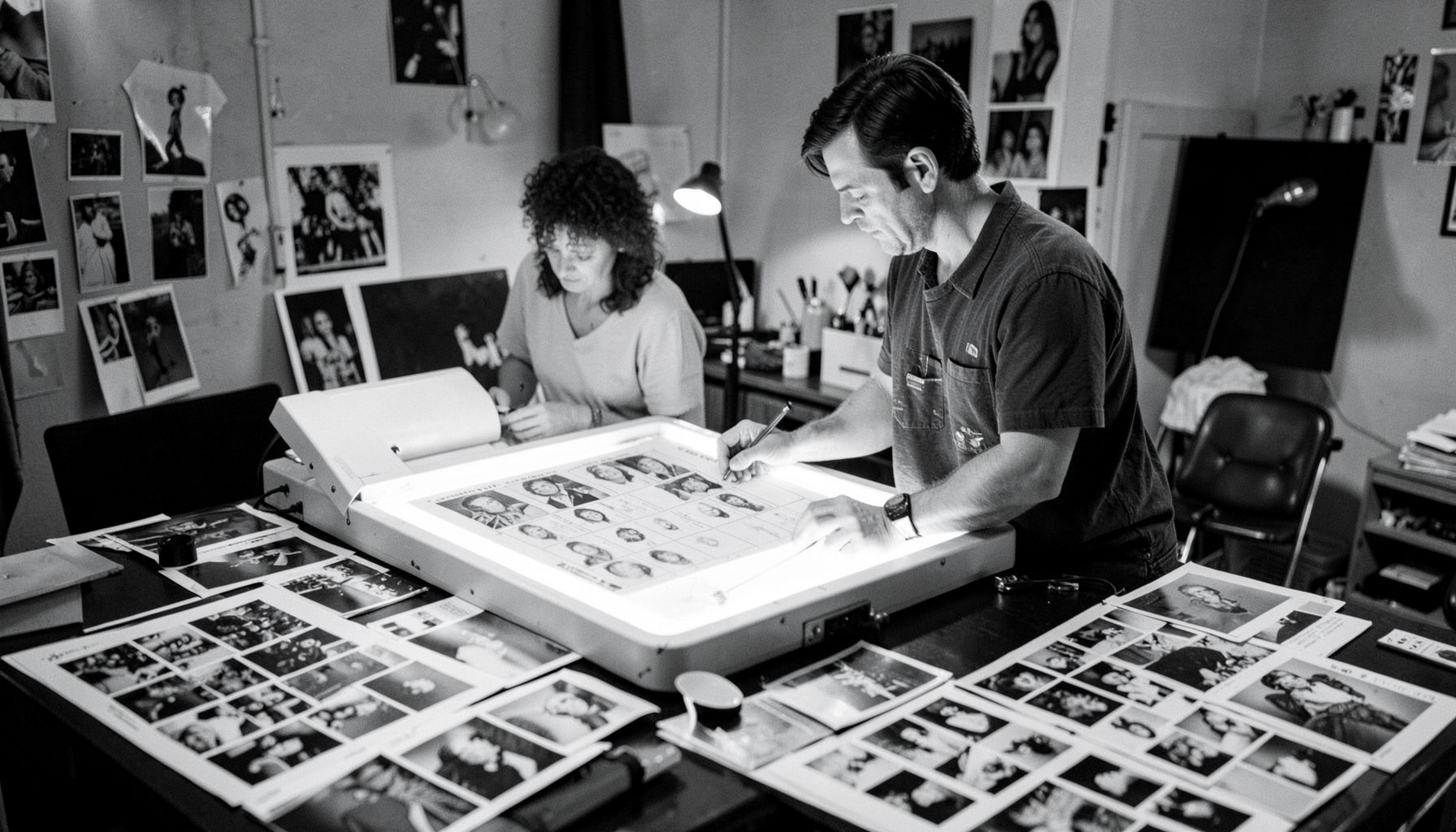
The value of the Shagrir Collection lies partly in its range of formats. A negative may show a slightly different frame from a published print. A contact sheet can reveal which moments were selected and which were discarded. Personal papers, sound recordings and production notes may clarify where a photograph was made, who commissioned it and how its meaning changed across newspapers, television programs or exhibitions.
This material also benefits from comparison with other sources, including oral histories, community publications, government records and testimony from Ethiopian Israeli families. In some cases, a caption may use administrative language that does not match the memory of the person pictured. Preservation should make room for these differences rather than forcing one authoritative account.
The collection’s documentation of political life helps establish this method. Researchers can place the images of immigrant absorption beside political upheaval images, examining how Shagrir responded to crowds, institutions and moments of national change. The comparison shows that documentary photography is shaped by framing and access, whether the subject is a demonstration, a military event or a family starting over.
Why the story resonates in Australia
Australian viewers may connect these photographs with the country’s own migration and refugee histories. In Melbourne, Ethiopian and wider African communities have built cultural, religious and commercial networks across suburbs such as Footscray and the inner north. Sydney offers another point of comparison through its established Jewish institutions, migrant services and diverse western suburbs. These settings make the practical questions of language, housing, employment and community support immediately recognisable.
The images may also speak to the Australian habit of encountering history through public exhibitions, school programs and SBS reporting, where personal testimony often sits beside official statistics. In the local cultural market, archives that combine strong visual storytelling with reliable provenance are valuable to galleries, universities, libraries and community organisations. Digitised photographs can support classroom work on migration policy while exhibitions can foreground Ethiopian Jewish voices rather than presenting them only through an Israeli state narrative.
Australia’s own migration debates make careful historical framing particularly important. Terms such as “integration”, “settlement” and “community cohesion” can sound neutral while concealing unequal access to housing, jobs and public recognition. Shagrir’s photographs offer a way to examine those terms through real places, bodies and relationships.
Approaching the collection with care
Viewing these photographs should involve patience. It is useful to study the sequence around an image, read available captions and notice whether the photograph was made for a news report, documentary film, private record or later exhibition. The intended audience can affect everything from composition to the choice of subject, and later reproductions may crop or retouch the original.
Researchers and educators should also avoid treating Ethiopian immigrants as a single, uniform group. Differences of age, religion, region, gender, family status and migration route shaped each person’s experience. A photograph can open a question without answering it, making related testimony and community interpretation essential.
Practical engagement with the collection can combine visual analysis with local conversations about migration and belonging:
- Compare arrival photographs with oral histories from Ethiopian Jewish Australians and other migrant communities.
- Trace how captions, newspapers and exhibition labels influence the meaning of a documentary image.
- Use maps to connect Israeli absorption centres with Australian settlement patterns in Melbourne and Sydney.
- Discuss consent, privacy and the long-term effects of photographing people during vulnerable moments.
- Support digitisation, translation and community-led interpretation so the archive remains accessible beyond specialist researchers.
The strongest reading of Shagrir’s work holds public history and private experience together. His photographs document a major chapter in Israeli immigration, yet they also preserve ordinary gestures: waiting, learning, gathering, grieving and adapting. Those gestures give the archive its lasting relevance, allowing audiences in Australia and elsewhere to see migration as a continuing human process rather than a completed event.