
Shagrir's Images of Israeli Fashion and Textiles in the 1970s
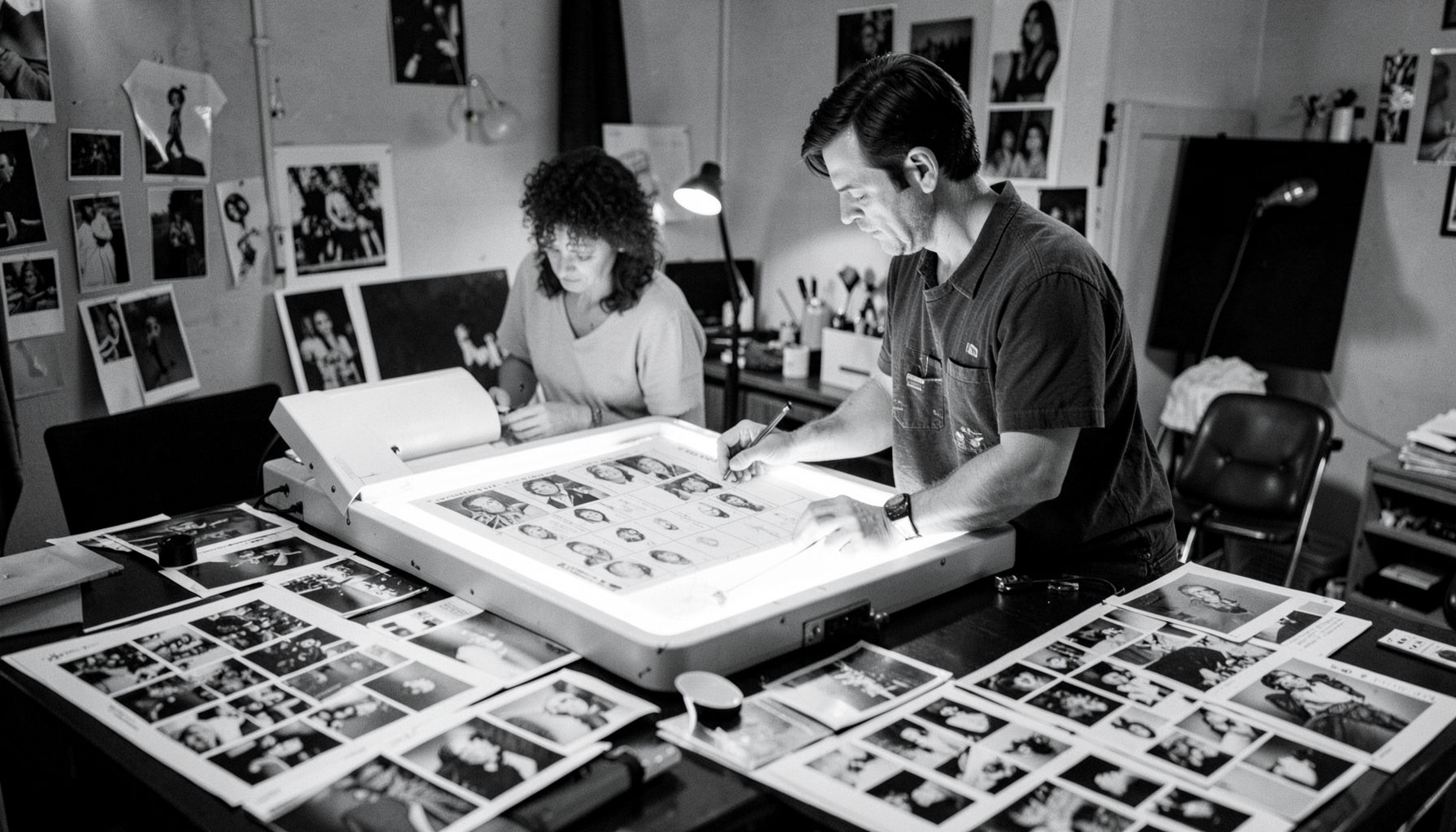
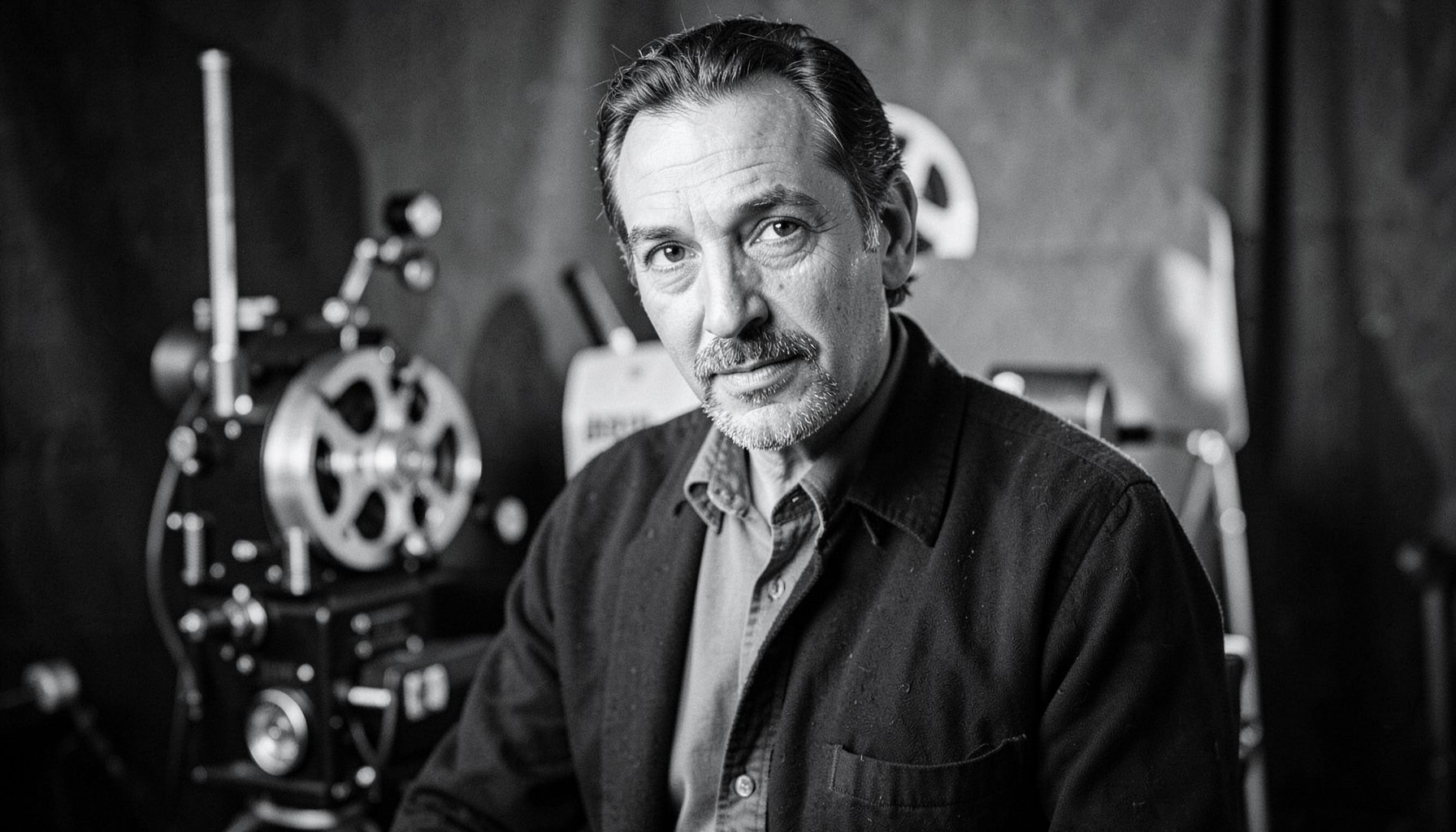
The Shagrir Collection holds the working archive of Micha Shagrir: negatives, prints, films, recordings and personal papers tracing five decades of Israeli media life. Tucked inside that body of material is a rich seam of 1970s fashion and textile evidence — garment workshops, cutting rooms, market stalls, studio portraits and street scenes in which cloth, cut and colour do the talking. Frames that look like reportage at first glance turn out, on closer inspection, to be industrial and social documents: who made the clothes, who wore them, and what working life looked like around them.
The decade itself explains why the subject matters. Israel's 1970s were shaped by industrial consolidation, subsidised import substitution and a rapidly expanding ready-to-wear sector, with sewing rooms and finishing shops drawing women into paid employment while the fashion press tracked hemlines and prints with equal seriousness. Australian readers will recognise the parallel mood of their own 1970s, when tariff reductions following the 1973 tariff review began admitting cheap clothing imports and squeezed Melbourne's garment district and Sydney's high-street boutiques at the same time. Shagrir's negatives capture a local answer to a global problem: how a young country dressed a working population.
Clothing, cloth and the texture of the decade
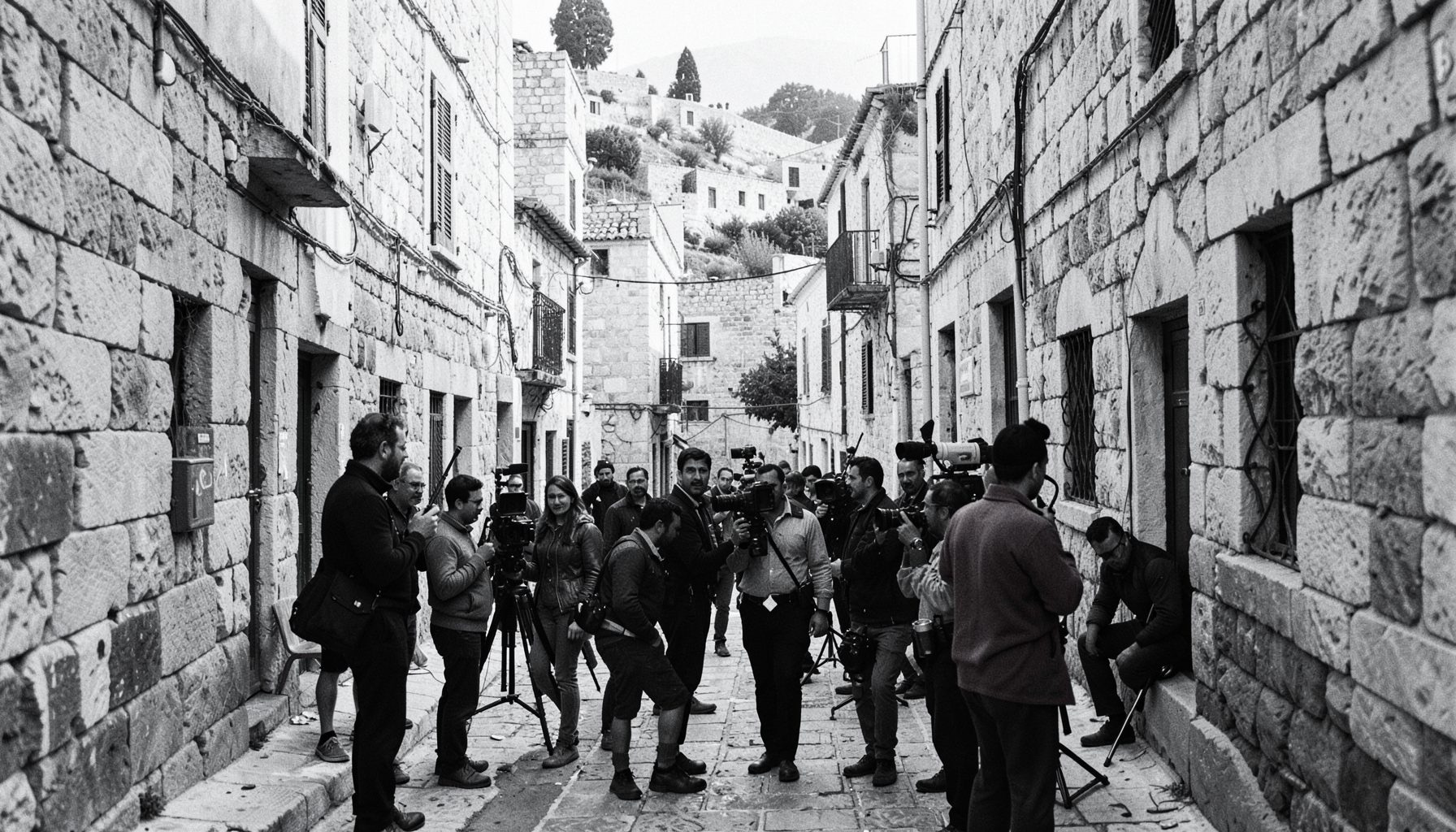
Shagrir approached fashion with a reporter's eye rather than a designer's. Instead of a single hero garment, the archive favours context: the racks behind a model, the shop assistant in her own clothes, the fabric sample pinned to a wall. That instinct is consistent with the wider documentary work, including the Pillar of Fire series, which Shagrir produced for television and which treated crowds, uniforms and public ritual with the same observational patience.
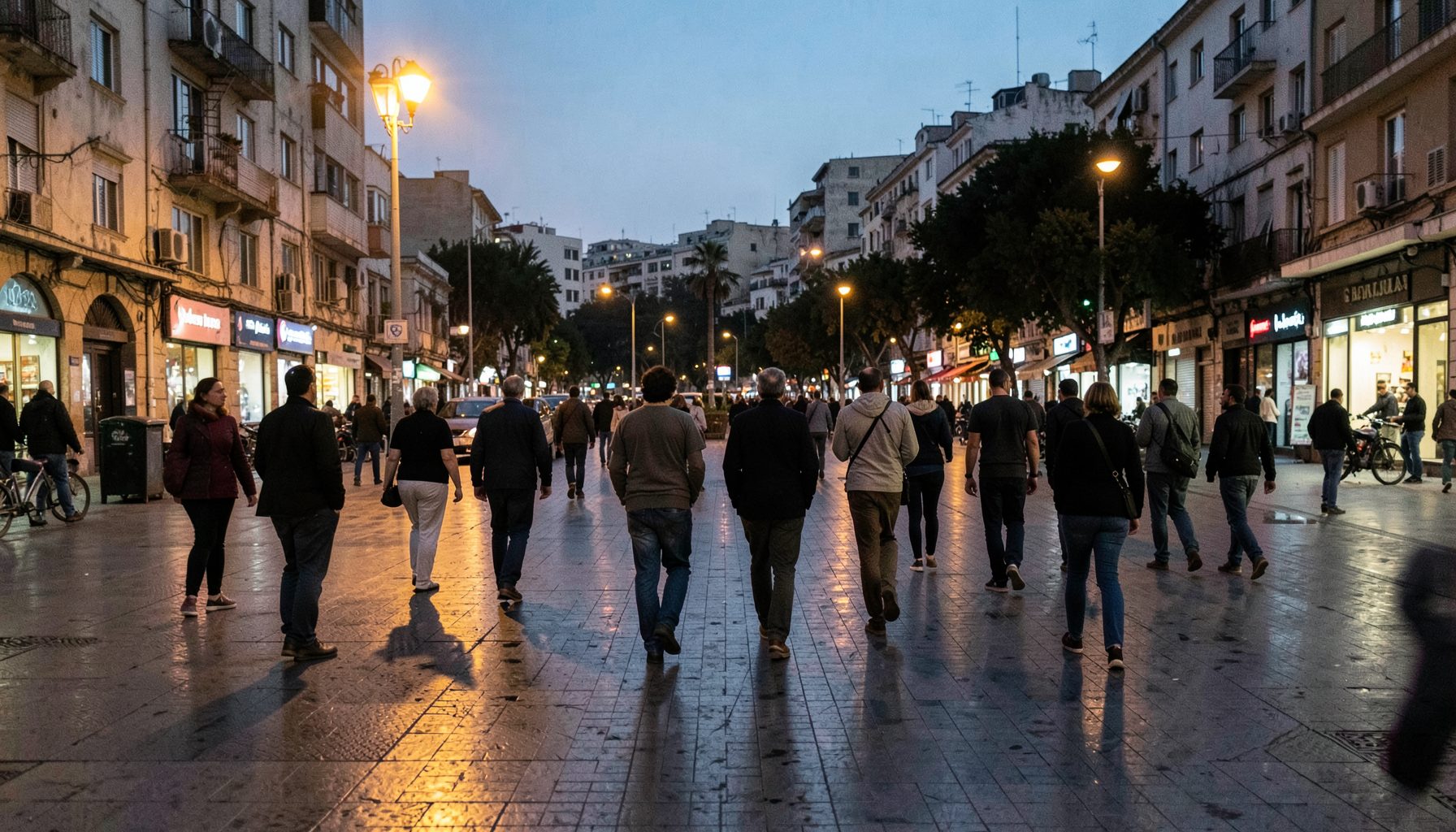
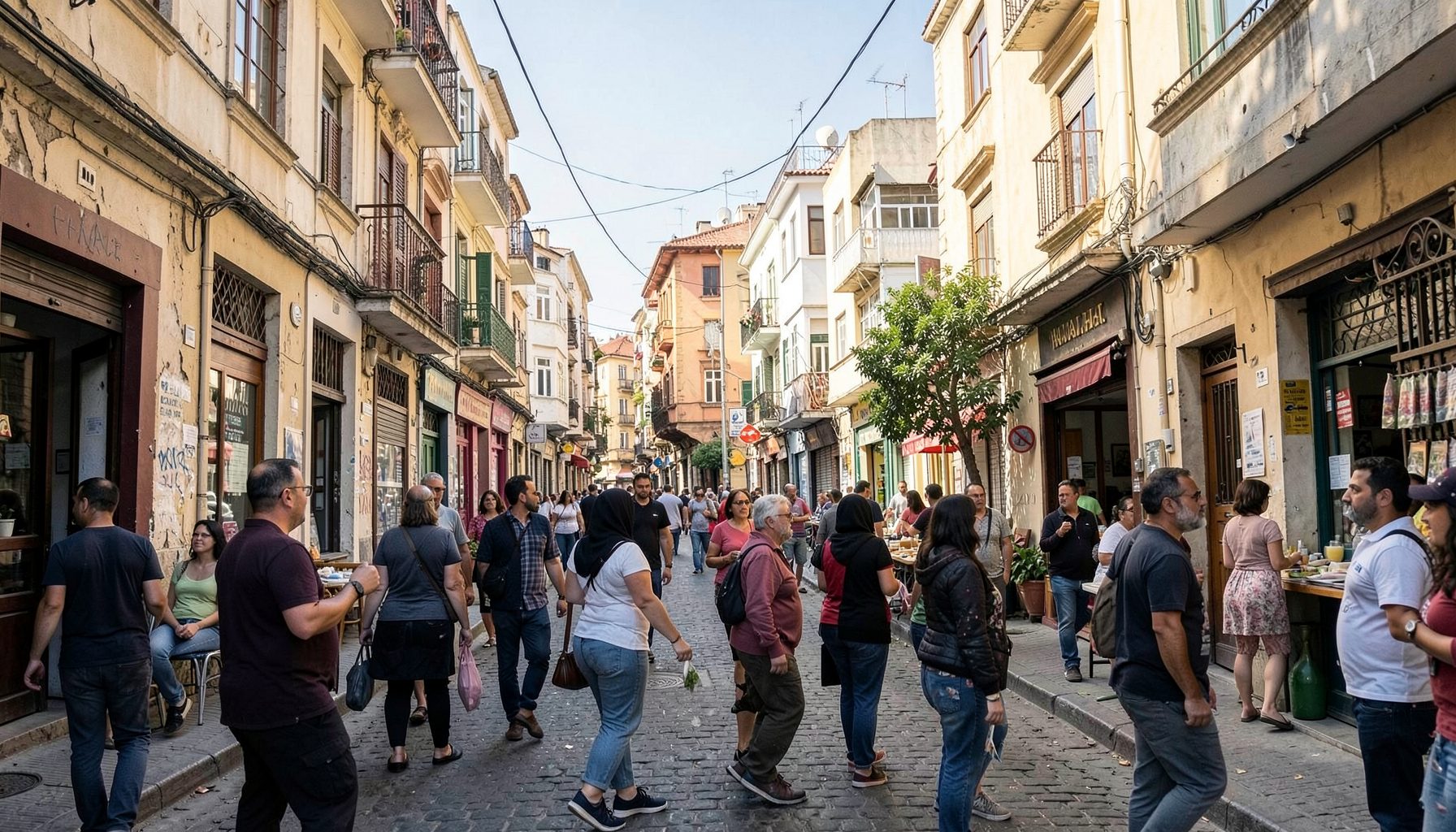
Period fashion pages survive in fragments. Magazines such as HaKol, the Israeli fashion weekly that ceased publication in the mid-1970s, ran studio shoots and street photography of the kind that appear in Shagrir's contact sheets and negatives. Alongside them sit informal records: promenade walks along the Tel Aviv seafront, stall-holders at Jerusalem's Machne Yehuda market, workers in pressed shirts heading into a shift. Bell sleeves, high-waisted trousers, maxi dresses, bold geometric prints, knitted beachwear and army-issue fatigues all register in the frames — not as trends to be judged, but as clothing in use.
Material clues carry much of the argument. Cotton, rayon, acrylic and wool behave differently under flash, and Shagrir's lighting often reveals what a garment was made from as well as how well it had been sewn. Where a hem has been turned by hand, or a collar reworked, the photograph preserves a small biography of labour and thrift.
Factories, workshops and the business of making clothes
The industrial thread through the collection leads to workshops clustered around Tel Aviv and in the industrial towns of the periphery, where cutting tables, thread cones and pressing stations were photographed at close range. These were spaces staffed largely by women, many of them new arrivals adjusting to a new language, a new shift system and a new city. Negatives from such places let a researcher reconstruct the production chain — fabric arriving from a mill, panels laid out and cut, garments pressed and folded for the retail floor.
What makes the archive unusual is that industrial photography sits beside political history without separation. The same reels that hold a 1970s sewing room also hold moments of national consequence, such as the Oslo Accords signing ceremony, which Shagrir covered as a working journalist in the 1990s. Read together, the two strands complicate each other: the politics of a country shows up in the clothes its institutions issued and its citizens bought, and in the labour behind them.
Preservation and research sit at the centre of the collection's public work. Catalogue descriptions, digitisation, print exhibitions and educational programmes all depend on careful handling of fragile acetate and polyester negatives, many now in poor condition. Supporting the archive is therefore a practical act, not a symbolic one: every conserved reel is one more source for students, historians and designers.
A side-by-side comparison of the two countries clarifies what the pictures hold:
| Aspect | Israel in the 1970s | Australia in the 1970s | What Shagrir's frames preserve |
|---|---|---|---|
| Production base | Tel Aviv workshops, peripheral industrial towns, protected domestic market | Melbourne garment district, Sydney retailers undercut by imports after tariff cuts | Cutting rooms, thread cones, pressing stations, factory doors |
| Workforce | Women in sewing and finishing roles, mixed immigrant workforce | Rising female participation, union campaigns in apparel | Faces, hands, shop-floor group portraits |
| Trade environment | Import substitution, rising cheap imports later in the decade | Cheap imports erode local makers, push for Australian-made labels | Market stalls, storefronts, local and imported goods side by side |
| Fashion press | HaKol and studio shoots, monochrome reportage | Edgley, Gowings, George Gross and Harry Who campaigns | Contact sheets, negatives, printed reproductions |
| Visual technique | Flash and available light, mixed formats | Studio lighting, colour and monochrome mix | Grain, tone, framing decisions and their context |
| Present value | Heritage exhibitions and oral history | Industry restructured, imagery dominated by retouched commerce | A baseline for judging how clothing images are made today |
Negatives, prints and the craft of preservation
When researchers request frames, the workflow runs from selecting a contact sheet to scanning and correcting a high-resolution file. Practitioners who work through current software for landscape photo editing describe the same technical questions this archive raises: how far to push contrast, how to hold shadow detail, whether to accept grain. Several of the most requested images are wide views of the Tel Aviv seafront and the hills behind Jerusalem, where industry sits against a landscape the eye reads instantly.
Colour prints from the period have faded unevenly, so scanning profiles matter more than they might for newer material. The collection's approach — preserve the original negative, produce a faithful scan, document any intervention — keeps the archival object intact while making working copies that can be enlarged for exhibition. That distinction between the record and the reproduction is the ethical core of handling Shagrir's material responsibly.
Crops deserve particular caution. A frame trimmed too tightly can lose the factory sign, the shop name or the colleague standing at the edge of the picture, and with it the information that makes the image useful. Keeping the full composition is not pedantry; it is the difference between a garment portrait and a document about how clothes were made and sold.
Exhibitions, classrooms and shared access
Print exhibitions have given the fashion material a public life that prints alone could not: garments displayed beside the photographs of the people who produced them, short audio extracts from the archive's recordings supplying workers' voices to images made largely without captions. Curators who have staged these displays often begin with a single garment and let the surrounding photographs build the social context around it.
The same material travels well into classrooms. Guidance on teaching with the archive shows how sequences of frames can be used to ask students questions about evidence, work and migration rather than simply to illustrate a date. Victorian and NSW secondary history curricula trace migration and industrial change, and Australian students can compare those units directly with footage of Israeli sewing rooms, Tel Aviv markets and immigrant settlement. Institutions such as the Jewish Museum of Australia in Melbourne have long treated dress, labour and arrival as connected themes.
Access from abroad has widened considerably. Researchers in Sydney, Adelaide and Perth now request scans by email, request reproduction rights, and contribute captions and corrections that improve the catalogue for everyone. Each of those exchanges extends the working life of material that would otherwise sit in sealed boxes.
Practical ways to work with the collection
For anyone planning to research, publish or exhibit this material, a few habits make a real difference.
- Begin with the catalogue, then narrow to named negatives and prints rather than attempting the whole collection at once.
- Request the highest-resolution scan available and keep the unedited file beside any corrected version.
- Pair clothing frames with oral history, using the archive's recordings to supply workers' and designers' voices to images made without captions.
- Build comparisons deliberately: Shagrir's 1970s fashion frames sit naturally beside Australian material on the 1973 tariff changes and the contraction of local garment making.
- Note how clothing images are produced today — retouching guides for clothing photo editing show how sellers smooth, recolour and reshape garments, a contrast that sharpens what Shagrir's frames preserve about wear, texture and labour.
- Credit the archive in every caption and publication, and contribute to preservation or exhibition costs where you can.
- Plan for the classroom or the gallery with a small group of prints, one short audio clip and a concise label on a single garment, which can carry a larger argument than a long wall of text.
Shagrir's 1970s images of fashion and textiles work best when they are read as working documents rather than nostalgic pictures: a garment still damp from pressing, a shop sign newly painted, a stockist waiting for the morning's deliveries. The archive's future depends on the continued cataloguing, conservation and use of that evidence, and on the audiences who keep asking what the negatives still hold.