
Shagrir and the 1993 Oslo Accords signing ceremony
The White House ceremony on 4 September 1993 was choreographed to look like the end of a long argument. On the South Lawn, Israeli prime minister Yitzhak Rabin and PLO chairman Yasser Arafat shook hands under the gaze of US president Bill Clinton. Jordan’s King Hussein and Egypt’s president Hosni Mubarak also took part, turning a diplomatic breakthrough into a scene of leaders, flags, formal wording and managed emotion.
Calling the event “the signing of the Oslo Accords” is convenient but incomplete. The ceremony joined the Israel–PLO Declaration of Principles with the Israel–Jordan peace treaty, while the Gaza–Jericho agreement followed in Cairo days later. It publicly advanced the recognition process between Israel and the PLO but did not create a final Israeli-Palestinian peace settlement. That distinction matters when reading Shagrir’s images, which record a political promise rather than its completion.
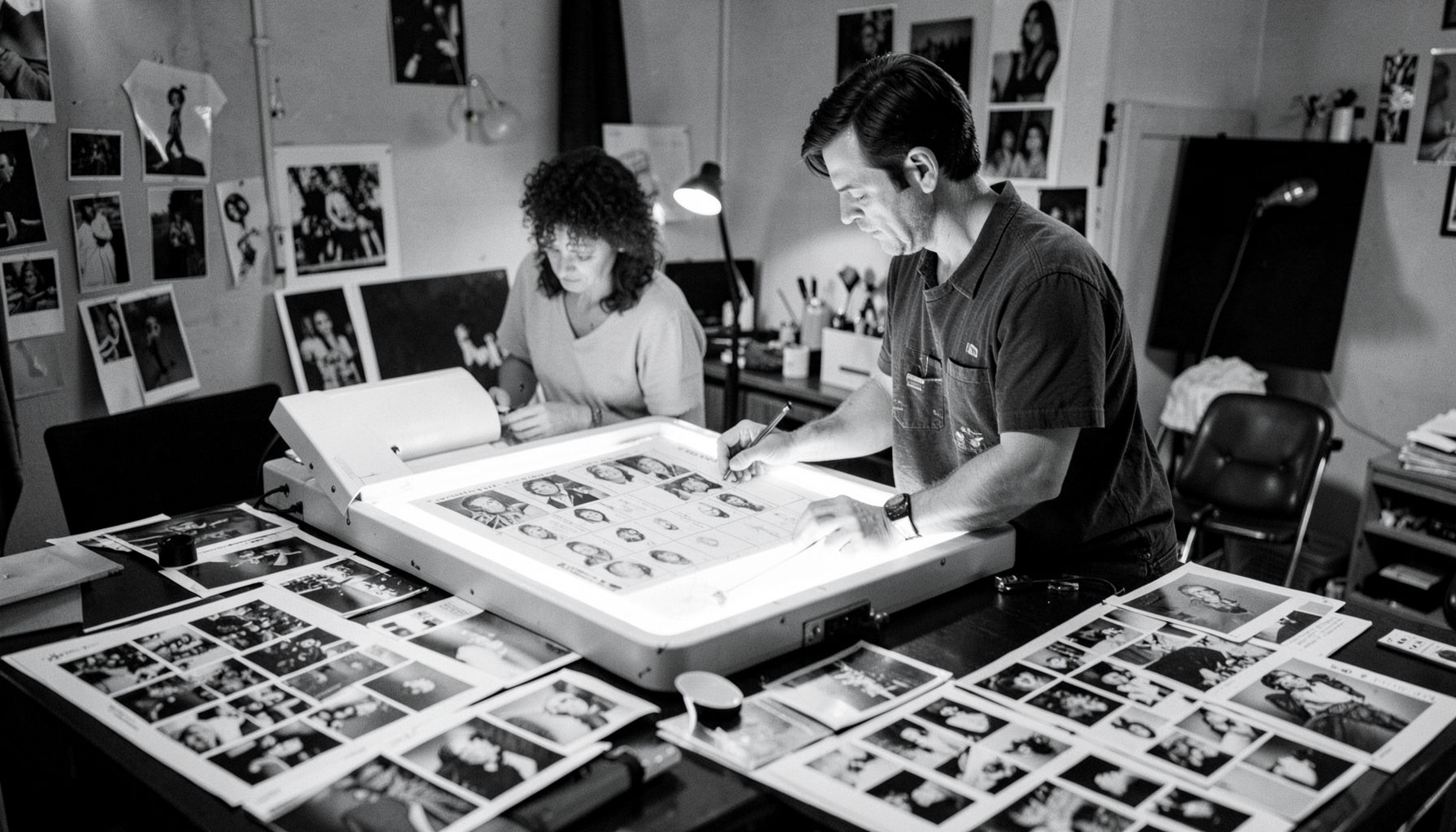
Micha Shagrir was an Israeli filmmaker, producer, photographer and journalist whose career placed him between public events and private documentary practice. His coverage of the signing belongs to that dual identity. The camera recorded an historic occasion, while the archive exposes the labour behind representation: choosing a position, following a sequence, filing negatives, making prints and deciding what viewers should know about an image.
The surviving material can be read as evidence of the event, of how it was witnessed and of how later generations might inherit it. For Australian audiences, this reaches beyond a retrospective gallery of famous leaders. It connects presidential theatre and Middle East diplomacy to familiar questions about public records, media ownership, captioning and the distance between a television headline and the lives carried by political decisions.
A ceremony watched around the world
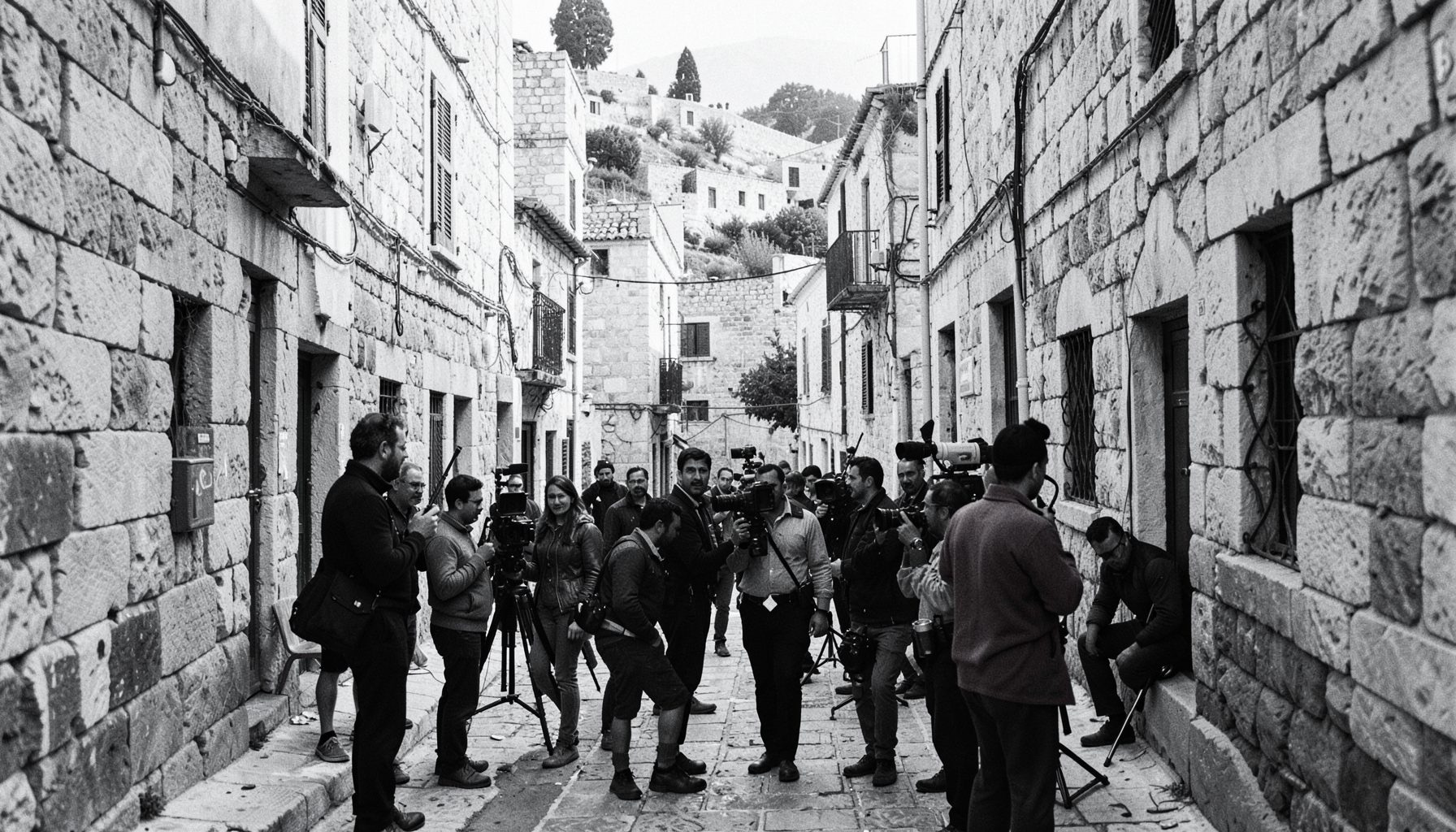
Shagrir entered an environment in which access and perspective were unequal. Accredited photographers worked in a defined area while television crews relied on elevated positions, sound feeds and the White House platform. The famous handshake was one instant in a longer choreography: arrivals, greetings, signatures, anthems and departures. A sequence of stills or moving images can hold those transitions together, showing how solemn ritual and brisk media logistics occupied the same lawn.
In Australia, the scene would often reach viewers through institutions closer to home. Canberra’s Parliament House and DFAT offices make the capital a centre for international-affairs briefings, while Australian correspondents and satellite crews interpreted events for national audiences. Geographic distance sharpened the need for clear visual information. Viewers in Perth also encountered Washington live through different time zones and late bulletins, a routine local experience that made “breaking news” a scheduling problem as well as a journalistic phrase.
Shagrir’s approach to the assignment
Shagrir’s background matters because a photographer is not simply a passive witness. As a documentary filmmaker and journalist, he understood that events gain meaning through framing and sequence. A close view of the leaders can suppress the press crowd; a wide view can make the people inside the handshake appear anonymous. The archive is strongest when these choices are considered together, rather than treating one emotionally charged photograph as a transparent substitute for what happened.
This is where the distinction between negatives, prints, film, recordings and papers becomes useful. Negatives preserve a selected frame, while prints reveal circulation through newspapers, books or exhibitions. Film retains movement and duration. Papers and recordings can carry names, chronology and procedural detail. Australians often talk about the “big picture”, but small details—a delayed cheer, an empty frame, a changed caption—can expose how that larger story was assembled.
Reading the surviving record
The Shagrir Collection gathers these forms rather than reducing the ceremony to a heroic image. Its negatives and prints show the visual record; films extend it through time; recordings, personal papers and other primary sources provide context beyond the White House narrative. Together they permit a researcher to move between the public event and the process of documentation, asking which moments were emphasised, which remained peripheral and what disappeared between capture, editing and publication.
Provenance is crucial for that work. Dates, captions, sequence information and the relationship between original material and later reproductions need checking rather than inference. The presence of several media types also helps identify what cannot be recovered. A missing frame may reflect a damaged negative, restricted access, a technical failure or simple disposal. The archive’s value lies partly in preserving uncertainty instead of smoothing it into a seamless official story.
A source-by-source comparison clarifies the differences:
| Evidence | Ceremonial account | Archive-based reading | Research value |
|---|---|---|---|
| Leading handshake | A symbol of reconciliation | A staged sequence shaped by protocol and position | Tests the meaning of the most reproduced frame |
| Working press | Background to the leaders | Cameras, cables, restrictions and timing reveal news production in action | Recovers the material conditions of the assignment |
| Papers and recordings | Formal proof of agreement | Anchors words and actions to names, sequence and setting | Allows claims to be checked across sources |
| Gaps and variants | Usually omitted from official narratives | Selection, technical limits and later reuse become visible | Keeps interpretation open to contradiction |
Read together, these sources show why no single format should carry the whole interpretation. A television clip privileges sound and duration; a still photograph privileges a fraction of a second; a document privileges legal language over physical experience. Shagrir’s multi-format archive lets partial accounts speak to one another, producing history more layered than the ceremony’s polished surface.
Images, memory and Australian perspectives
Images of the Oslo ceremony retain unusual authority because the handshake became shorthand for hope. Later events, including the violence of the First Intifada, the Second Intifada that began in 2000, Rabin’s assassination in 1995 and the collapse of the negotiated process, changed the meaning of that hopeful frame. The archive need not rewrite those outcomes into the images. It can show what participants, witnesses and the press could reasonably see in 1993, then let historians measure the distance between expectation and history.
That history has particular resonance in Australia. Sydney and Melbourne contain substantial Palestinian, Lebanese and other Arab Australian communities whose family histories, public campaigns and commemorations have added complexity to official accounts that treat the accords as a clean endpoint. Independent photographic practice offers a useful comparison here: Deepali Gupta’s work demonstrates how personal image-making can carry public history beyond official ceremony. Such comparison should remain contextual, not flatten distinct experiences into one visual style.
Bringing the archive into public view
Preservation turns private documentation into a public resource, but access requires careful description and rights-aware presentation. The collection’s photographs, films, recordings and papers can support exhibitions that place the White House beside other scenes from Shagrir’s career, giving visitors a broader view of Israeli political, military and social history. Educational programmes can use the material to examine propaganda, eyewitness testimony, photojournalistic ethics and the construction of national memory, rather than merely displaying leaders in ceremonial formation.
Current information about the collection and its media work is available through its press archive, giving researchers and journalists a route into public materials. The Australian publishing market offers a strong parallel: ABC newsrooms operate under a public-service remit, while Melbourne’s The Age, Sydney’s Sydney Morning Herald and Perth’s The West Australian combine syndicated international coverage with local pages and their own visual styles. Their cropping, headlines and picture credits show how one event is repackaged for different audiences, much as Shagrir’s negatives were transformed through selection and reproduction.
A documentary legacy beyond the White House
Shagrir’s interest in institutions and origins ran beyond the handshake. The collection’s account of the Tel Aviv University documentary shows how he used film to recover the early history of a young state and the people who built it. That project shares the Oslo coverage’s central concern: official milestones look different when viewed through the work, ambitions and contested memories of those who lived alongside them.
That wider legacy gives Australian researchers useful models of comparison. The National Film and Sound Archive of Australia in Canberra and public galleries such as Sydney’s National Portrait Gallery show the value of treating moving images, still photographs and personal papers as complementary evidence. A Shagrir print can be compared with a broadcast frame, a diplomatic file in Canberra and a family photograph held in Perth or Adelaide. Such cross-institutional work can reveal how national stories were photographed, edited and contested. Shagrir’s record of the Oslo ceremony endures because it preserves a moment when diplomacy became visible and the unresolved work behind that image remained open.