
The Enduring Legacy Of The Pillar Of Fire
Micha Shagrir’s place in Israeli screen history is closely connected with the effort to preserve national memory through moving images. His work as a filmmaker, producer, photographer and journalist occupied the space between personal testimony and public history. That combination gives The Pillar of Fire lasting importance beyond its original television broadcast.
The series belongs to an era when television was a shared civic experience. Before on-demand viewing and fragmented digital audiences, a historical documentary could enter family conversations, classrooms and national debates at the same time. Its account of Zionism, Jewish migration and the formation of Israel helped establish a visual language through which several generations encountered the country’s past.
Its legacy is also found in the materials behind the broadcast. Film negatives, production records, photographs, recordings and working papers reveal how historical television was assembled. The Shagrir Collection makes it possible to study those layers rather than treating the finished series as an isolated cultural object.
For Australian viewers, this archive offers a useful point of comparison with the work of the National Film and Sound Archive in Canberra, the ABC’s historical documentaries and SBS’s multilingual approach to national stories. It encourages audiences in Sydney, Melbourne, Brisbane and beyond to see television history as an active process of selection, preservation and interpretation.
A Television Landmark In Israeli History
The Pillar of Fire presented the history of modern Jewish nationalism and the Jewish community in Palestine through archival footage, photographs, documents, interviews and carefully structured narration. The series connected political movements with migration, conflict, diplomacy and everyday life, turning a complex historical record into a television narrative with a broad public reach.
Its importance came partly from scale. A long-form documentary series could move across decades and place individual events inside a larger chronology. Viewers were invited to connect the rise of Zionist organisations with the experience of immigrants, the British Mandate, violence between communities and the political decisions that shaped the establishment of Israel.
The production also demonstrated the authority television could acquire when it assembled scarce or unfamiliar images. Archival footage gave historical events a physical presence, while voice-over and editing supplied a clear argument. That clarity made the programme influential, though it also means that present-day audiences should examine which voices were prominent, which were less visible and how the narrative framed competing experiences.
Micha Shagrir And The Craft Of Historical Storytelling
Shagrir’s contribution can be understood through his wider practice. He worked across documentary film, journalism, photography and production, disciplines that depend on close observation and a sensitivity to evidence. His career shows how a historical programme is shaped long before the audience sees the final episode: through research, rights clearance, interviews, image selection and editorial judgement.
The surviving production materials are valuable because they expose this craft. A photograph may show a location or contributor; a script may reveal changes in emphasis; a production note may explain why one piece of footage was chosen over another. Researchers can therefore study the programme as both a historical interpretation and a material artefact of Israeli media culture.
This approach resembles the careful attention given to visual memory in Yani Lavigne, where images can be considered as objects with context, authorship and circulation histories. For Australian archive users accustomed to browsing digitised photographs through the NFSA, state libraries or museum collections, that distinction is especially useful: an image is evidence, but it is never evidence without a history of production and use.
Memory, Emotion And The Archive
The series has endured because it combines political history with emotional memory. Migration, persecution, religious belonging, exile and the search for security are not presented as abstract themes alone. They are attached to faces, voices, landscapes and family stories, allowing viewers to experience history as something lived rather than simply recorded.
That emotional dimension can be explored through ideas of inner life and cultural meaning, including the concept discussed in this reflection on kokoro. The comparison should not erase the differences between Japanese and Israeli contexts. Instead, it offers a vocabulary for thinking about how archives hold feelings that are difficult to translate into formal historical categories.
For Australian audiences, this matters when viewing documentaries about migration and nation-building. A Polish, Lebanese, Vietnamese, Greek or Jewish family in Melbourne may recognise the importance of inherited stories even when the political history differs. The series can prompt conversations about how memory travels through households, community organisations, religious centres and weekend gatherings, rather than remaining inside official institutions.
From The British Mandate To A Wider Public Record
One of the series’ major strengths is its treatment of the British Mandate period as a crucial part of the road to statehood. The Mandate was marked by competing national aspirations, administrative decisions, immigration restrictions, armed resistance and escalating communal conflict. Presenting this period through documentary evidence gives viewers a framework for understanding why later political events were so contested.
The Shagrir Collection’s account of the Mandate documentary adds a valuable production perspective. It directs attention to the practical and intellectual labour involved in reconstructing a period from scattered records. Historical filmmaking depends on locating fragments, checking their provenance and placing them in a sequence that remains legible without pretending that the past is simple.
This is relevant to Australian public history, where interpretation of colonial records, frontier violence and migration policy is continually reassessed. The Australian Copyright Act 1968 also shapes how libraries, educators and researchers can reproduce archival material. Access may be technically possible while publication, exhibition or classroom distribution still requires permission, careful attribution and an understanding of rights holders.
Why The Series Still Requires Critical Viewing
The legacy of a landmark documentary does not depend on treating it as an unquestionable authority. Historical television reflects the institutions, language and political assumptions of its production period. A programme made for a national broadcaster may foreground a particular national story, use a confident narrative voice and give limited space to perspectives that later scholarship has brought forward.
Critical viewing can therefore deepen appreciation rather than diminish it. Audiences might compare the series with Palestinian testimonies, British records, private letters, oral histories and recent academic research. They can ask how images were obtained, whose testimony was recorded, how captions guide interpretation and where the evidence remains incomplete.
This kind of comparison is familiar in Australian education, where students are increasingly encouraged to read primary sources alongside textbook narratives. A classroom in Adelaide or Perth could use an episode to examine documentary construction, then compare its methods with oral-history projects held by local museums or the National Library of Australia. The focus becomes historical literacy: understanding how stories are made, preserved and challenged.
Preservation Makes The Legacy Visible
The Shagrir Collection extends the life of the series by preserving the ecosystem around it. Film reels, negatives, prints, audio recordings, correspondence and personal papers can reveal relationships between professional assignments and private memory. They also help establish dates, identify people and recover production details that may disappear from public memory when institutions close or formats become obsolete.
Digitisation is essential, yet it is not a complete substitute for physical preservation. A scan can improve access for a researcher in Sydney or Hobart, but the original film stock may still contain information about emulsion, editing marks, framing or colour. Archivists must balance safe storage, conservation budgets, metadata creation and public access, especially when older formats require specialist equipment.
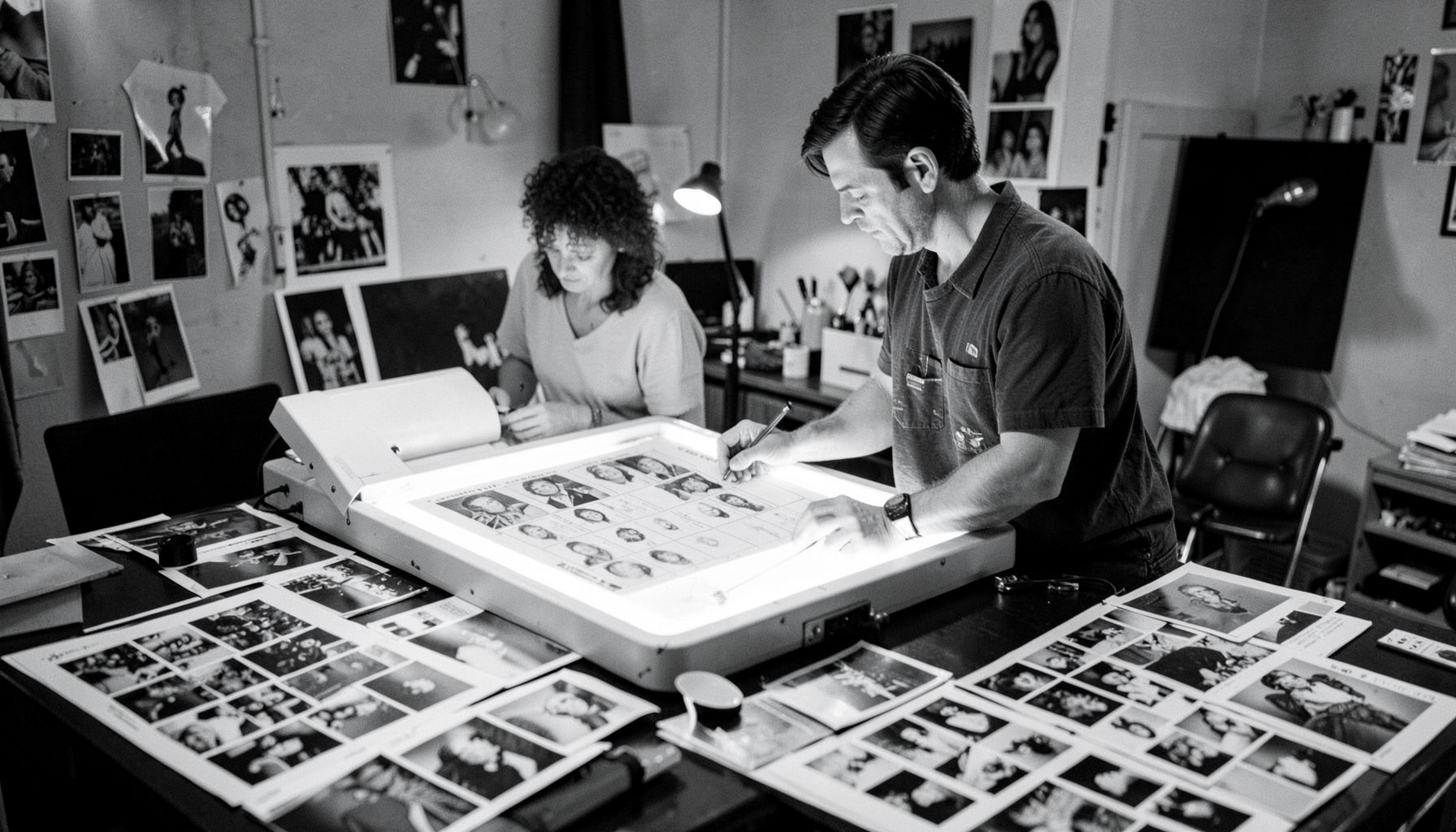
The collection also supports exhibitions and educational programmes. Showing contact sheets beside a broadcast excerpt, or a production document beside a finished sequence, can make historical method tangible. Visitors see that national memory is built through thousands of decisions made by photographers, editors, researchers, interviewers and archivists.
Practical Ways To Engage With The Archive
A meaningful encounter with The Pillar of Fire can combine viewing, research and discussion. Public audiences do not need specialist training to begin, but they benefit from recording episode details, distinguishing contemporary narration from archival testimony and following references into related collections. Australian viewers may also find that local libraries, universities and Jewish museums provide complementary resources.
The supporters of the Shagrir Collection help sustain preservation and access work, and information about contributing is available through the collection’s supporters. Support can take different forms, including financial assistance, scholarly collaboration, educational use and the careful sharing of family materials with appropriate documentation.
- Watch selected episodes alongside a reliable chronology of Israeli and Mandate history.
- Compare the programme’s narration with oral histories from different communities.
- Record names, dates, locations and source notes for images that require further research.
- Use the series to teach documentary language, including editing, voice-over and archival selection.
- Consult Australian libraries, museums and screen archives for comparable preservation projects.
- Discuss copyright, consent and cultural sensitivity before copying or publishing archival material.
The continuing value of Shagrir’s work lies in this combination of historical reach and material depth. The television series shaped public understanding, while the archive allows later generations to examine how that understanding was produced. Its legacy remains active whenever viewers connect an old image with a new question about evidence, belonging and the responsibilities of remembering.