Capturing a New Nation: Micha Shagrir's Early Years at Davar
In the middle of the 1950s, when the young State of Israel was still drawing its borders and learning how to present itself in print, a young photographer named Micha Shagrir began carrying a Speed Graphic into newsrooms, kibbutzim, government offices, and refugee camps. He worked for Davar, the daily newspaper of the Histadrut labor federation, which was then the most influential Hebrew paper outside the religious press. The masthead gave him a platform that combined labor Zionism, cultural ambition, and a serious commitment to visual reporting.
Shagrir brought to Davar an instinct for the decisive moment that he had refined as a student in the late 1940s. The paper's editors, many of them former underground operatives and writers from the Palmach generation, treated photography as evidence rather than decoration. Shagrir's negatives from those years now rest in the Shagrir Collection, where researchers, journalists, and educators can trace how a single frame shaped the public memory of the early state.
For readers based in Australia, where the Sydney Morning Herald, The Age in Melbourne, and the Canberra Times were developing their own photojournalism traditions, the parallels are instructive. Both nations experienced post-war reconstruction, large immigration waves, and lively debates about press freedom, which makes Shagrir's early archive unusually resonant for documentary photographers and historians working from Brisbane to Perth.
Entering the Newsroom of Israel's Labor Daily
Davar was founded in 1925 under the editorship of Berl Katznelson, and by the time Shagrir joined its staff it had grown into a multi-section broadsheet with a nationwide stringer network. The paper included a daily editorial, a workers' supplement, and a children's paper, and Shagrir contributed to all three. His earliest bylines appeared as small black-and-white prints captioned in Hebrew type, set into columns of dense political reporting. Editors trusted him with politicians, soldiers, and trade unionists alike.
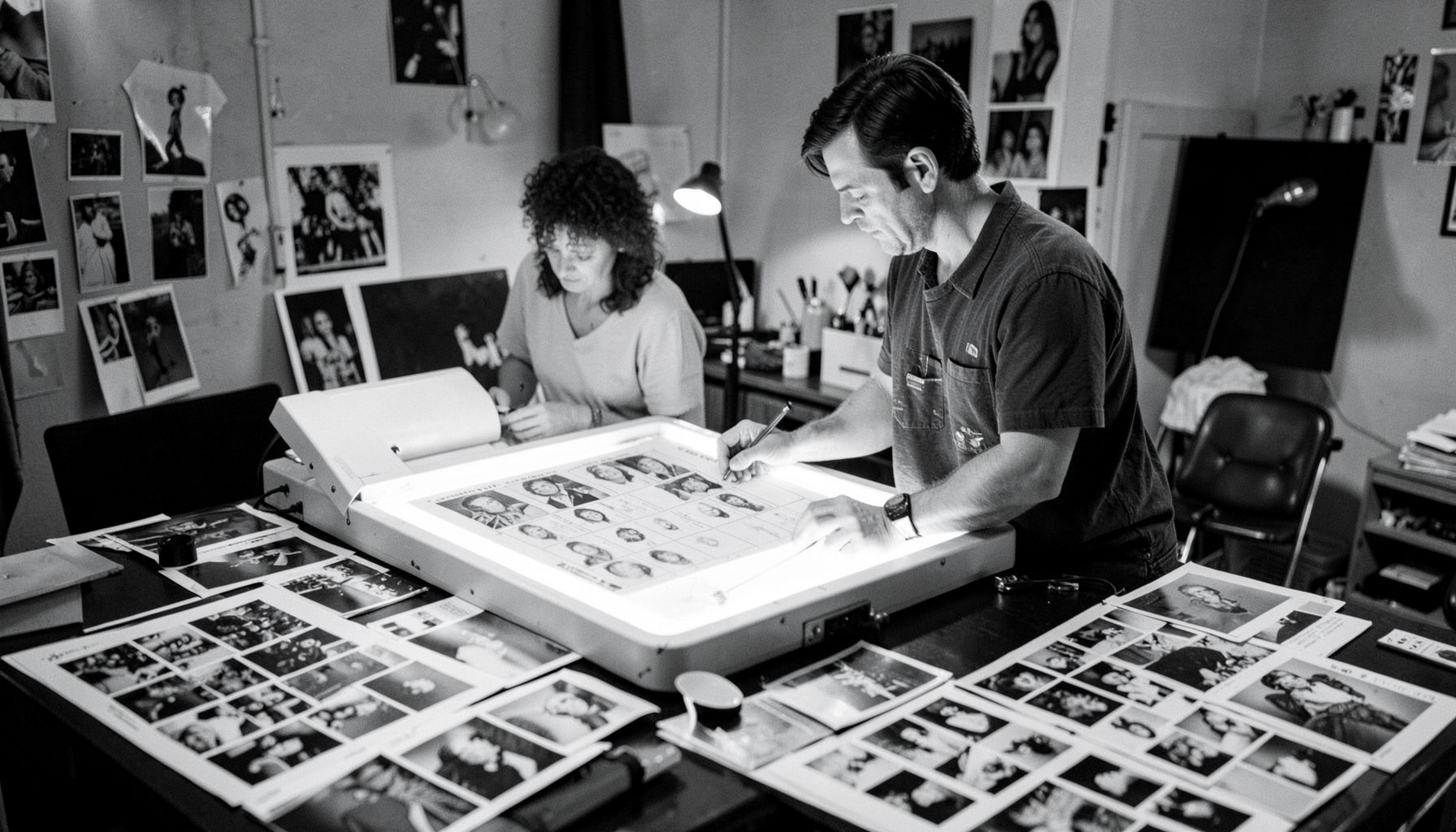
The newsroom culture was shaped by European Jewish intellectualism, with copy desks that prized precise language and a visual sensibility borrowed from illustrated weeklies in interwar Berlin and Vienna. Within a few years Shagrir was running his own assignments, returning from the field with several rolls of film that he would edit overnight in a backroom lit by a single red bulb.
For Australians tracing a similar path, the experience resembles early careers at the Melbourne Herald or the former Sydney Daily Telegraph, where young photographers were expected to develop their own film and hand-print a contact sheet before dawn. That shared craft ethos, anchored in wet chemistry and tight deadlines, links the two hemispheres more closely than readers often assume.
The Press Landscape of the 1950s
Comparing Davar to other mid-century newspapers helps clarify what made Shagrir's early position distinctive. The comparison below sets out a few points of contrast with selected English-language dailies of the same era, including two Australian titles familiar to readers in Sydney and Melbourne.
| Feature | Davar (Tel Aviv) | The Sydney Morning Herald | The Age (Melbourne) | The Times (London) |
|---|---|---|---|---|
| Founded | 1925 | 1831 | 1854 | 1785 |
| Ownership | Histadrut labor federation | Independent, later Fairfax | Independent, later Fairfax | Independent |
| Photo focus | Central to identity | Growing through 1950s | Growing through 1950s | Limited, text-led |
| Stringer reach | Nationwide, ideological | Nationwide, commercial | Nationwide, commercial | Worldwide |
The contrast highlights how Davar's ideological backing encouraged a confident visual identity at a time when commercial papers in Australia and Britain were still debating whether photographs belonged on the front page. That debate was settled in Israel earlier than in most other press systems, and Shagrir was among the photographers who settled it. His early commissions anticipated the visual revolution later led by titles such as the Daily Express in London or the Sydney Daily Mirror after its 1942 relaunch.
A Photographer's Eye on a Young State
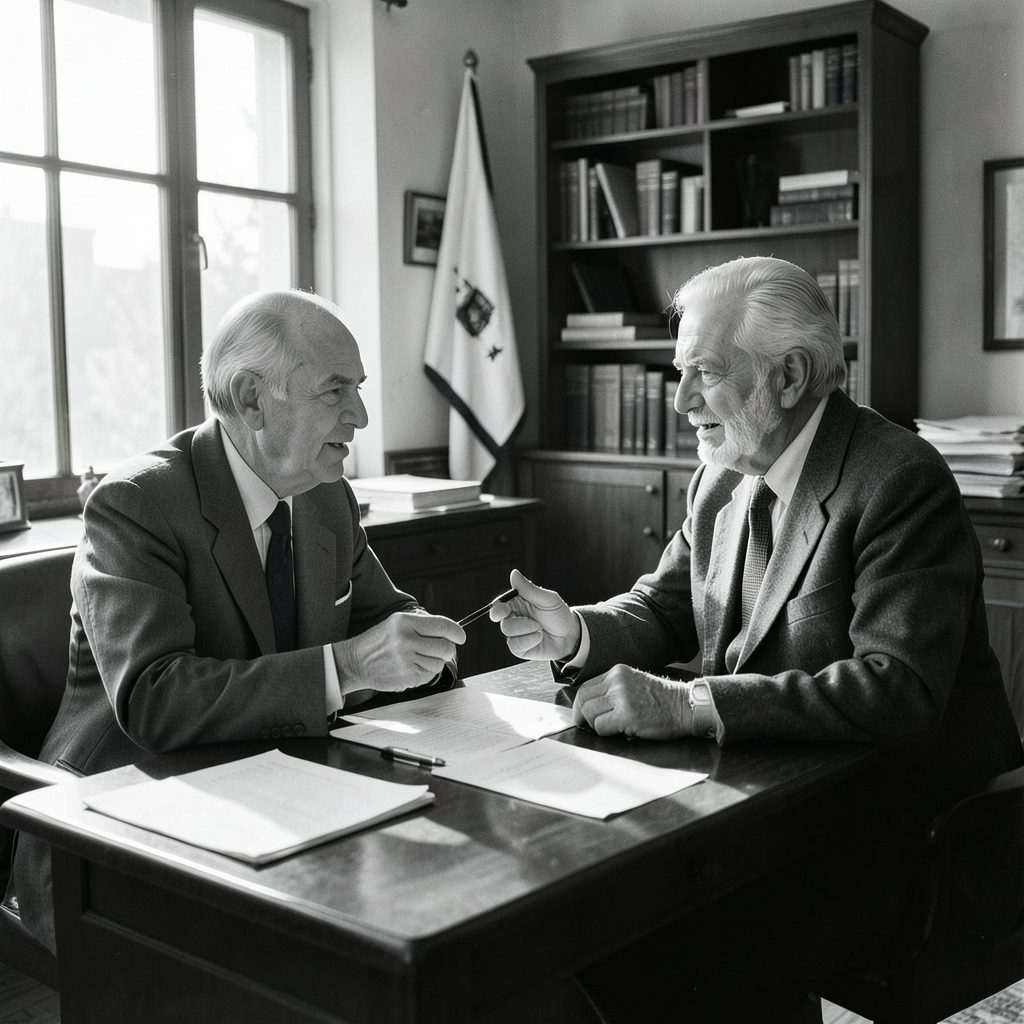
Shagrir's style at Davar was direct and unadorned. He preferred available light and a vantage point that placed readers at shoulder height with his subjects. Whether the assignment was a cabinet meeting in Jerusalem or a ceremony at a Negev settlement, he framed political power in human terms. His portraits of David Ben-Gurion, Moshe Sharett, and Yitzhak Ben-Zvi conveyed exhaustion as readily as authority.
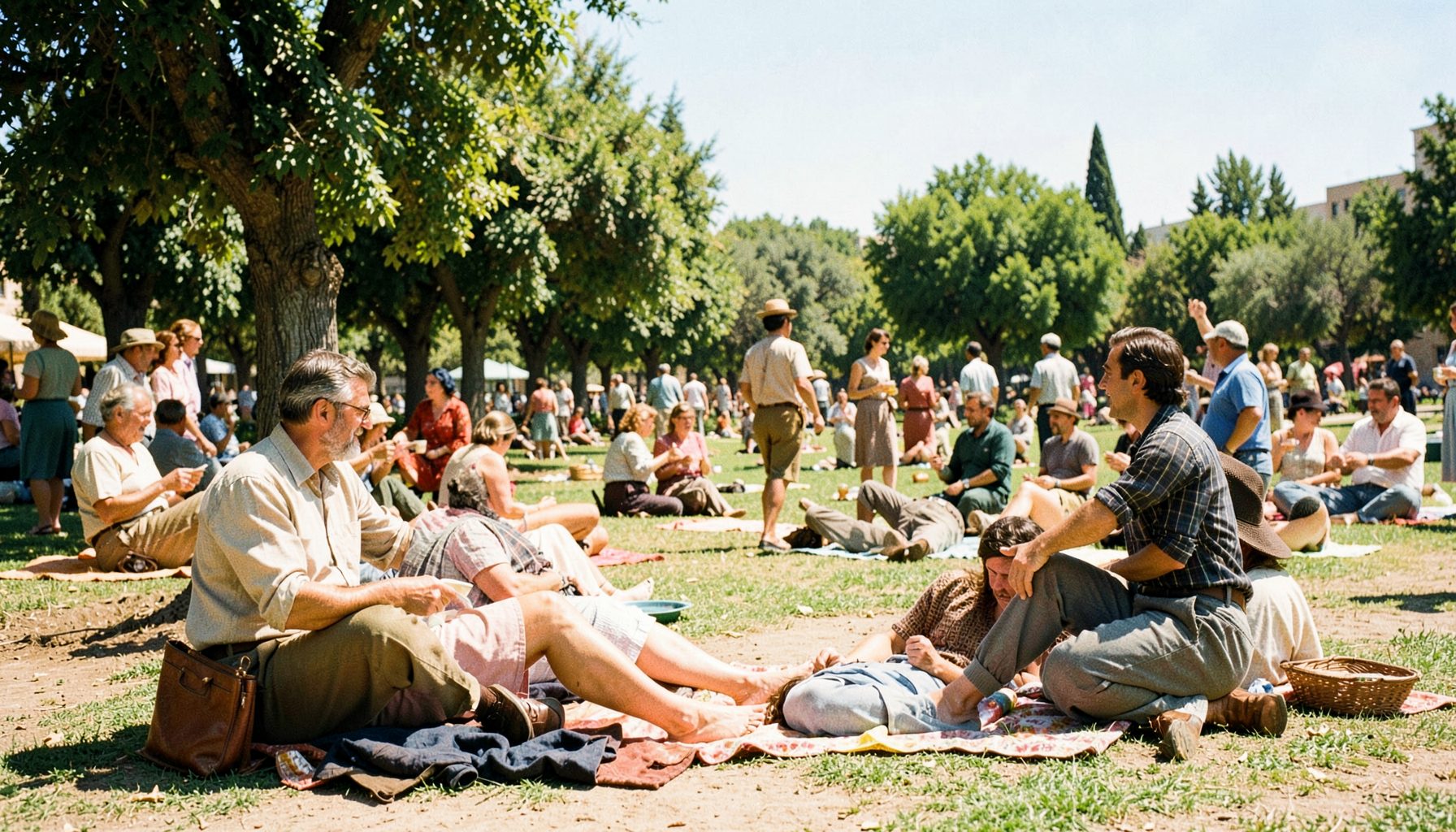
He also documented the less glamorous corners of national life: market workers in Tel Aviv, Yemenite children at school, engineers surveying the new port at Haifa. These images, many of them now digitised through the Shagrir Collection, gave Davar readers a panoramic view of a society in motion. Shagrir later described these assignments as a way of photographing a country that was still learning to see itself.
The breadth of his output invites comparison with the work of Australian contemporaries such as David Moore or Jeff Carter, who were documenting construction sites, new suburbs, and migrant communities in Sydney and Melbourne during the same decade. That cross-cultural resonance is one reason the archive has drawn interest from scholars at the Australian Jewish Historical Society and from university presses in Victoria.
Subjects on the Frontline and the Home Front
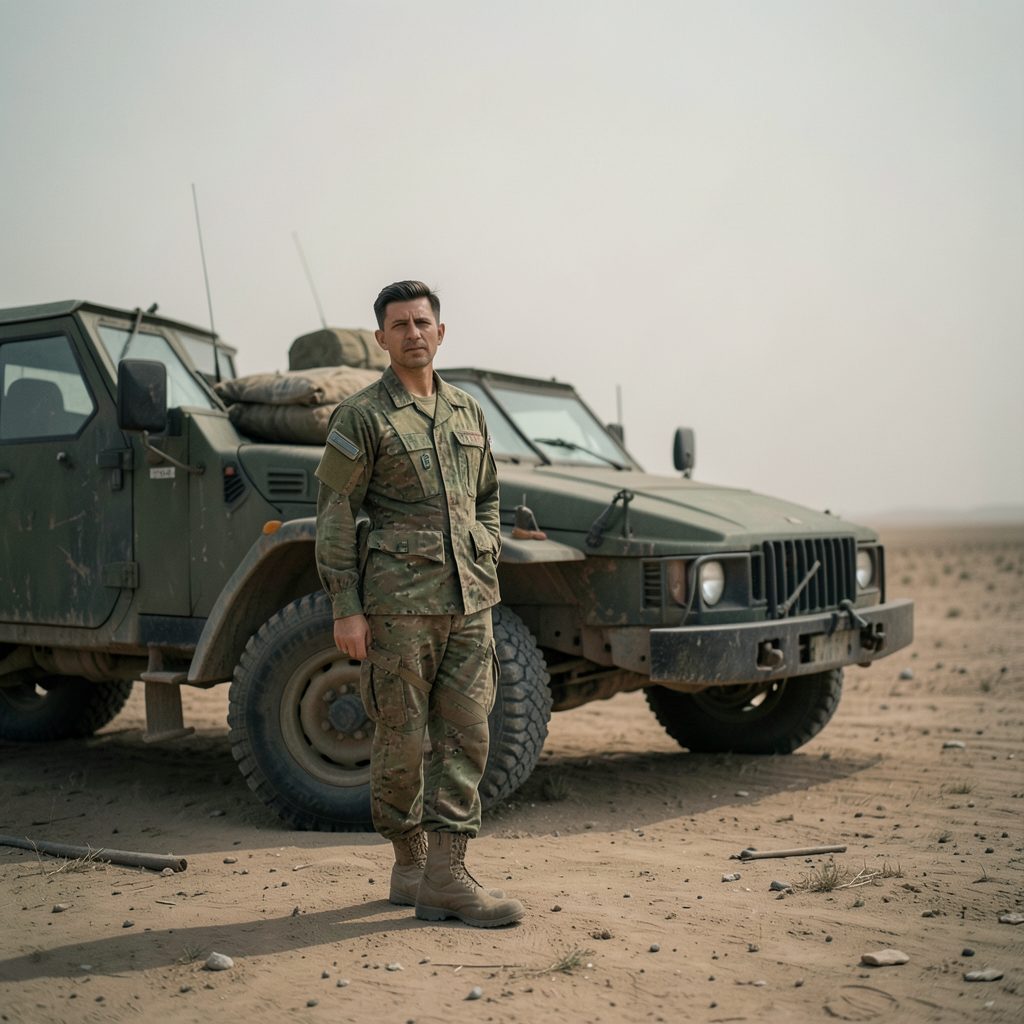
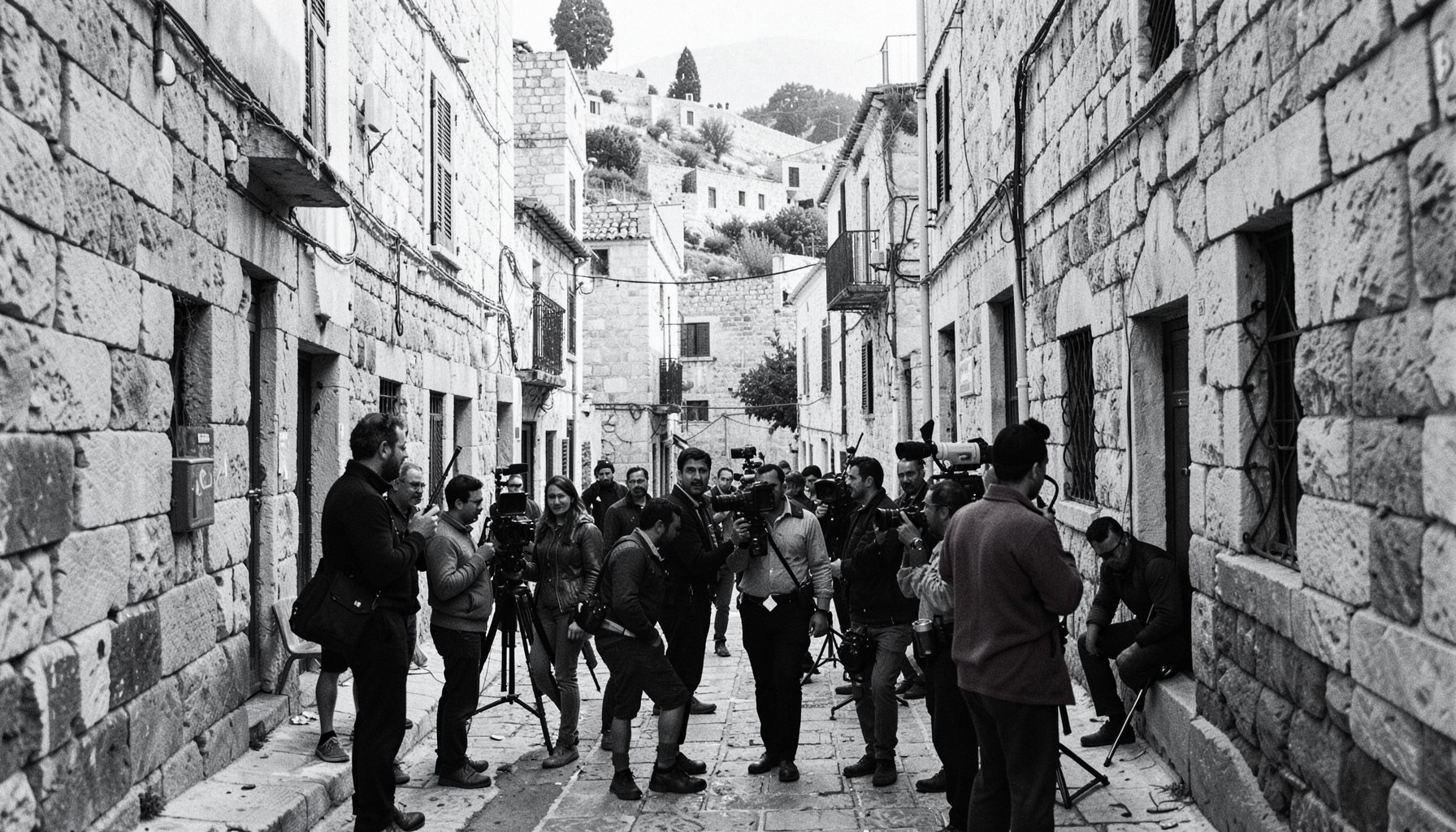
Among Shagrir's most reproduced early Davar images are those taken during military operations in the mid-1950s, including scenes from the Sinai Campaign of 1956. He travelled with reservists, ate in field tents, and filed his film through military couriers back to Tel Aviv. The pictures he brought back balanced triumph and loss, showing soldiers resting beside wrecked vehicles and commanders hunched around radio sets.
Equally important were the domestic stories that filled the paper's inside pages: agricultural fairs, university graduations, and the arrival of new immigrants at Haifa port. Shagrir's file from the early 1960s contains remarkable sequences of Ethiopian and Soviet Jewish arrivals, recorded with a dignity that matched the paper's editorial line without slipping into propaganda. A photo essay drawn from his own notebooks offers a glimpse of his working routine.
Many of these photographs were never published at full size during Shagrir's lifetime. The archive now reveals how selective editors were, and how much was filed away for future use. Researchers visiting the collection's reading room, or accessing it online from Canberra or Perth, can trace a single image from the original negative through several printed versions to the clippings file where Davar stored it.
Recurring Themes in the Davar Negatives
Several themes appear again and again in Shagrir's Davar negatives, and they help explain why the collection has retained its documentary power.
- Portraits of statesmen and trade union leaders shown in unguarded moments between speeches.
- Scenes of new immigrant arrivals at Mediterranean ports, including families in transit halls and welfare officers handing out forms.
- Ceremonies in agricultural settlements, particularly in the Lachish region, where pioneering labor was celebrated as a civic virtue.
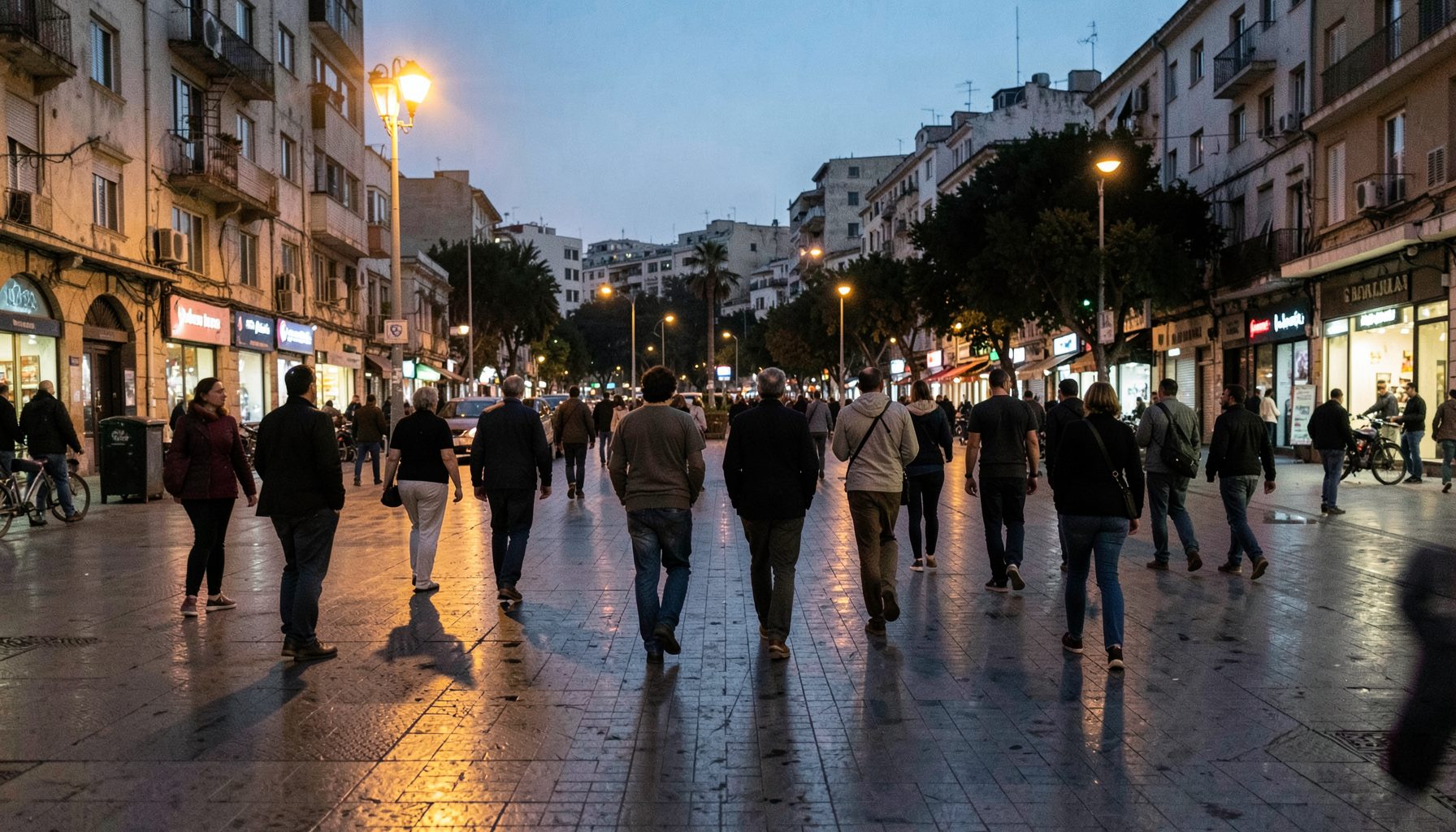
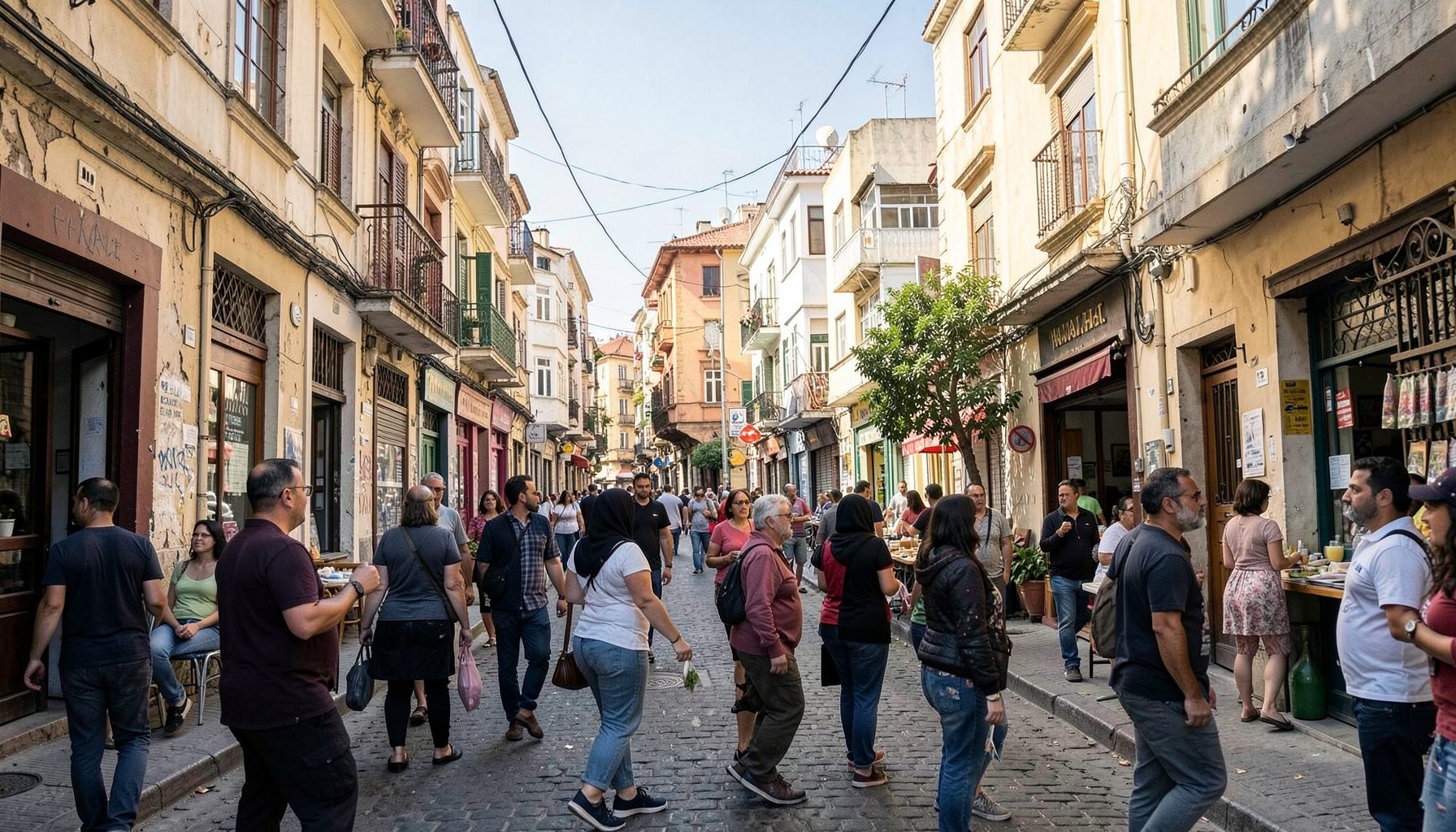
- Quiet images of Tel Aviv at street level, from cafe queues to night shifts at the central bus station.
- Coverage of military exercises and border patrols that later informed historical studies of the 1956 and 1967 periods.
Together, these themes sketch a society negotiating between socialist ideals and the pressures of a regional conflict, a tension that Australian historians have compared with the early decades of the Australian Broadcasting Corporation and the post-war nation-building debate in Canberra.
Why the Collection Matters for Researchers Today
The reasons to engage with Shagrir's Davar years extend well beyond Israeli studies. Researchers, educators, and curators continue to draw on the archive for several distinct purposes.
- Source material for monographs on the early State of Israel and on the role of the Hebrew press in shaping national identity.
- Case studies in photojournalism courses at universities in Sydney, Melbourne, and regional centres such as Wollongong.
- Reference imagery for exhibitions exploring the visual history of the 1950s Mediterranean and Middle East.
- Comparative material for studies of mid-century press photography in Australia, where the Sydney Morning Herald archive is being digitised alongside other national collections.
A later phase of Shagrir's career, when he moved into documentary film and television production, is examined in a study of his Dayan television project, which traces how the visual instincts he refined at Davar shaped his later work. The archive also preserves everyday texture: images of Tel Aviv trams, beach scenes, and children playing in courtyards that remind visitors that behind every headline about war and diplomacy were ordinary lives being recorded with care. That combination of the historic and the ordinary is what makes the collection a continuing resource for scholarship, teaching, and public memory across continents.