
Unpublished letters between Shagrir and Israeli editors
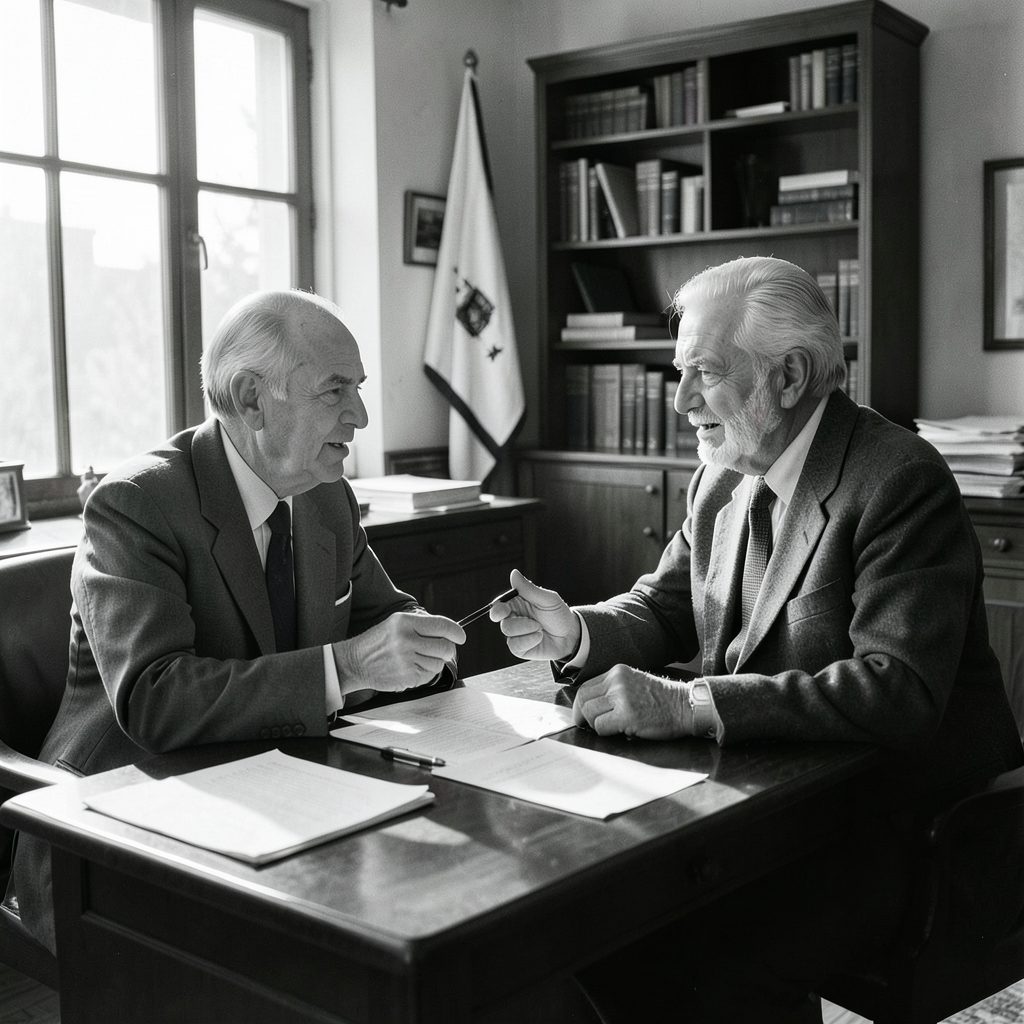
Among the Shagrir Collection’s most revealing holdings are letters that never became articles. Unpublished correspondence between Micha Shagrir and Israeli editors records the working negotiations behind journalism: an assignment taking shape, a photograph being challenged, a documentary being proposed, or a sensitive historical account being made safer for publication. These are not simply supporting documents; they are evidence of how media priorities were formed.
Read alongside the archive’s negatives, prints, films, recordings and personal papers, those letters connect working relationships to public events. They help explain why a story was pursued, how an institution wanted it framed, and where confidence, caution or conflict entered the editorial process. Their value lies in their unfinished character, preserving choices that polished newspaper pages and finished broadcasts usually conceal.
What the unpublished correspondence preserves
Shagrir’s career joined press photography, military and social history, and documentary filmmaking. The letters between him and editors occupy an especially revealing point in that sequence. Instead of presenting a finished narrative, they show journalists and editors testing evidence, questioning images and negotiating language. The subject extends beyond what happened in Israel to how people in the media decided what could be shown, said or attributed.
Unpublished should not be confused with secret. A letter may be absent from print yet fully catalogued; another may have restricted access because it names a living person or contains confidential editorial material. Catalogue descriptions, therefore, need to be read alongside the documents. Researchers must distinguish a routine exchange about a story from a personal disclosure, and an institutional position from an individual editor’s preference.
Even with those cautions, the correspondence opens several lines of inquiry. It can reveal commissioning practices, staff hierarchies and the rhythms of daily news production. It can also illuminate the editing of photographs and documentary films, where cuts and captions may carry as much argument as written words. The documentary context can be widened through additional research resources, while the letters remain the central evidence.
Editorial power and the pressure to conform
Editors hold authority over space, deadlines and publication. Their correspondence with Shagrir therefore records a relationship of unequal institutional power, even when friendship and shared political commitments were strong. An editor might request a narrower question, a firmer conclusion or the removal of a detail. Shagrir might accept, resist or answer with more supporting evidence. The resulting letters let us see professional negotiation rather than a retrospective account of consensus.
The exchanges also offer a view of the pressures surrounding Israeli reporting. National security rules, military censorship, political patronage and the interests of newspaper owners could shape what was commissioned. Those categories need careful handling: a policy cannot be inferred from one informal remark, and criticism by an editor is not proof of direct political intervention. The letters are most persuasive when read across dates, publications and other surviving records.
Australian readers encounter similar tensions between public interest and institutional control. The Commonwealth Freedom of Information Act 1982 regulates access to federal records, subject to exemptions, while state and territory laws use different frameworks. These statutes concern government holdings rather than a private editor’s correspondence, but they provide a useful civic reference point for asking who should be permitted to shape the historical record. Comparing these letters with published articles separates institutional language from the individual choices captured in private exchanges.
Reading letters beside films and photographs
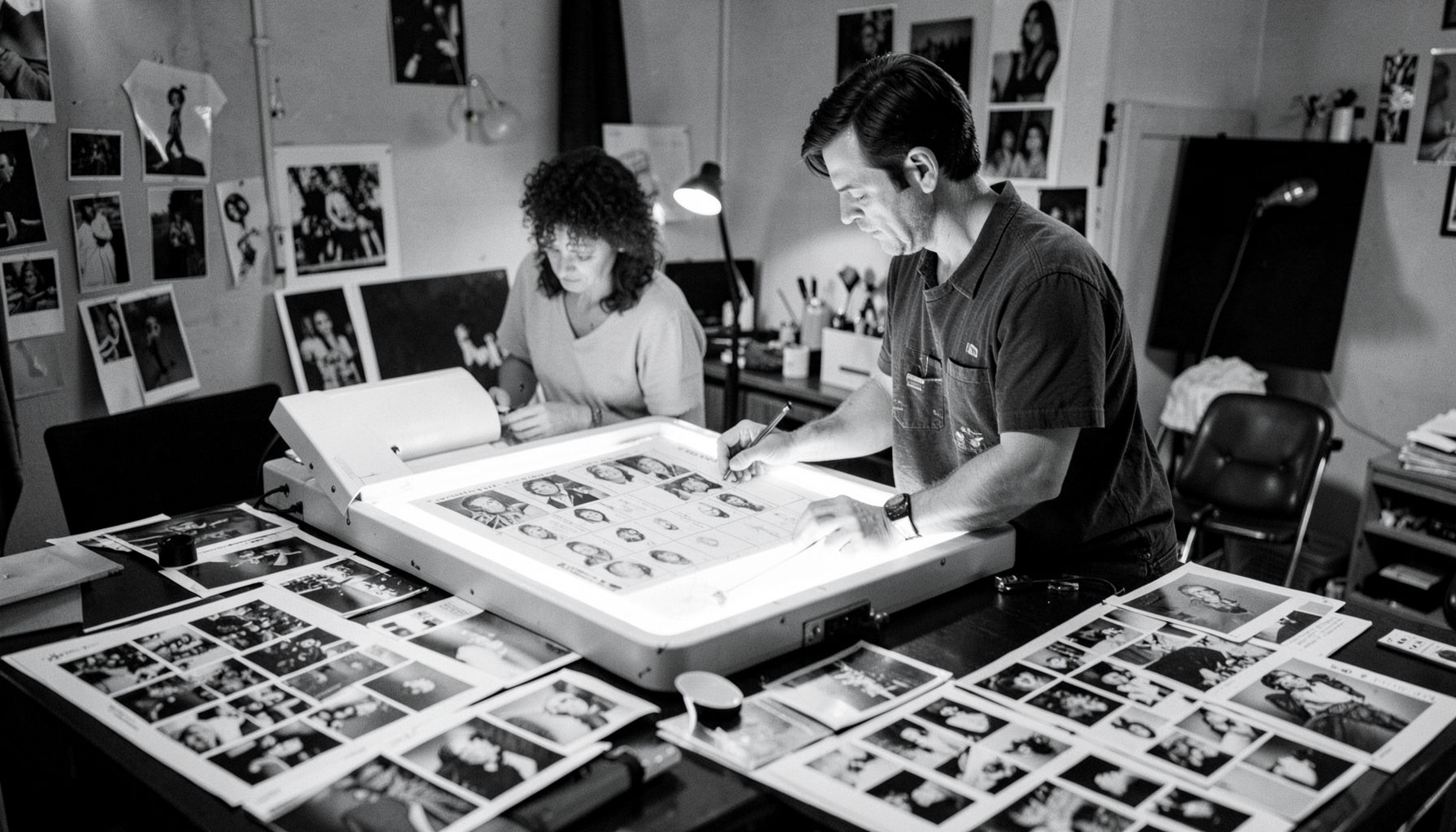
The strongest use of the correspondence is visual as well as verbal. Shagrir’s photographs and documentary films do not merely illustrate his career; they embody decisions about viewpoint, sequence and evidence. The collection’s account of Shagrir's documentary work shows how a documentary’s historical argument develops through production choices. An editor’s letter may clarify why a sequence was retained, reframed or excluded, while a personal note may record a reaction that never reached the final cut.
Researchers can place four kinds of material beside one another without treating them as interchangeable.
| Source | Main evidence | What it reveals | Principal caution |
|---|---|---|---|
| Published articles | Headlines, final text, captions and bylines | Public framing, attribution and omissions | A polished text can conceal earlier uncertainty |
| Editorial correspondence | Questions, instructions, reactions and routing | Negotiation, hierarchy and editorial intent | One letter cannot represent an entire newsroom |
| Visual and production records | Photographs, film sequences, negatives and annotations | Viewpoint, sequencing and the treatment of evidence | Display order may differ between prints, cuts and archive copies |
| Personal papers | Notes, diaries and private correspondence | Context, relationships and private judgments | Private opinions require careful separation from institutional policy |
This comparison makes disagreement visible. It also exposes the difference between an editor’s request and what a newsroom ultimately approved. No single source should carry the entire interpretation, but their discrepancies can be more informative than agreement. A photograph’s caption, a letter’s account and a film’s sequence may preserve different moments of the same historical decision.
Bringing Israeli history into Australian public culture
Australian audiences encounter archival history through familiar institutions as well as film seasons. The Sydney Film Festival and Melbourne International Film Festival provide settings where documentary makers discuss memory, borders and political change, while independent cinemas and bookshops sustain conversations beyond the largest commercial venues. A Melbourne audience may encounter the collection through a café discussion, a lunchtime screening or a volunteer-led history talk; bringing the letters into that setting makes the mechanics of journalism part of the story.
Public broadcasting offers another route. The ABC and SBS have traditions of historical documentary and substantial remembrances of their own, giving Australian viewers a ready point of comparison with Shagrir’s work across Israeli press, military and political life. In Canberra, the National Archives of Australia makes many federal records accessible through its catalogue, although digital availability varies by collection. That experience offers a practical parallel: researchers can begin with a finding aid, then move between documents, photographs and audiovisual material.
The collection’s experience of exhibiting Israeli history abroad is therefore relevant to Australian curators, teachers and community historians. The letters can add an intimate dimension to maps, captions and projected images, showing how evidence was handled before the public saw it. For overseas exhibitions, this is more than local colour; it connects an international audience to the editorial choices and institutional constraints of Israeli media.
Preservation, access and responsible reading
Unpublished correspondence requires care that belongs as much to journalism as to librarianship. A letter may expose an editor’s private opinion, identify an uncredited source or contain a personal account that was never intended for wide circulation. Descriptive metadata should alert researchers to those issues, and access decisions should distinguish an ordinary professional document from one whose disclosure could cause demonstrable harm. Respect for the dead does not mean suppressing history; it means weighing the consequences of publication.
Preservation also means retaining the physical and digital context. Envelopes, letterheads, annotations and sequence numbers can reveal routing, authorship and chronology. Scanning a letter is valuable, but a digital image should remain linked to its catalogue record and the surrounding collection. Audio and film materials need appropriate storage and migration, while photographs require stable identifiers so that a caption in one document can be checked against a print, negative or broadcast version.
For readers, the correspondence changes the scale of historical understanding. It turns a newspaper photograph from a sealed image into the outcome of a negotiation, and a documentary from a finished argument into a sequence of judgments about evidence and responsibility. The Shagrir Collection preserves that negotiation in forms that can be examined, compared and discussed in public. Its unpublished letters offer a durable way to understand Israeli editors as participants whose choices shaped the stories history retained.