
The restoration of Shagrir’s 16mm film collection
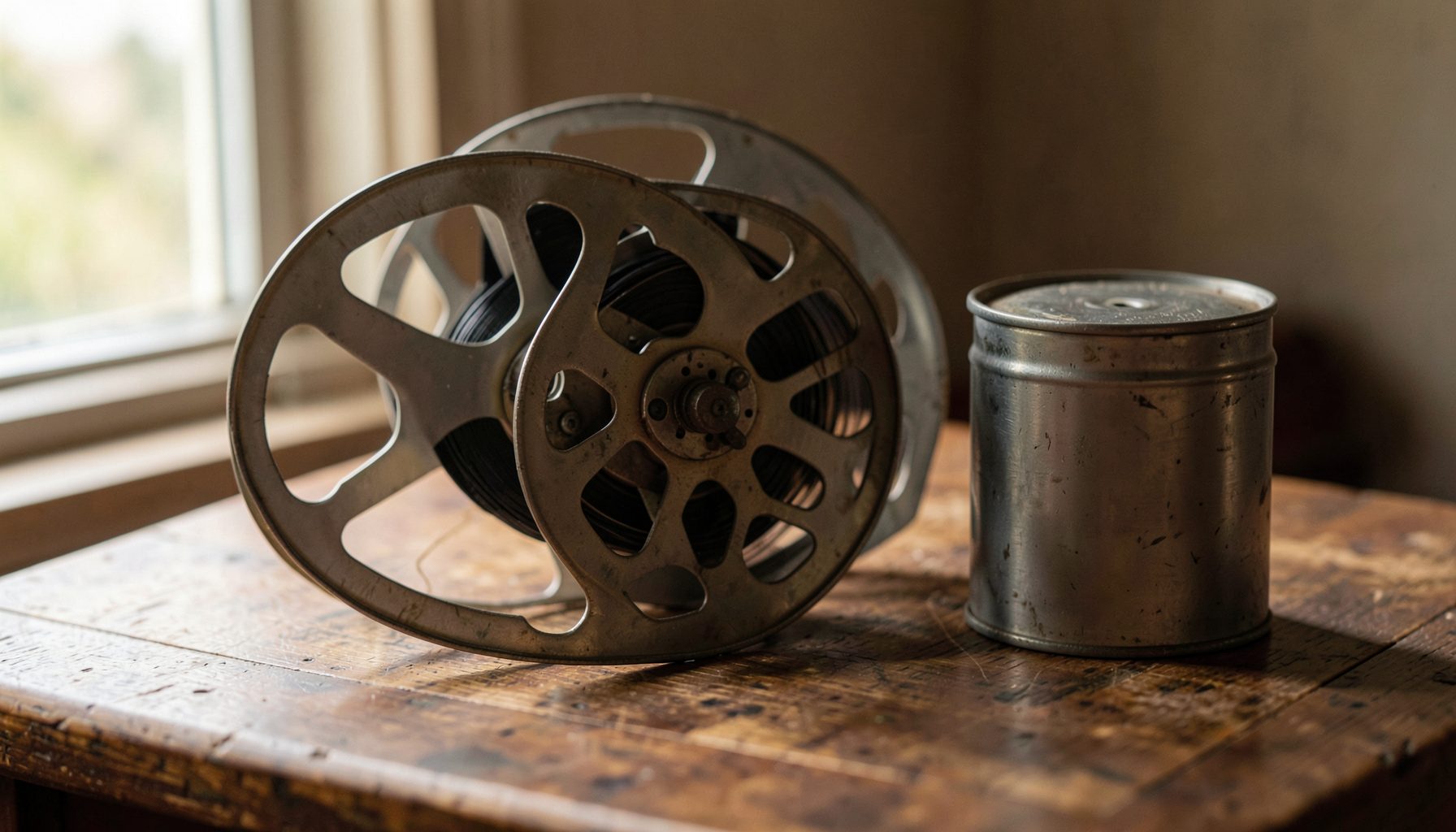
The Shagrir Collection’s restoration of its 16mm film holdings creates a moving-image counterpart to Shagrir’s negatives, prints and personal papers. The reels preserve what a still photograph can frame but not fully convey: movement, speech, ambient sound and the rhythm of a place. Their value also lies in original slates, editing decisions and the marks left by cameras, laboratories and projectors.
Preserving this material requires more than a quick scan. Chemical ageing, damaged perforations and brittle splices can make a reel unsafe to project, while harsh grading can turn historical footage into a modern-looking artefact. The restoration treats the carrier, image, soundtrack and provenance as one body of evidence. The result should support research and public viewing without erasing the grain and imperfections that place the films in their period.
| Preservation route | What it safeguards | Strongest use | Limitation |
|---|---|---|---|
| Original 16mm reel | Original emulsion, soundtrack and physical evidence | Reference, research and future copying | Fragile, slow and costly to access |
| Photochemical duplicate | A stable analog copy that can still be projected | Cinemas, teaching and laboratory work | Cannot recover information already lost |
| Archival scan | Detailed picture and sound in a durable digital form | Streaming, editing and education | Requires constant digital preservation |
| Hybrid programme | Original carrier plus managed preservation and access files | Long-term public use | Higher costs and more complex oversight |
What the restoration is trying to preserve
Film restoration has two connected purposes: stabilising the physical object so its information survives, and making that information legible for research and viewing. For Shagrir’s collection, the reels are both historical records and working media. They may contain interviews, observational sequences or documentary moments whose force depends on duration rather than one decisive frame.
Authenticity does not mean returning a reel to an imaginary pristine state. Grain, soundtrack hum, projector flutter and small splices can be part of its material history. Conservators distinguish damage that obscures content from blemishes that still show how the film travelled. Every decision is documented, so researchers can compare the preserved film with the source and understand what was repaired, retained or adjusted.
The restored object must also keep its place within a wider archive. Metadata can connect a reel to dates, locations, contributors and related photographs. The Collection’s reporting on Israel’s startup boom shows how visual evidence can illuminate a national story beyond one famous subject. Such contextual care helps users interpret lesser-seen documentary fragments without turning fragments into unsupported claims.
From inspection to careful repair
Each reel needs a condition assessment as careful as the photography. Labels, canisters, leaders, frame counts and edge markings are recorded, and the film is checked for base type, shrinkage, mould, emulsion damage and perforation stress. This stage establishes what can be handled normally and what requires a conservator; a few sample frames cannot reveal the condition of an entire reel.
Ageing acetate can develop vinegar syndrome, indicated by an acetic odour and shrinking or warping, while polyester has different needs. Scratches, torn perforations and weak splices may worsen with each projection. Treatment is minimal, documented and reversible where possible. Damaged sections may be skipped only after the loss is logged and, where feasible, checked against other sources.
Cleaning and repair use specialist methods rather than household products. Loose dirt can be removed under controlled conditions, torn edges supported with archival film tape, and broken splices rebuilt with compatible materials. If a source is too fragile for routine projection, a preservation duplicate may be made photochemically. The original remains the reference artefact even when the public copy is digital.
Capturing picture, colour and sound
Scanning converts the image but does not define the restoration by itself. Resolution should reflect the grain and detail present, while overscan captures the full aperture and frame edge. Wet-gate or dry-gate methods can reduce visible base scratches, but they cannot invent missing image area. Transfer rate, colour space, frame rate and scanning notes belong with the master so another laboratory can reproduce the workflow.
Colour decisions need restraint, especially with faded dyes and tinted stock. A historical reconstruction should be grounded in surviving colour references, laboratory records and comparative frames, not a preference for vivid images. Black-and-white film retains tonal information colour cannot restore. The preservation master should favour evidence and repeatability, while viewing copies can be adjusted for exhibition and display equipment.
Sound is transferred with the same concern for evidence. Optical or magnetic tracks are read at the correct speed, synchronised to picture and preserved with their original dynamics. Camera noise, pauses and imperfect recordings should remain when they carry meaning. A close study of photographing textures offers a useful analogy: emulsion, scratches and edges are not clutter to hide, but clues for a faithful reconstruction.
Why the 16mm reels carry historical weight
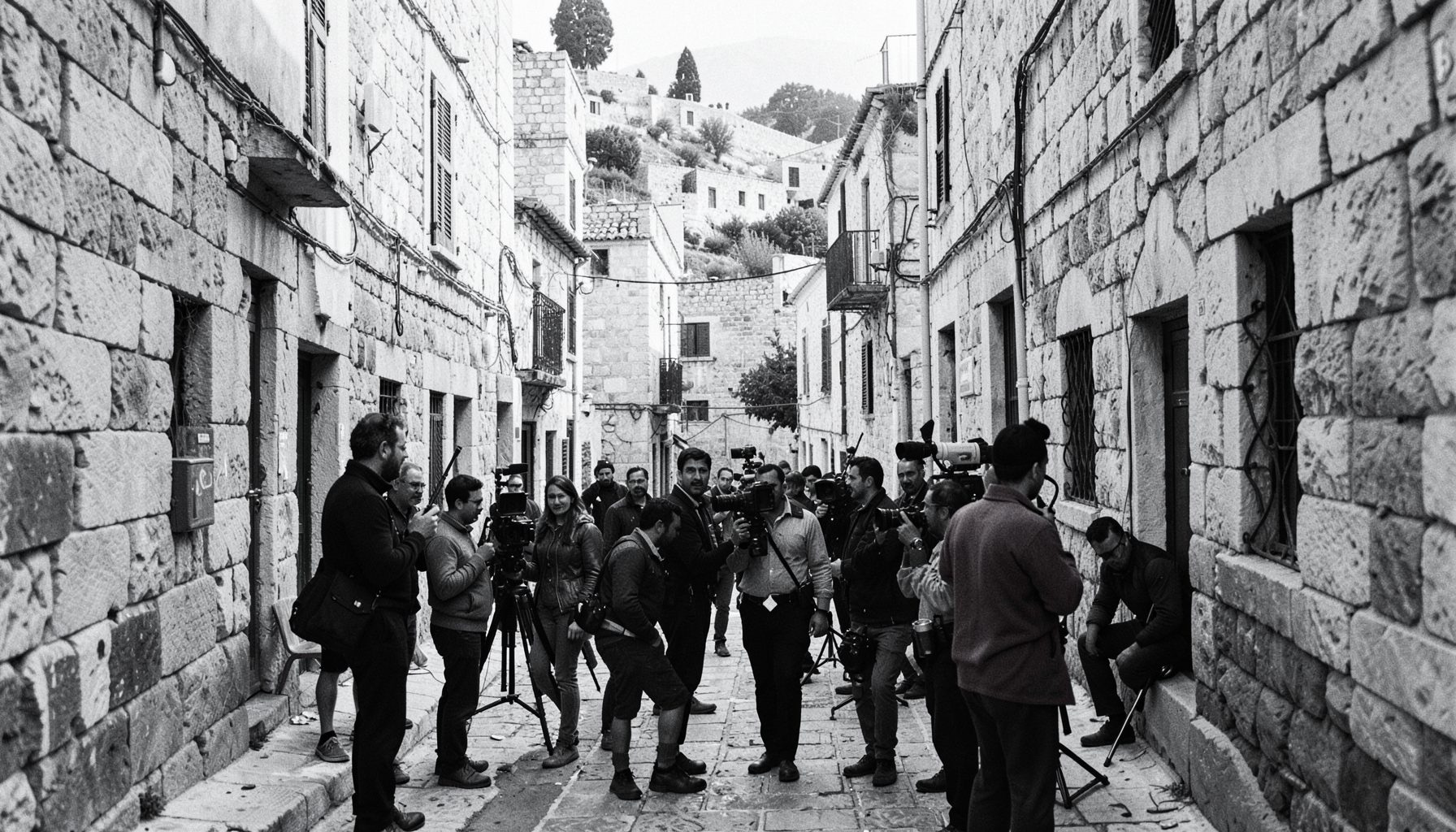
Shagrir’s films document people and places at moments when official accounts often felt remote from ordinary experience. Moving images add evidence a caption cannot: pace, hesitation, dress, architecture, crowds and the direction of attention. That makes the ethics of war photography directly relevant. Restoration should identify uncertainty, avoid sensational framing and provide context before presenting conflict footage as spectacle. The archive records encounters, and the camera’s proximity must not erase the people observed.
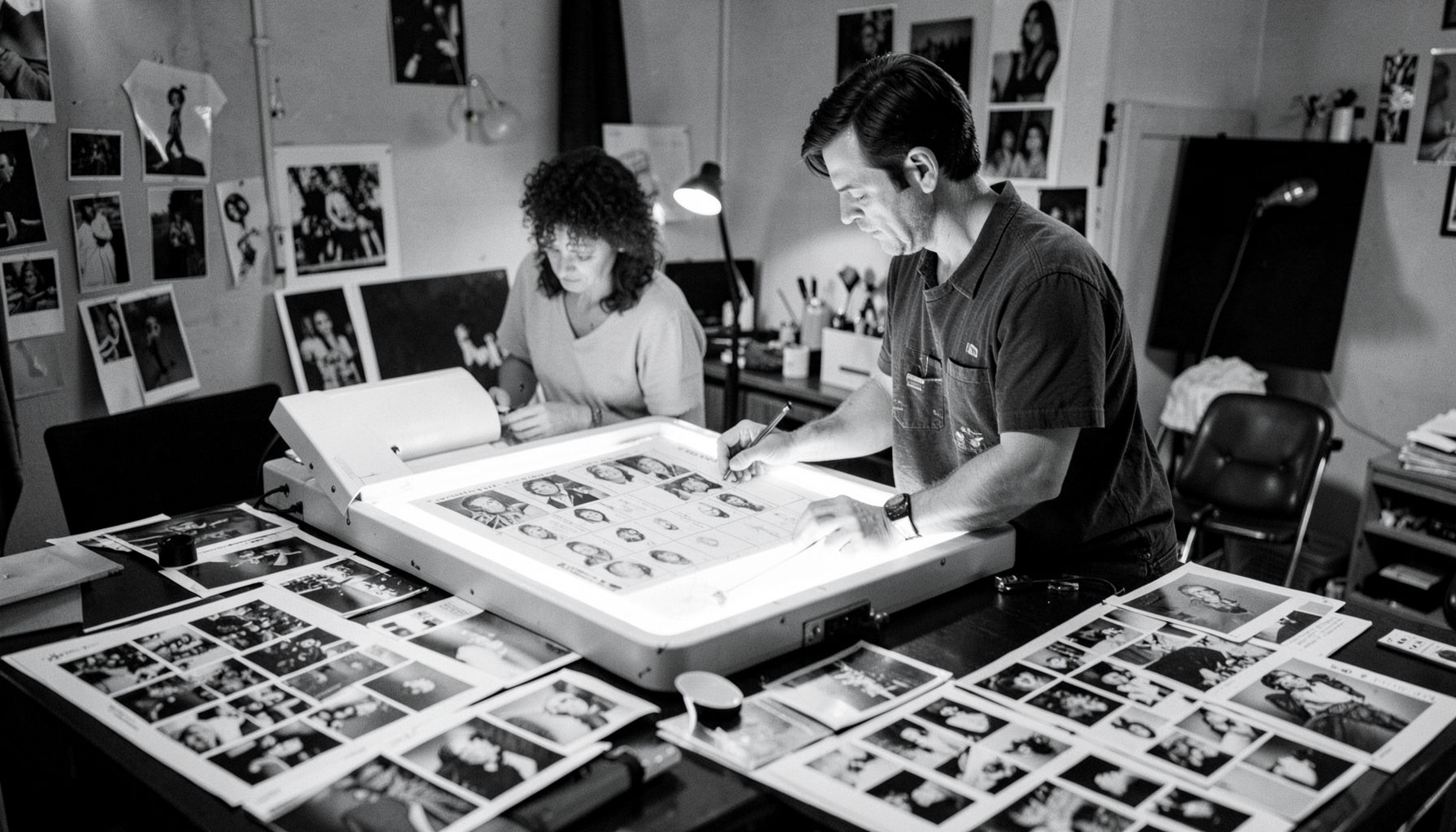
The reels sit beside prints, negatives, papers and recordings that can confirm or complicate what appears on screen. This cross-media relationship matters where dates, identities or locations differ between sources. The restoration can then serve filmmakers, historians, schools and represented families, each finding different evidence in the collection. Its significance lies in preserving relationships as much as individual shots.
What this means for Australian collections
For Australian researchers and filmmakers, the project has a clear local parallel. The National Film and Sound Archive in Canberra, ACMI in Melbourne and Melbourne-based Last Chance Film demonstrate the value of specialist facilities and public collecting. A country with distinct regional histories needs that infrastructure, yet access cannot stop at major institutional doors. Digitised 16mm material lets students in Alice Springs, Darwin, Hobart or regional campuses examine original footage without waiting for a travelling print.
Australian geography creates both challenge and opportunity. Moving reels between archives can be slow and costly, while heat, humidity, dust and bushfire smoke threaten vulnerable collections. Local studios and community archives can act as careful gateways, but transfer workflows and preservation standards must remain consistent. Keeping an authoritative digital copy in Australia reduces supply-chain risk, provided copies sit across separate sites and are regularly checked.
Australian cultural projects commonly combine public grants, institutional budgets, philanthropy, commissions and commercial laboratory services, making restoration a sustained programme rather than a one-off rescue. Local practitioners often speak plainly about a “doco”, “lab work”, “footage” and “screening”. Networks described through Australian film preservation can help practitioners compare methods, understand preservation pathways and identify suitable partners.
A practical framework for sustainable access
For the Shagrir Collection, sustainable access begins with clear priorities: retain the original carrier, create a technically sound master, prepare lighter viewing versions and keep contextual records attached to every stage. The workflow should be documented as carefully as the films. Future archivists need to know which decisions were made, what remains uncertain and which files are preservation masters rather than everyday viewing copies.
A shared standard connects physical care with online discovery and community use while leaving individual conservation decisions evidence-led. It also helps material carrying personal testimony remain usable without losing its human context.
- Keep original 16mm reels in cool, stable storage, with checks for shrinkage, perforation wear and chemical change.
- Retain lossless preservation masters with technical metadata, plus lower-resolution files for online viewing.
- Store preservation data in three geographically separate locations, including one off-site, and verify file integrity regularly.
- Publish reel descriptions, transcripts, translations where needed and rights information so films can be assessed before use.
- Connect restored material with exhibitions, classrooms, community screenings and research, while giving conflict and personal testimony careful framing.