Shagrir's unpublished manuscripts: inside the archive's hidden holdings
Deep within the Shagrir Collection sits a corpus of material that rarely makes the spotlight: the unpublished manuscripts. While reels of 16mm film and iconic press photographs have long drawn researchers, the typewritten pages, handwritten drafts, and spiral-bound notebooks quietly reshape what we know about Micha Shagrir's working life. These papers document the moments before the camera rolled, the script edits that never reached a producer's desk, and the personal reflections he preferred to keep private.
The collection brings together negatives, prints, films, sound recordings, and personal papers spanning the formative decades of Israeli media. It functions as a working archive, continuously catalogued by family members, archivists, and visiting scholars. The manuscripts represent one of its least digitised corners, and therefore one of the richest frontiers for researchers.
Unlike published articles or finished films, the unpublished writings capture a creator in mid-thought. Researchers encounter margin notes, alternative scene descriptions, and letters to colleagues that reveal the working relationships behind well-known documentaries. The texture is often rough, sometimes smudged, and always revealing.
For Australian researchers, the appeal is both professional and personal. Australia hosts a sizeable Israeli diaspora, with Melbourne and Sydney as cultural anchors. The National Film and Sound Archive in Canberra holds complementary material on regional documentary filmmaking, and academics at the University of Melbourne and the Australian National University regularly cross-reference Israeli collections. The manuscripts offer a transcontinental dialogue with Australian film historiography, particularly for those studying post-1970s documentary ethics.
The scope of the manuscript holdings
The manuscript holdings run into the hundreds of files, grouped by project and decade. Early boxes contain drafts from Shagrir's first journalistic assignments in the 1950s, while later folders hold treatment documents from the 1990s that never progressed to production. The archive's curators have begun assigning stable identifiers to each box, a slow but essential task that allows citations to follow the papers into published scholarship.
What makes the collection distinctive is its variety. One box might hold a handwritten log of camera equipment; another might contain a typed memoir addressed to his grandchildren. There are drafts of feature-length screenplays, outlines for television segments, interview transcripts, and personal correspondence in Hebrew and English. No single researcher can claim to have seen the whole archive.
Some manuscripts arrived in disorganised bundles donated by colleagues who had simply stored Shagrir's papers in their offices. Others came from his Tel Aviv study, complete with sticky notes and coffee rings. Archivists have had to reconstruct the original order, a process that often reveals unexpected connections between projects.
Types of documents and their condition
The papers fall into three categories. Production drafts include script revisions and editing notes. Journalistic material covers interview notes and background research. Personal writings contain diaries, travel reflections, and family correspondence. Each category presents conservation challenges, given the range of paper types and inks used over four decades.
Condition varies widely. Some documents from the 1960s remain crisp, while others show significant foxing, ink bleed, or tape damage. Australian conservators, including specialists at the NFSA, point out that even in climate-controlled environments, papers from the Mediterranean region often carry residual salt and humidity that accelerate decay. The Shagrir Collection has begun deacidification treatments and rehousing in archival folders to slow further deterioration.
Not all materials are paper. A handful of manuscripts arrive on floppy disks and early digital formats, requiring emulation software. There are also audio cassettes paired with typed transcripts, where the manuscript preserves the spoken text and the cassette preserves the voice. The archive treats these hybrid items as a single record, a practice borrowed from Australian and international audiovisual standards.
Research access and academic collaboration
Access follows a familiar archival model. Researchers submit a request outlining their topic, agree to handling guidelines, and work in a supervised reading room. Manuscripts cannot leave the archive, but high-resolution scans can be ordered for a modest fee. The collection welcomes postgraduate students, independent journalists, and family historians who book ahead and respect the fragility of the material.
For early-career researchers, the decision to pursue an archival project can be daunting. Anyone weighing the practical realities of stepping away from paid work to chase a passion project will find a key question worth sitting with before booking a flight. The archive's staff can often suggest funding avenues or short-term residencies that soften the financial impact.
Academic partnerships have grown. Israeli institutions, including Hebrew University and Tel Aviv University, have hosted joint seminars using the manuscripts. In Australia, scholars from the University of Sydney and Monash University have drawn on the collection for comparative studies of documentary ethics, occasionally co-publishing with Israeli counterparts.
International visitors are encouraged to combine reading-room time with conversations over a long arvo coffee, as local custom dictates. The archive keeps a register of current visitors and their topics, helping staff connect newcomers with researchers working on overlapping material.
Connection to Shagrir's filmed work
The manuscripts do not stand apart from the films. They are the scaffolding on which each documentary was built. Reading a shooting script alongside the final cut reveals editorial decisions: what was filmed but never used, what was cut for length, what survived because a participant insisted.
Production diaries document the logistical reality behind well-known footage, recording weather, lighting, and the moods of interviewees. Comparing manuscript drafts to Shagrir's later published memoir exposes the careful self-editing of a public figure, showing a writer as deliberate with prose as he was with a camera lens.
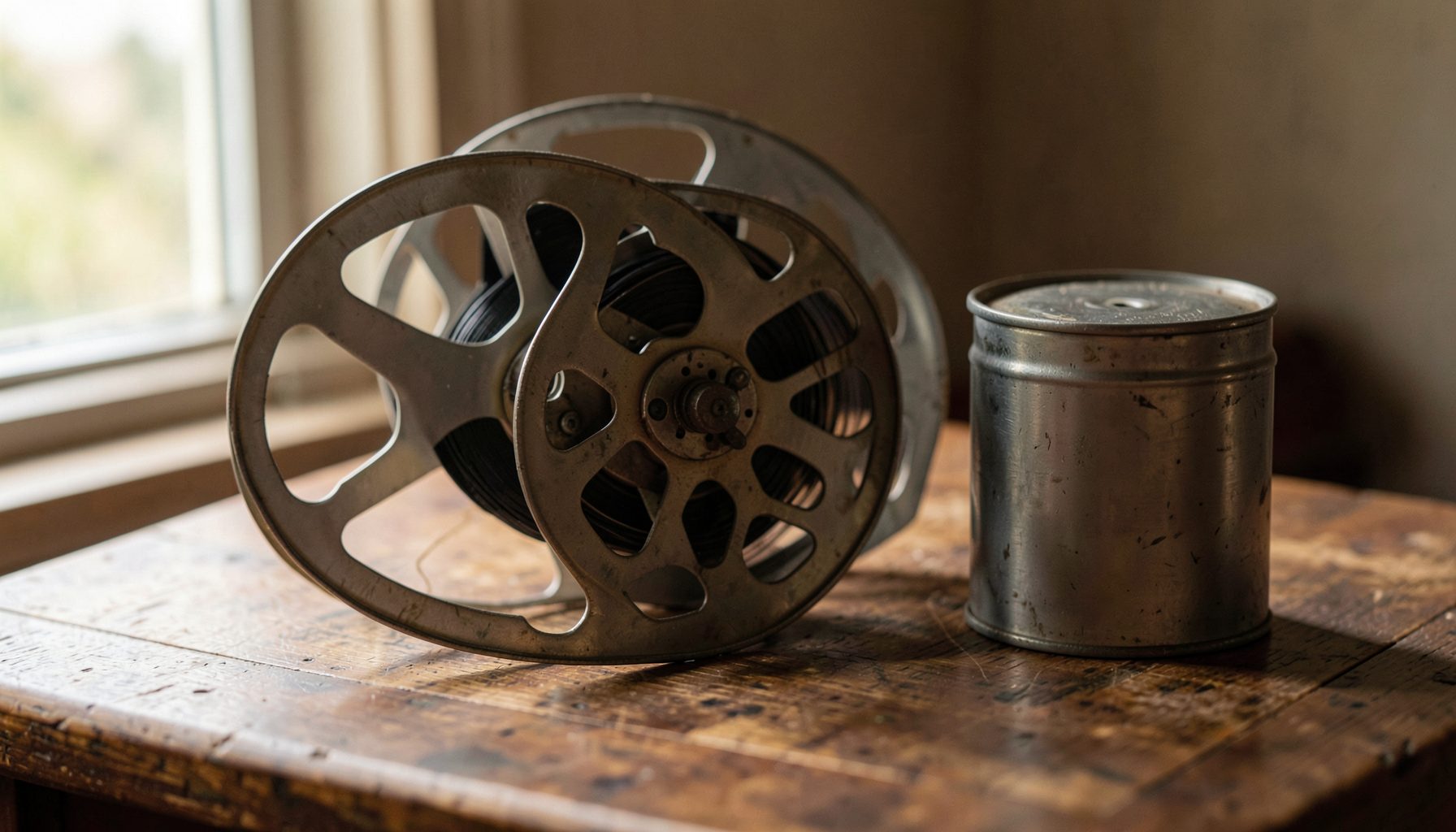
The technical history of the collection is itself documented in the manuscripts, and researchers can trace Shagrir's evolving equipment lists. The archive has published a detailed account of its efforts at preserving Shagrir's 16mm negatives, a process that parallels the conservation work being done on the manuscripts themselves. Both require patience, calibrated humidity, and a willingness to accept that perfect preservation is rarely possible.
Preservation and digital imaging
Digitisation is the archive's most visible preservation strategy. Manuscripts are scanned at 600 dpi in colour, with metadata captured at the item level. Files are stored in redundant systems following international standards for archival imaging. Born-digital materials receive equivalent treatment, with checksums logged to detect bit rot.
The cost is significant, and the archive relies on grants, donations, and a small endowment. Australian readers familiar with regional gallery constraints will recognise the pattern: steady work, lumpy funding cycles, and a permanent backlog. Even so, the archive has digitised a meaningful share of the most-requested manuscripts, and the rate is slowly increasing.
For those looking to understand how small cultural organisations scale their operations, the lean operations playbook offers a useful counterpoint. Principles around audience development and digital infrastructure translate surprisingly well from tech startups to independent archives. The Shagrir Collection has drawn on similar thinking to streamline its metadata workflows.
Preservation is also about people. The archive runs a volunteer programme that trains participants in basic handling, and several volunteers have moved on to work in libraries and museums across Israel and Australia, taking their training into institutions that handle comparable material.
Exhibitions and public programs
Manuscripts occasionally appear in exhibitions, paired with film stills and audio clips. A recent display at the Shagrir family home in Tel Aviv included a page from an unused screenplay, shown alongside the camera used during the shoot. The combination gave visitors a sense of the creative process.
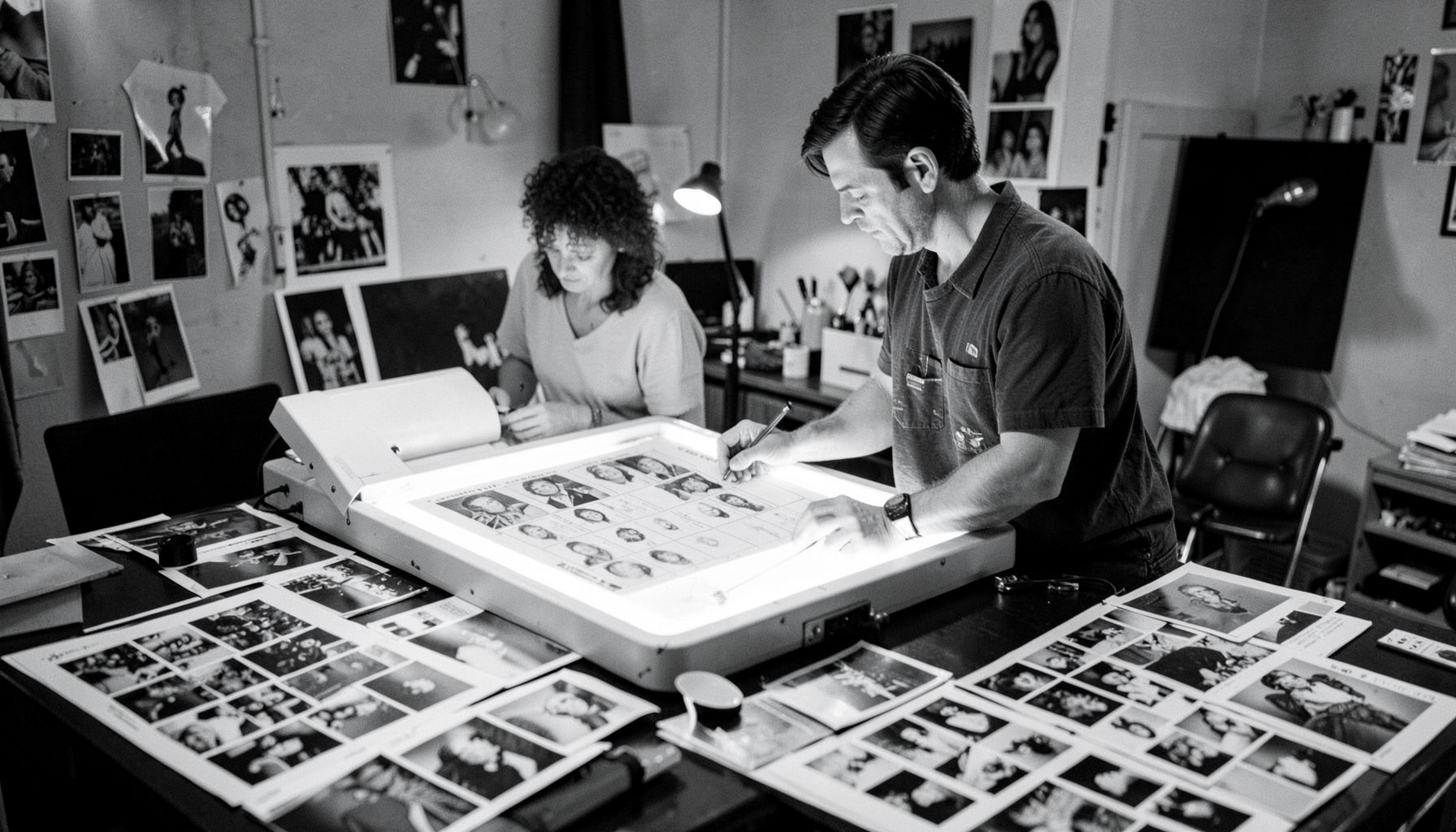
The archive maintains a photo gallery that documents exhibitions, conservation work, and day-to-day operations. The gallery is updated regularly and serves as a window for supporters who cannot visit in person, a function that has grown since virtual tours began.
For Australian audiences, distance is a real barrier. Flights to Israel take the better part of a day. The archive has experimented with travelling exhibitions, including a small display at the Sydney Jewish Museum in 2023 featuring facsimile manuscripts and a screening of related documentary excerpts. The pilot was well received, and further partnerships are being explored.
Future programming includes a planned workshop on archival Hebrew typewriting, aimed at helping researchers read mid-century drafts. It will be livestreamed, allowing participants in Adelaide, Perth, and Hobart to join without leaving their desks. The archive describes this outreach as central to its mission: ensuring the manuscripts do not remain the private property of a handful of specialists but become part of a wider conversation about Israeli history and documentary practice.