Shagrir’s visual record of the 1982 Lebanon War
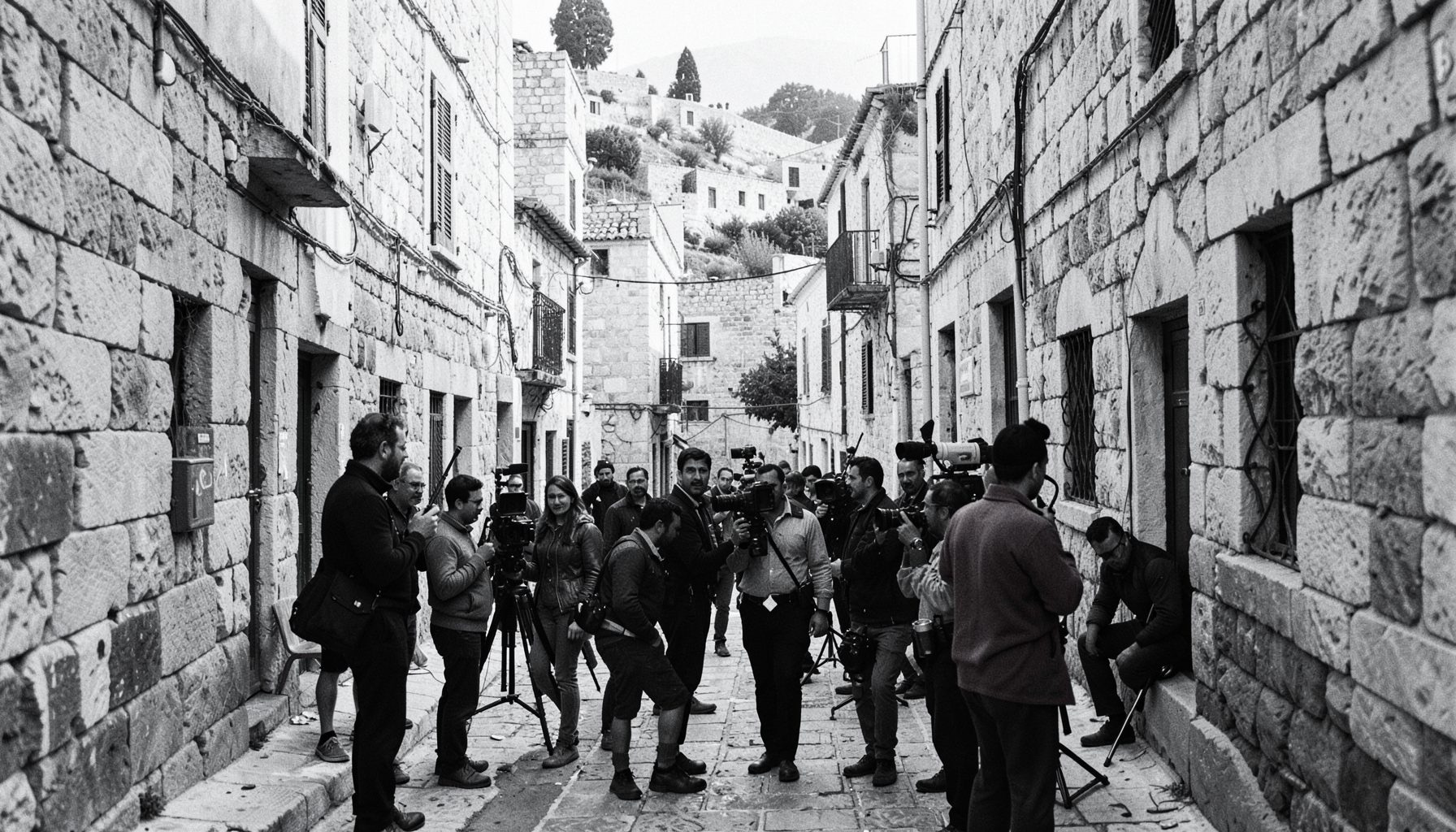
The 1982 Lebanon War remains one of the most visually consequential conflicts in Israeli history. Photographs of soldiers, displaced families, armoured columns and city streets shape later memories, yet a single frame can conceal chronology, editorial choice and civilian experience. Micha Shagrir’s archive offers a way to move beyond the circulated image and examine the material process of documentation.
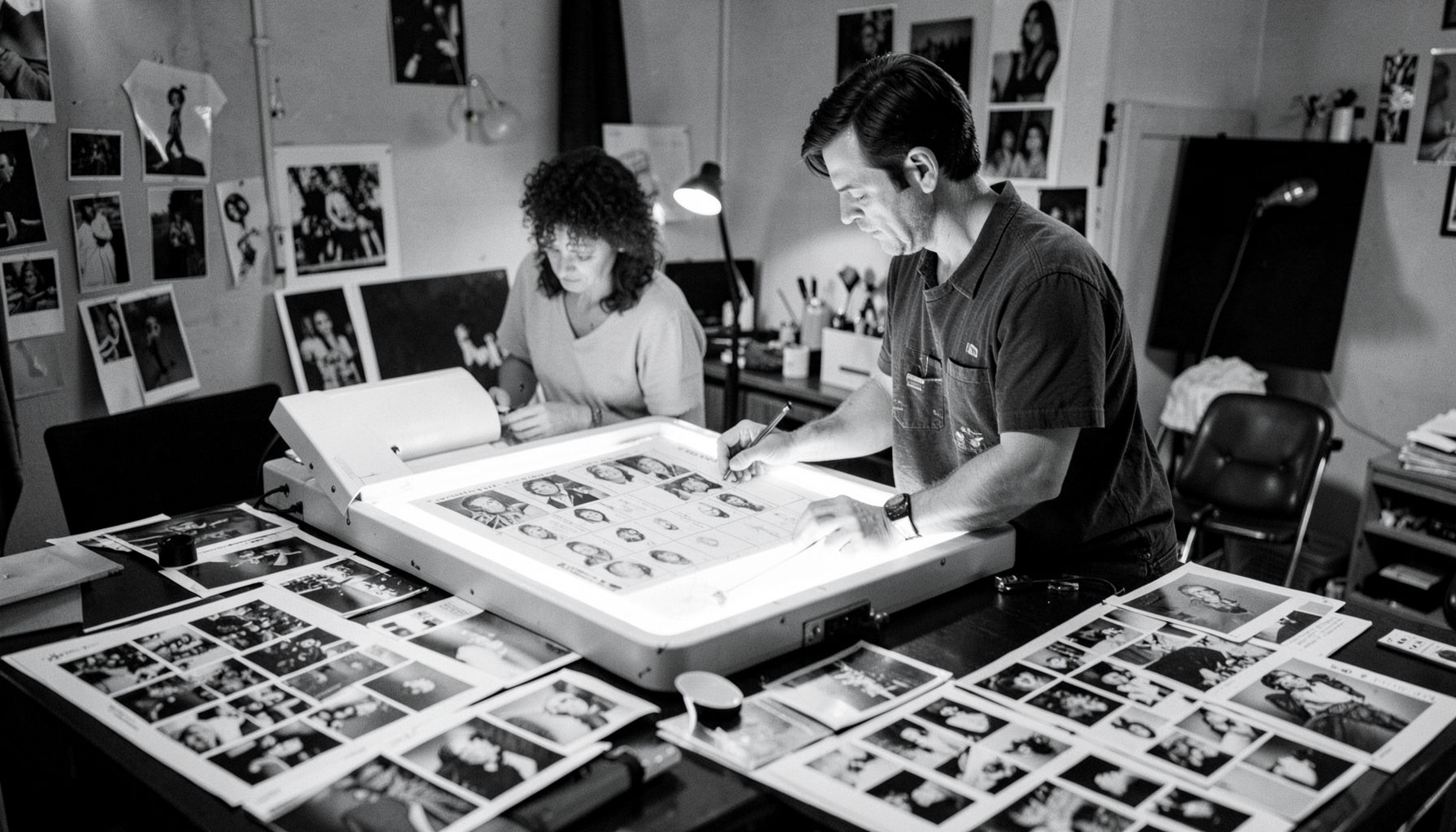
Across his career as a photographer, filmmaker, producer and journalist, Shagrir produced visual and recorded accounts of Israeli public life. The Shagrir Collection preserves negatives, prints, films, recordings and personal papers connected with political, military and social history. These holdings matter because they place finished images beside traces of selection, including working notes, assignment records and contact sheets where preserved.
Shagrir’s documentation of the 1982 Lebanon War should therefore be read as a body of evidence, not as a substitute for military or diplomatic history. It can show what was seen, photographed, edited and retained, while leaving other viewpoints outside the frame. Its value lies in making those boundaries visible and allowing researchers to test a caption against the object behind it.
For Australian readers, the collection has a familiar point of entry through institutions in Canberra. The Australian War Memorial and the National Film and Sound Archive of Australia both hold or interpret records connected with international conflict, while the Australian War Memorial’s exhibitions make visual evidence especially accessible to the public. The Shagrir material expands that local frame by placing the Lebanese campaign within Israeli media culture.
Historical context and working methods
Israel launched Operation Litani, also called Operation Peace for Galilee, on 6 June 1982, aiming to drive the Palestine Liberation Organization from southern Lebanon and establish a zone under Israeli control. The campaign developed into the occupation of much of Lebanon, fighting around Beirut and the wider War of the Camps. Any visual account must distinguish the initial southern operation from later phases rather than treating 1982 as one undifferentiated scene.
Shagrir’s earlier work provides a useful bridge to this changing environment. A related essay on Shagrir’s 1977 images follows political upheaval in Israel and the role of the press, establishing a longer concern with public crisis, institutional power and image-making. Read alongside 1982 material, that context shows how photographers and filmmakers repeatedly negotiated official access, competing narratives and the need to protect sources.
Photographs as primary evidence
Photographs become primary sources through physical detail as much as depicted event. The grain, framing, edges and tonal range of a print may distinguish it from a later reproduction; a negative may reveal cropping, sequencing or retouching absent from the published version. Researchers should retain item numbers, original captions, dates, place names and credit lines rather than relying on a screen image alone.
Interpretation also requires separating observation from inference. A vehicle carrying soldiers, a crowd near Beirut or a damaged building may invite conclusions that the photograph cannot prove. Shagrir’s archive is strongest when each image is treated as one position within a network of military briefings, newspaper reports, broadcasts, diaries and oral testimony. Corroboration is especially important where danger, censorship or restricted access shaped what could be recorded.
Media systems and layers of record
Image circulation in 1982 depended on a mixed media system of military censors, newspaper desks, wire services and television crews. Shagrir’s role as filmmaker and journalist places his personal archive alongside this production chain. The wider holdings of the Shagrir Collection allow a researcher to move between individual pictures, documentary work and personal papers without treating them as isolated artefacts.
The evidence can be compared across several connected layers, each answering different questions while carrying its own limitations.
| Evidence layer | Questions it can answer | Limits to remember |
|---|---|---|
| Negatives and prints | What was photographed, and how was it cropped, sequenced or retouched? | Physical or editorial changes may alter the published meaning |
| Film and recordings | What did people say, and how did movement and sound reconstruct an event? | Broadcast copies may contain cuts, dubbing or missing sections |
| Personal papers | What were the assignment conditions, source relationships and immediate concerns? | Notes may be selective, private or written after the event |
| Published reports | Which official version reached the public, and how was it illustrated? | Editorial selection and source restrictions shaped the final account |
Used together, these layers resist a simple distinction between official truth and private truth. A caption may reproduce an army account; a personal note may reveal uncertainty; a broadcast may preserve a moment edited for broadcast. The archive gains authority from the tensions among these records when their production and custody are documented.
Australian collections and audiences
Canberra offers the most direct institutional comparison. The Australian War Memorial combines military history with public display, while the National Film and Sound Archive of Australia demonstrates how film, sound and oral history can be catalogued, digitised and made searchable. Researchers can use those models when assessing how Shagrir’s negatives, motion-picture material and recordings acquire context through metadata.
Australian audiences encounter conflict imagery across public-service broadcasters such as ABC and SBS, commercial free-to-air television, subscription streaming and digital news publishers. That mixed market affects rebroadcast rights, discoverability and the speed at which old footage is recirculated. Australian commentary may call the conflict the Lebanon campaign, while Israeli records may use Operation Litani or Operation Peace for Galilee, making variant search terms essential.
Distance matters outside Sydney and Melbourne. State and community repositories in cities such as Melbourne and Sydney may hold newspapers, community testimony or copies of broadcasts, while interstate travel to major collections can be expensive. Online catalogues, high-resolution files and reproduction orders are therefore practical research tools for an Australian audience spread across the country.
Preservation, access and ethical interpretation
Preservation is part of the story. Cellulose negatives, photographic paper, magnetic tape and film can deteriorate under humidity, heat and handling, while digital surrogates face format and storage risks. The Shagrir archive’s combination of objects and online access illustrates a dual responsibility: stabilise the original item and connect it to metadata, rights information and stable identifiers that allow a citation to remain meaningful over time.
Ethical interpretation is equally important. Images of casualties, displacement and occupied communities demand precise place names, dates and descriptions, as well as awareness of how photographs may have been cropped for propaganda or news. For additional perspective on the presentation of personal visual archives, Deepali Gupta offers a useful online point of reference when considering how collections are discovered and discussed beyond their original institutions.
A practical research pathway
A sound workflow begins with the Shagrir Collection catalogue and moves outward to military, diplomatic and media sources. Researchers should note when a sequence, caption or date is uncertain and distinguish the archive’s object from a later scan. Access questions about identifiers, reproduction permissions or contextual information can be addressed through the archive contact page.
- Start with the item-level catalogue entry and preserve its exact identifier in every research note.
- Compare a digital surrogate with the corresponding negative, print or contact sheet where available.
- Cross-check dates, locations and military terminology against official records and contemporary broadcasts.
- Read captions as historical statements that may reflect an editor’s, officer’s or censor’s language.
- Separate observation, eyewitness testimony and later interpretation in notes and publications.
- Record reuse conditions, including photographer or estate credit, before publication or exhibition.
Used this way, the collection becomes more than a sequence of memorable pictures. It becomes a documented route into the decisions, experiences and contested meanings of the 1982 Lebanon War, with each surviving object carrying both visual evidence and a history of its own.