
Restoring Micha Shagrir’s magnetic audio tapes: a case study
Magnetic sound recordings associated with filmmaker, producer and journalist Micha Shagrir are both fragile objects and primary sources. A reel may preserve an interview, field report or broadcast that anchors a photograph, film or personal paper elsewhere in the archive. Its value rests in both playability and the circumstances of its production, recording and transmission.
The case study follows a low-intervention route from identification through preservation transfer and public access. Every decision becomes part of the evidence: what can be learned before handling, what can be repaired without altering the recording, and what must remain documented rather than silently corrected.
Why magnetic sound records need a patient response
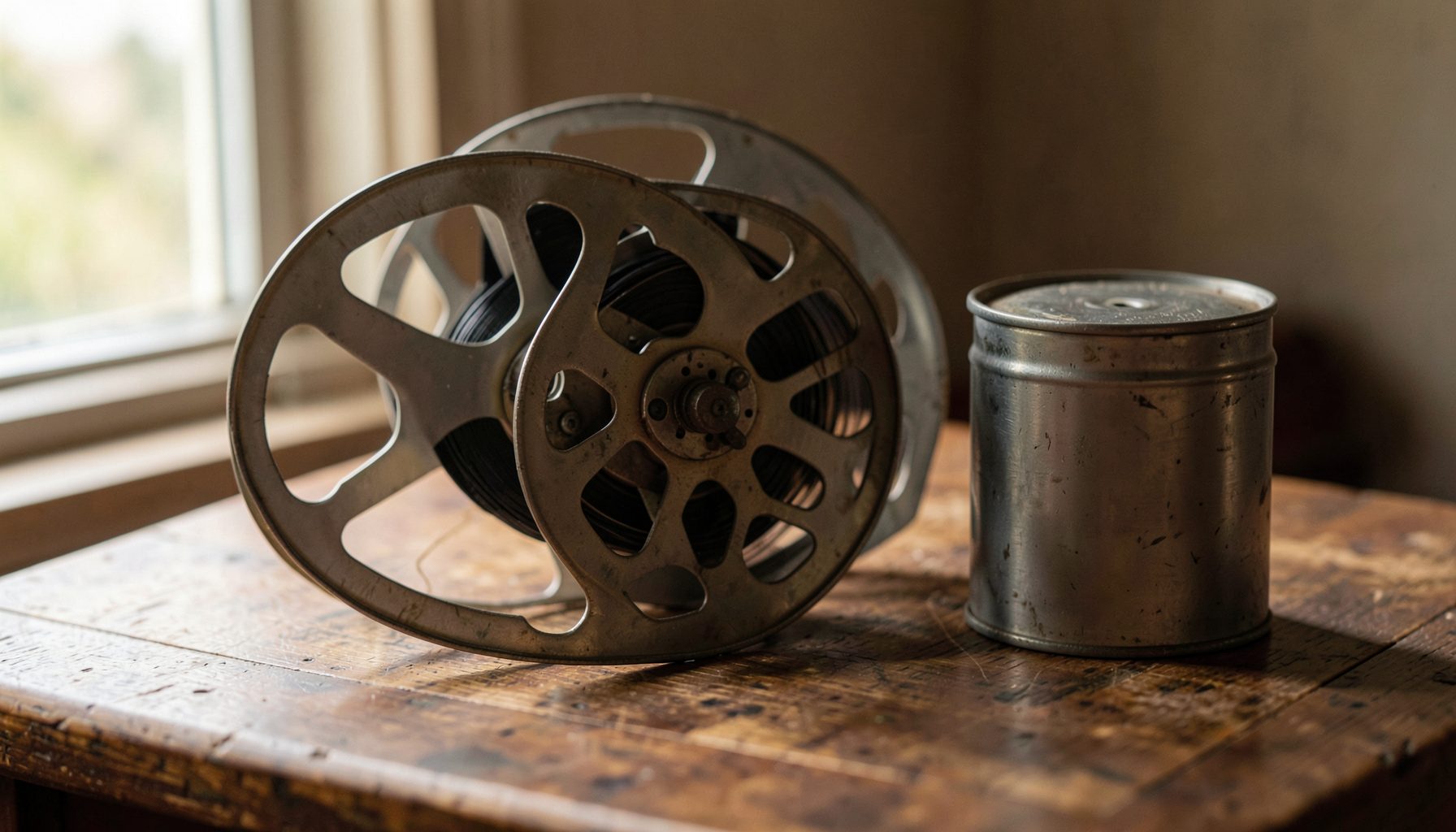
Every tape carries two histories: the event it records and the material history of its carrier. Labels fade, leaders disappear, and boxes may be reused, making cataloguing part of conservation rather than an administrative preliminary. Before playback, staff reconcile reel numbers, dates, names and locations across photographs, papers and production records.
Researchers can consult the Shagrir Collection archive to trace those relationships and determine whether a reel is a master, broadcast derivative or working copy. That distinction shapes treatment priorities. A master receives the most cautious handling, while a reference copy may still provide evidence even when it cannot be played. Unusable media can also document past storage, editing and transmission practices.
Reconstructing the recording’s story
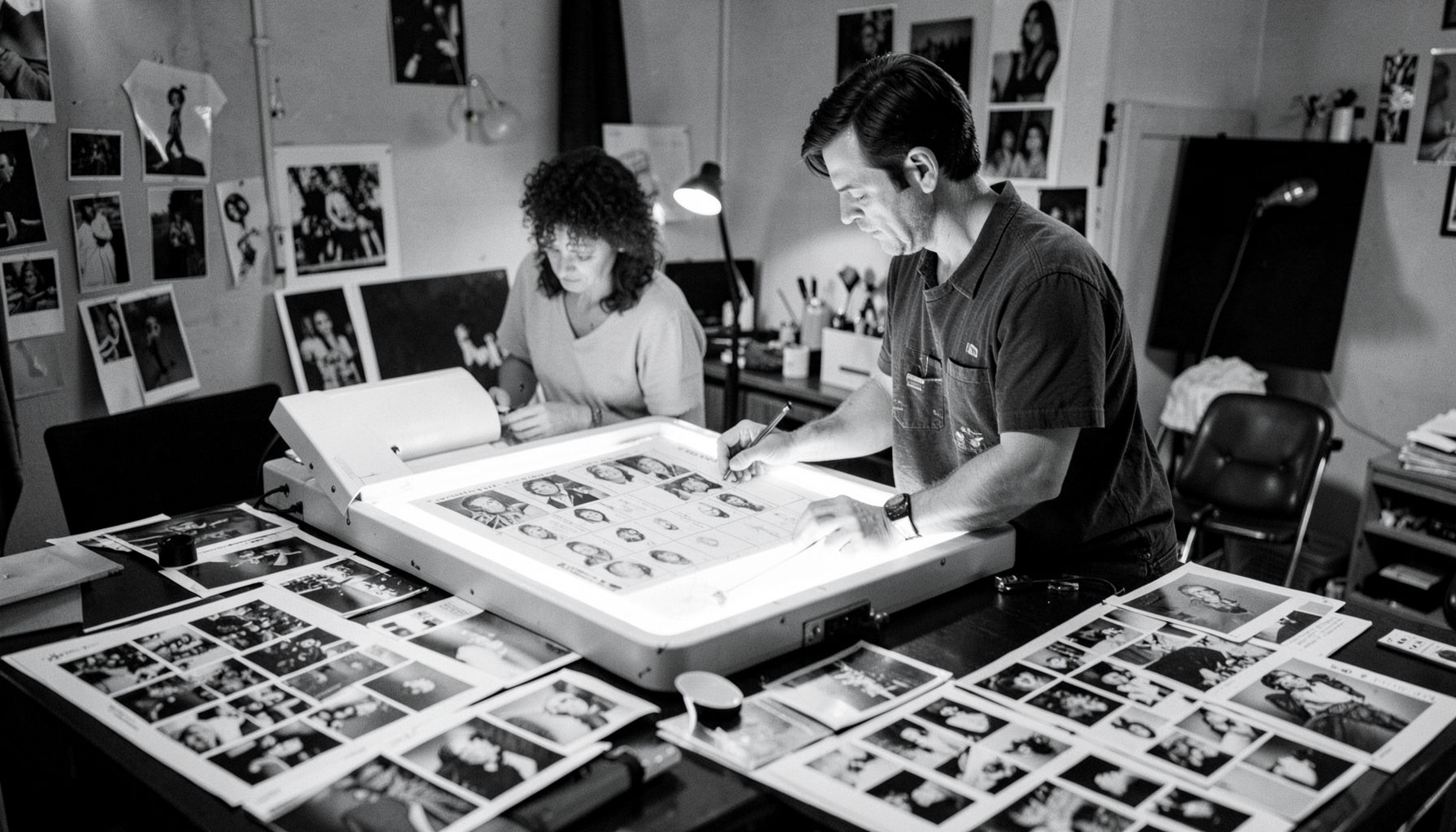
Provenance research should capture who supplied the tape, when it entered the collection, its original title or working name, and every known copy or broadcast. Uncertain details need to remain visibly uncertain. An accession record can record several possible identifications, supported by photographs, interview notes, broadcast schedules and handwritten labels, without replacing ambiguity with a confident guess.
Historical comparison can narrow those possibilities. The archive’s 1973 oil crisis coverage demonstrates how a subject can be reconstructed across dates, locations and participants. For an audio reel, researchers can compare that chronology with production schedules, weather conditions and Shagrir’s assignments, reducing the risk of attaching a plausible but incorrect caption.
Assessing fragile tape and ageing equipment
Condition assessment begins outside the machine. Conservators inspect the shell, hubs, leader and wound tape under raking light, looking for shedding particles, sticky patches, tears, mould, warping and previous splicing. Severely damaged reels are not test-played. Cleaning, treatment or duplication requires a conservator or specialist laboratory because one careless pass can transfer debris to a good head or permanently lose an audible passage.
Australian conditions make stable storage especially important. The National Film and Sound Archive of Australia in Canberra provides a useful national reference point, while Melbourne’s variable humidity, Sydney’s bushfire smoke, Brisbane’s coastal moisture and Perth’s heat and dust each affect enclosures differently. A cool, low-humidity environment with limited pollutant exposure is more useful than a rigid universal set point.
The local market also shapes practical work. Sydney and Melbourne have active markets in used professional audio, while regional buyers often source equipment from interstate dealers or overseas. Prices are quoted in Australian dollars and normally include GST; overseas purchases can attract GST, duty, freight and clearance charges, so import costs belong in the conservation budget. Compatible specialist decks may cost more than the tape’s commercial replacement value because the purpose is historical transfer.
Restoring, transferring, and preserving the signal
The treatment plan should distinguish recovery from beautification. A source capture represents the tape as faithfully as possible; software repair follows only when a defect is audible and the intervention can be explained.
| Tape condition or research issue | Preferred conservation response | Restoration decision |
|---|---|---|
| Dry, stable and audible | Clean with approved methods and inspect the playback path | Capture a calibrated source before processing |
| Sticky binder without shedding | Quarantine and seek a specialist assessment | Controlled thermal treatment may be appropriate |
| Shedding oxide or loose particles | Stop routine reel-to-reel handling | Treat as high risk and duplicate only under specialist controls |
| Torn, jammed or badly deformed tape | Do not force the reel or rewind under tension | Stabilise, reconstruct or retain as a non-playable object |
| Missing or unreliable identification | Photograph, transcribe and compare catalogues | Document the uncertainty instead of assigning a guessed title |
Sticky-binder tapes may be candidates for controlled thermal treatment, but heat is not a universal cure and should never be attempted without assessment. Demagnetisation is a separate procedure used only where appropriate. Transfers should use a compatible reel-to-reel machine with calibrated head alignment, speed, level and monitoring, supported by test tapes and technical notes. An unprocessed capture should be retained beside any restored version.
The preservation package can include Broadcast Wave audio at 24-bit/96 kHz where justified, a lighter access copy, checksum values, photographs, a condition report and a complete equipment log. Restoration software may remove clicks, hum or narrowband interference, yet aggressive noise reduction can erase room tone, breath and the texture of an era. Managed, geographically separate copies protect both the files and the original reels.
Documenting decisions and widening access
Restoration is credible only when another specialist can repeat the reasoning. Metadata should tie every file to a unique reel identifier and record operators, dates, equipment, calibration references, interventions and software versions. Checksums confirm that copies have not changed silently, while an audit trail distinguishes original source noise from added processing.
Public access brings its own duties. Voices recorded in private, military or politically sensitive settings may carry privacy, security, copyright or cultural restrictions even when the carrier has been preserved. Australian institutions also apply privacy principles and, where First Nations material is involved, community protocols rather than treating every recording as unrestricted content. Researchers, teachers and exhibitors can contact the collection to discuss transcription, permissions, duplication and educational use.
A practical workflow for Australian archives
Australian archives can extend this model through collaboration with collectors, broadcasters and community organisations. For field documentation, a reliable mirrorless camera review can help teams compare bodies suited to controlled copy stands and colour-accurate record shots, although lighting, scales and colour charts matter more than the camera badge. Australian contributors travelling overseas can use local SIM cards for affordable destination connectivity and predictable data allowances, reducing dependence on expensive international roaming while logs and photographs are uploaded.
Within the laboratory, the sequence is:
- Assign a unique reel identifier, then photograph the box, shell, label and both tape faces before disassembly.
- Record dimensions, format, tape type, suspected speed, winding direction, damage and every visible repair.
- Obtain a baseline source capture only when the carrier and playback path are stable enough to handle safely.
- Retain both the unprocessed transfer and a separately labelled restoration derivative with a documented processing history.
- Generate checksums, preservation files, access copies and a condition report before returning the reel to protected storage.
For fieldwork and travel, use a parallel sequence:
- Pack only durable cases and use conditioned, nonmagnetic supports that prevent pressure on hubs and tape edges.
- Keep equipment and carriers away from heat, moisture, food and tools that can scratch or shed particles.
- Maintain encrypted working copies and an offline backup before leaving a venue or crossing a border.
- Record upload times, file names and any edits made on a phone, laptop or portable drive.
- Reconcile field notes and photographs with the catalogue record after returning to the laboratory.
This approach leaves future researchers with more than playable audio. It preserves the physical tape, the context needed to interpret it and an auditable trail from sound to digital file. For a collection shaped by Shagrir’s documentary work, that combination turns a fragile carrier into a durable research and public-history resource.