
Restoring the Magnetic Tape: Micha Shagrir's Audio Legacy
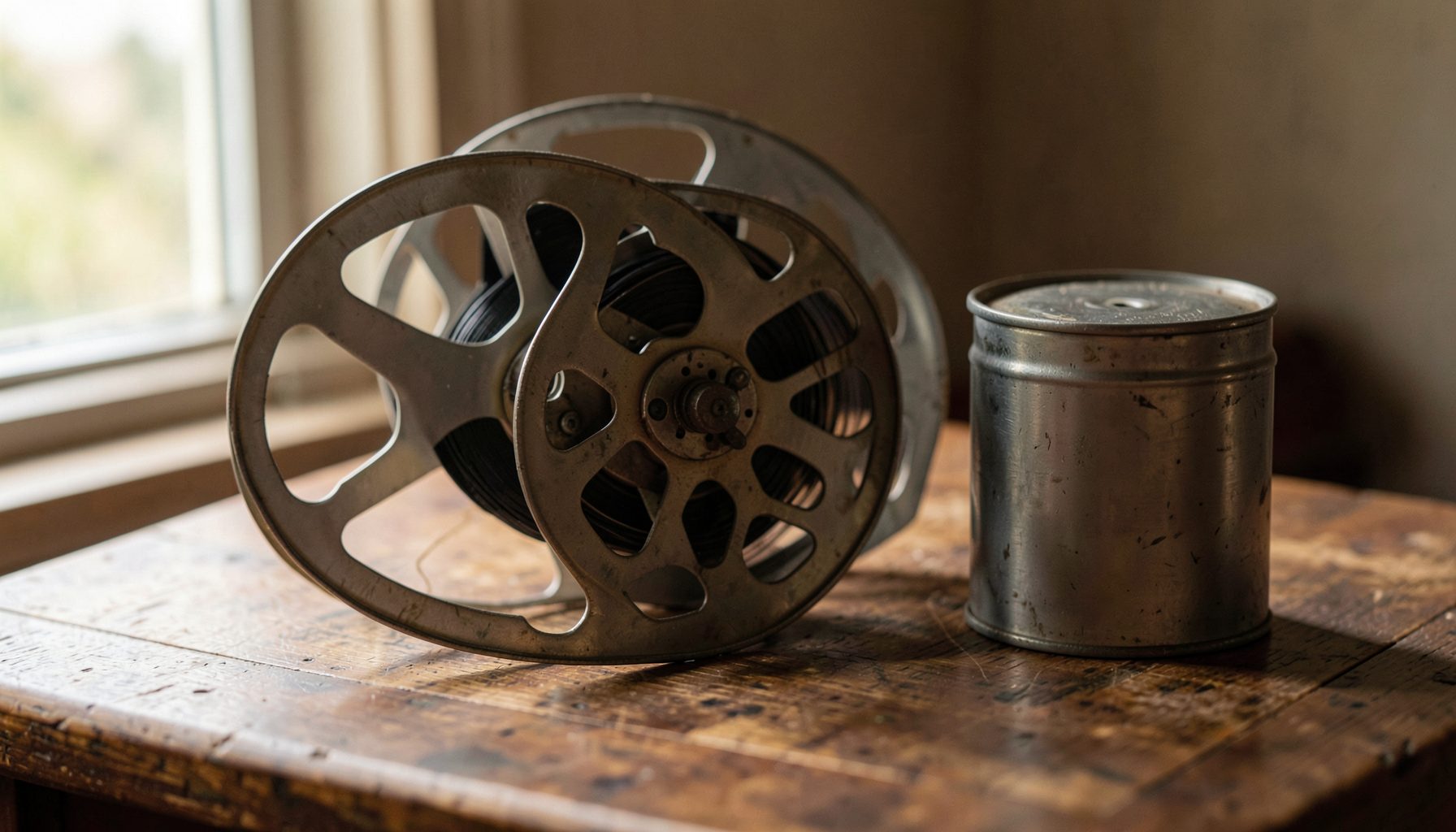
For decades, the hum of a Studer or a Nagra tape machine was the heartbeat of broadcast journalism. Today, those same machines sit in cold-storage rooms across the world, and the tapes they recorded are slowly falling apart. The Shagrir Collection holds hours of magnetic tape captured by the late Israeli journalist and filmmaker during his coverage of wars, immigrant absorption, and political upheaval, and each reel now faces the same fate as countless others in archives from Canberra to Tel Aviv.
Reel-to-reel recordings occupy a strange place in the history of sound. They predate the compact cassette in professional use, dominated radio and television newsrooms for roughly thirty years, and were eventually overtaken by digital formats that promised permanence. Magnetic tape, however, is anything but permanent. The binders that hold oxide particles to the polyester backing break down, the rubber components of the tape path deteriorate, and the recordings themselves become unplayable without careful intervention.
Preserving Shagrir's audio archive is therefore not merely an act of nostalgia. It is a technical and ethical responsibility, and one that requires specialised equipment, trained hands, and a substantial budget. Researchers in Australia and abroad are watching similar projects with great interest, because the lessons learned here will shape how other twentieth-century broadcast collections survive the next fifty years.
The Magnetic Tape Crisis Facing Archives Worldwide
Around the world, estimates suggest that more than half of all analogue magnetic tape recorded before 1990 is at serious risk. The culprits are well known to audio engineers: sticky-shed syndrome, where the binder absorbs moisture and becomes gummy; oxide shedding, where the magnetic coating literally falls off the backing; and physical deformation caused by poor storage, with edges curling and layers sticking together. Shagrir's tapes, recorded across Israel and the occupied territories from the late 1960s onwards, are not immune to any of these problems.
A typical reel in the collection might contain a rough-cut interview with a government minister, ambient sound recorded in a refugee camp, or wild audio captured during a military convoy. The same physical tape, however, can hold the only known record of a particular event. Once oxide loss begins, no software in the world can reconstruct the missing signal. The window for capture closes quietly, and often without warning.
| Common Tape Issue | Likely Cause | First-Line Restoration Step |
|---|---|---|
| Sticky-shed syndrome | Hydrolysis of polyurethane binder | Low-temperature baking (around 54°C) for 8–12 hours |
| Oxide shedding | Binder failure, ageing acetate base | Gentle cleaning, then single-pass playback on calibrated heads |
| Print-through | Layer-to-layer magnetic transfer | Re-orientation before playback, software de-bleed |
| Edge curl or warping | High humidity, improper winding | Controlled re-humidification and slow rewind |
| Dropouts during playback | Surface contamination, head wear | Wet cleaning of tape, head demagnetisation |
Decoding Shagrir's Reel-to-Reel Collection
Not all reel-to-reel tape is created equal, and the Shagrir Collection reflects the full alphabet soup of mid-century recording standards. Some reels are quarter-inch mono at 7.5 inches per second, the workhorse format for radio journalism. Others are half-inch stereo at 15 ips, used for higher-quality documentary production. A few reels even appear to be quarter-inch tape recorded at unusual speeds, suggesting field recordings captured on portable German or Swiss machines that ran slower to save battery life.
Equalisation curves add another layer of complexity. NAB, IEC, and AES standards each demand a different amount of bass and treble boost during playback, and getting the curve wrong can make a voice sound thin, boomy, or oddly muffled. Restorers must therefore identify each tape's likely origin, sometimes by listening for characteristic hum patterns, sometimes by recognising the labels of European or American tape manufacturers printed on the box.
A related challenge is azimuth alignment, the angle at which the playback head crosses the tape. A misaligned head can strip away high frequencies and make speech almost unintelligible. Skilled operators therefore adjust each machine before every session, often using a reference tape and an oscilloscope to confirm that the head is sitting perfectly perpendicular to the tape path.
From Baking to Bytes: The Restoration Workflow
The workflow used to save a deteriorating reel begins long before any software is loaded. First, the tape is visually inspected under raking light to look for shedding, wrinkles, or signs of mould. A sample leader is often spliced onto the supply reel so that sticky portions can be played past without damaging the machine's heads. Only then is the reel mounted on a machine fitted with new pressure pads, fresh idler tyres, and freshly cleaned guides.
When sticky-shed is detected, the tape is gently baked in a laboratory oven, typically for several hours at a carefully controlled temperature. This temporarily restores the binder's flexibility, allowing the tape to be played back cleanly within a short window. The audio is captured in real time to a high-resolution digital recorder, usually at 96 kHz and 24 bits, with a backup recorded simultaneously to a second drive. Digitisation is a one-shot opportunity, and there is rarely a second chance if something goes wrong.
After capture, audio engineers work in software such as iZotope RX, Cedar, or Steinberg's WaveLab to remove clicks, hum, and broadband noise. Careful de-essing and spectral repair can rescue moments that would otherwise be lost, but the philosophy guiding the project is conservative. Where the original signal is unclear, the restorer tries to leave it unclear rather than fabricate detail. As one Australian audio engineer working on a similar collection in Melbourne put it during a recent conference, "you fix the tape, not the history."
Australian Connections and the National Film and Sound Archive
Australia's own heritage institutions have wrestled with these problems for years. The National Film and Sound Archive of Australia, based in Canberra's Acton peninsula, holds more than three million items, including reel-to-reel recordings that mirror the Shagrir collection in many ways. NFSA technicians were among the first to develop public protocols for treating sticky-shed syndrome, and their findings have been published in international preservation journals. Australian broadcast archives, including those at ABC Radio and SBS, have also contributed practical knowledge about handling tapes recorded under field conditions in hot, humid climates.
SBS Radio, in particular, has long carried stories from immigrant communities, and its Arabic-language programming once shared broadcast corridors with Israeli outlets covering similar diasporic stories. The technical crossover is therefore closer than it might appear. An archivist in Sydney's inner west who volunteers with the Shagrir project notes that a reel of Palestinian voices recorded in the early 1970s resonates with material held by SBS's heritage unit, and that comparing the two collections helps researchers understand how different national broadcasters treated the same subjects.
There are also economic dimensions worth noting. Australian sound preservation projects have benefited from a national framework that combines federal funding, state library support, and private philanthropy. This blended model offers one possible roadmap for a project of this scale, and it is worth examining how the collection's supporters are mobilising similar partnerships in Israel and abroad.
Helping the Archive Move Forward
Anyone with the right skills and equipment can contribute to this kind of work, but the barriers to entry are real. Specialised tape machines cost thousands of dollars, calibration tools are scarce, and the training pipeline for analogue audio engineers has thinned since the 1990s. Partnerships with universities, media schools, and existing heritage institutions therefore matter enormously. The team behind the Shagrir project is actively seeking volunteers, donations of working equipment, and technical advice from experienced restorers, and you can get in touch with the team if you have relevant background.
Researchers interested in the broader historical context will find the essay on Ethiopian immigrant absorption photographs a useful companion, since it traces how Shagrir's visual and audio work reinforced one another. For those curious about how military journalism operated in comparable conflict zones, the history of the 504th MP Battalion convoy offers a useful comparison, particularly regarding how journalists embedded with armed units produced raw material that later required careful restoration.
Practical Priorities for the Restoration Programme
- Acquire a second calibrated Studer A810 or PR99 machine to reduce the risk of a single point of failure during digitisation sessions.
- Establish a controlled cold-storage room, ideally at 12°C and 30 percent relative humidity, to slow further deterioration of unrestored reels.
- Build a public-facing listening platform so that restored material can reach educators, family historians, and diaspora communities without legal barriers.
- Document every transfer in a standardised metadata schema compatible with the Australian APPX and international IASA guidelines.
- Train a new generation of analogue audio engineers through apprenticeships with established restorers in Australia, Europe, and North America.
Indicators That a Tape Needs Immediate Attention
- Visible white or brown powder on the tape surface or on the machine's heads after playback.
- A sticky or tacky feel when a small section is touched between clean fingertips.
- Pronounced squealing or drag during fast-wind, often accompanied by a pungent chemical smell.
- Severe dropouts, level changes, or unexpected distortion that were not present in earlier playbacks.
- Visible mould, edge damage, or signs of prior water exposure on the reel or its storage container.