
Shagrir and the early colour experiments
The Shagrir Collection preserves the papers, photographs, films and recordings of Micha Shagrir, whose career crossed Israeli journalism, documentary production and photography. Its holdings place his early experiments with colour photography in the 1960s as part of a working archive rather than isolated curiosities.
Colour was entering Israeli media unevenly. Expensive slide film, slow processing and uncertain newspaper reproduction made it a risky documentary medium, while television and tourism photography were making colour more visible. A photographer’s decision to use it could signal a change in subject, audience and institutional trust.
For Australian readers, “colour”, “lab” and “negative” carry familiar practical meanings, while used cameras pass through specialist dealers, fairs and online marketplaces in Australian dollars. The comparison separates what was radical in the 1960s from what now looks familiar.
A new language within Shagrir's documentary work
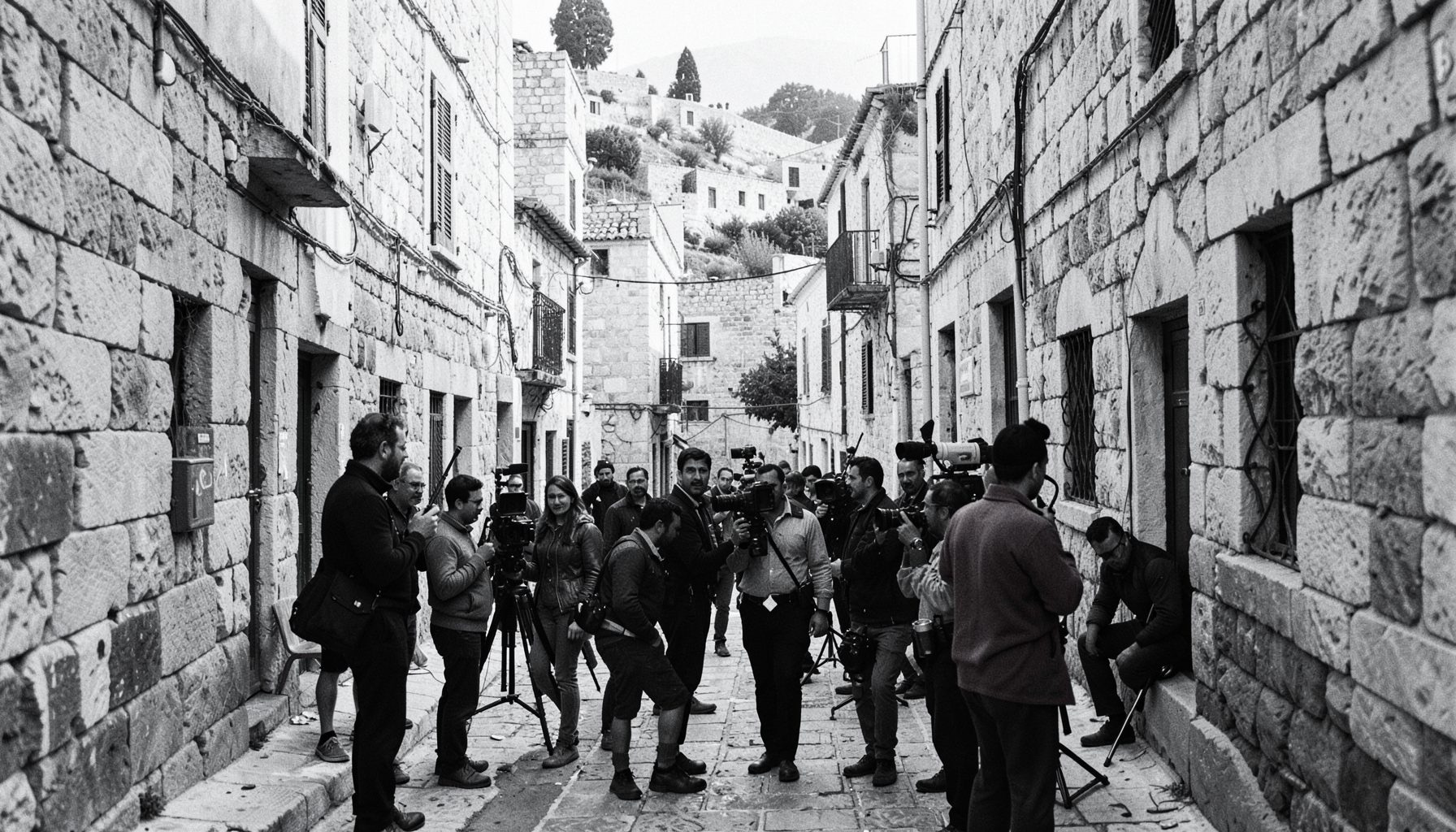
Shagrir’s reputation grew from documentary observation: people, settlements, military life and the texture of a young state. Black-and-white film carried the authority of the photojournalistic page. Colour could make an event look immediate, contemporary or ceremonial, and that shift affected how documentary images were read.
For much of the period, colour did not replace monochrome. It could look artificial beside a carefully exposed black-and-white frame, especially when skies, skin tones or available light behaved unpredictably. Experiments mattered because photographers had to learn which visual problems were chemical and which were editorial.
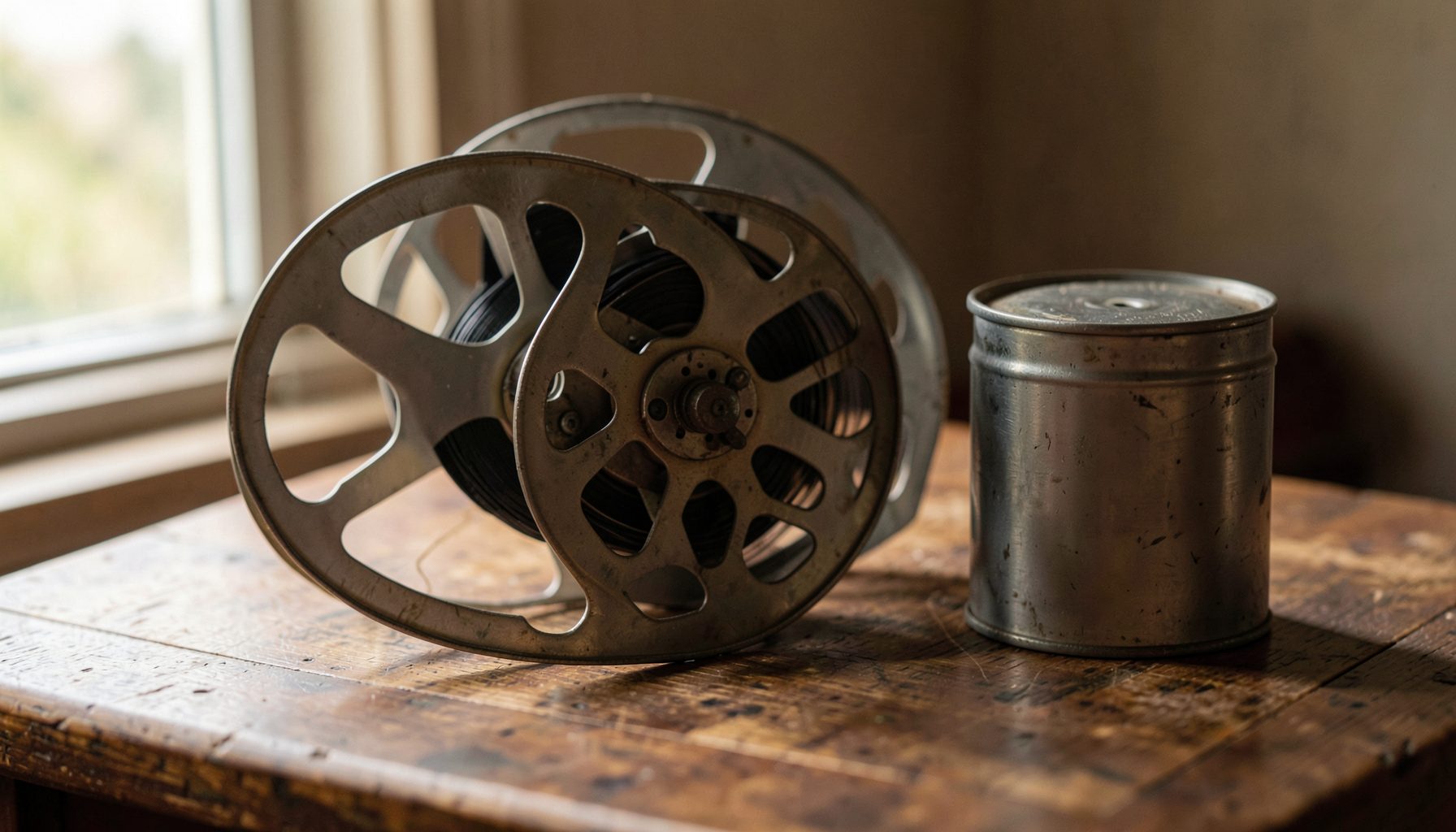
The archive’s material breadth is important here. The curator’s artefact tour introduces objects that carry technique, handling and biography at once, providing a practical model for reading the photographs alongside Shagrir’s films, notes and working materials.
Reading the physical evidence
Every early colour object carries clues beyond the visible scene. Edge markings can identify a stock family; the rebate and mount reveal the camera format; a colour cast may point to daylight balance or ageing. Dust, scratches, fading and decomposition can also affect interpretation.
Digital access adds another layer. A clear account of RAW file formats is useful for distinguishing camera capture data from preservation derivatives, although modern RAW files cannot replace the original negative, transparency or print. For Shagrir’s material, an access image should accompany, rather than conceal, the physical artefact.
Australian conditions make that distinction practical. Heat during Sydney and Melbourne summers can accelerate acetate deterioration and dye shift, while humidity affects mounts, paper and storage boxes. Conservators in Canberra, including those at the National Film and Sound Archive of Australia, provide a useful benchmark for cold, dark and stable storage.
The colour processes behind the experiments
There was no single route to colour. The available processes had different visual characters, costs and workflows, so identifying a format can narrow the date, equipment and likely use of an image.
| Process | Typical 1960s use | Visual character | Archival clue |
|---|---|---|---|
| Kodachrome transparency | Professional slide and magazine work | Saturated colour, strong contrast and limited exposure tolerance | Stock markings, edge codes and cardboard mounts |
| Ektachrome transparency | Daylight and tungsten slide photography | Fine grain, flexible exposure and accurate reversal colours | Rebate codes, film-base tint and mount details |
| Colour negative | Producing multiple prints for publication | Broader exposure range, softer colour and an orange mask | Negative edge markings and laboratory processing codes |
| Agfacolor transparency | Late-1960s slide photography | Warm rendering, dense reds and pronounced saturation | Agfa edge printing or a characteristic colour cast |
| Early Polaroid colour | Immediate, single-use colour prints | Soft detail, strong hues and an uneven white border | Integral print format and signs of chemical deterioration |
These distinctions matter because colour did not replace monochrome during Shagrir’s experiments. It sat beside it, sometimes serving a different purpose. A saturated slide used in a presentation may have carried a different intent from a restrained print entered in a newspaper archive.
Catalogue records, donor information and conservation notes therefore deserve close attention. The Shagrir Collection site brings public description and physical holdings into the same research frame, allowing an image’s technical history to be checked against its documented place in Shagrir’s career.
A research method for the archive
The earliest useful observations are often mundane, and they are recorded before a viewer decides what an image means. Material evidence can narrow a photograph’s date, production route and likely function.
Material clues
- Read edge codes, frame numbers and manufacturer marks for stock and date clues.
- Compare the rebate, mount and format with the camera likely used.
- Note colour casts, density shifts and signs of fading.
- Inspect the emulsion, borders and paper for damage or later copying.
Those observations need documentary context. The archive’s catalogue, related negatives and sound material can show whether an image was made for publication, presentation or private use.
Context clues
- Match locations and dates against Shagrir’s film and newspaper work.
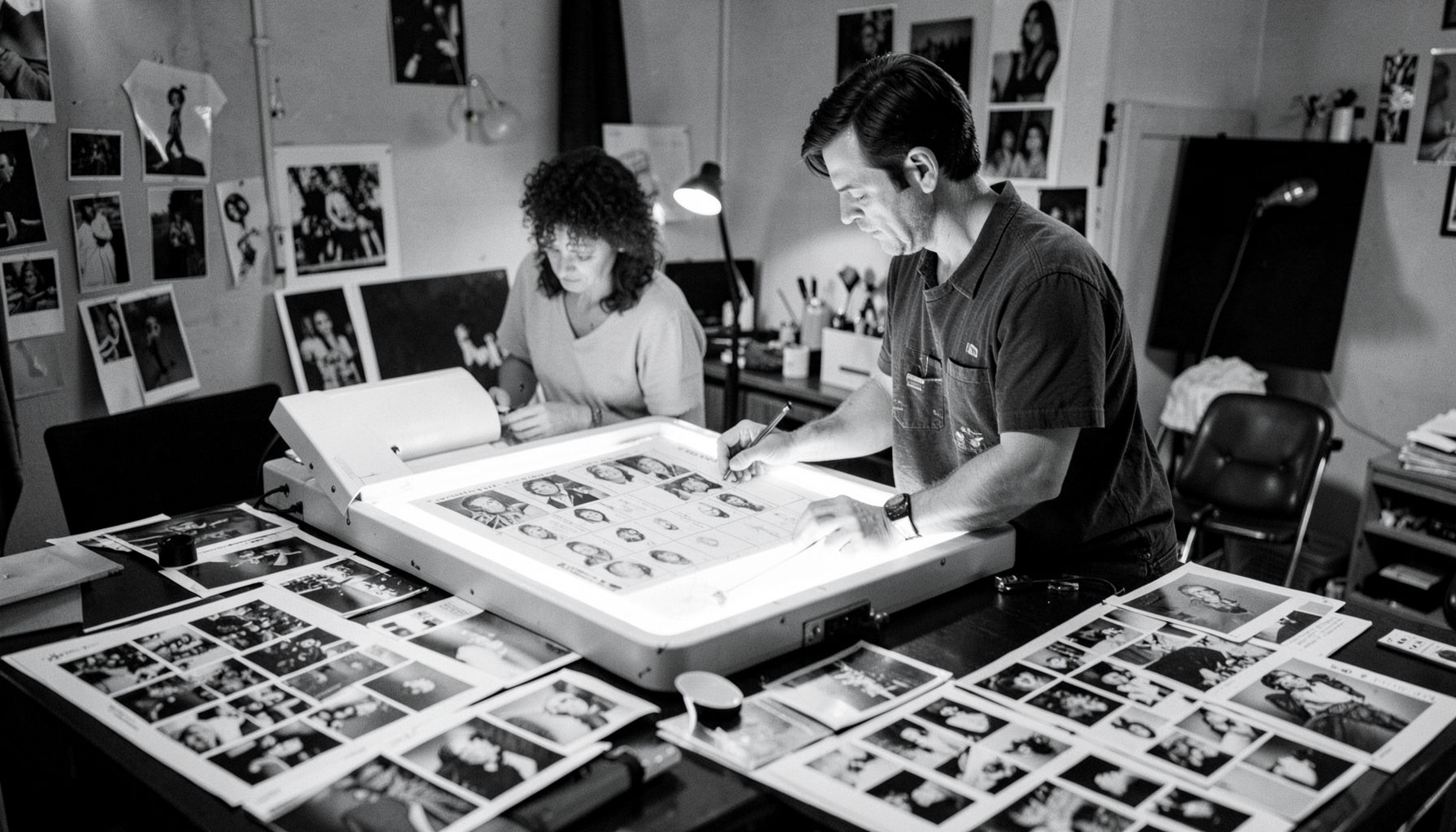
- Compare experiments with related monochrome frames and contact sheets.
- Pair images with contemporaneous notes, recordings or captions.
- Record ownership, reproduction rights and any later intervention.
Applied together, these checks turn a visually striking slide into a precise archival object. They also distinguish an experimental print from a later reproduction, preserving the evidence that gives the 1960s work its historical force.
Why the experiments matter now
Shagrir’s importance lies in the relationship between image and record. He documented events and also worked as a producer and filmmaker. Early colour anticipates the multimedia forms through which he later pursued public history, memory and cultural identity.
Personal material can reveal how professional choices were lived. The archive’s personal vinyl records post opens a parallel window into music, taste and the domestic side of a media career, reminding researchers that experiments often begin outside the assignment sheet.
Preservation, exhibitions and education can carry this archive into Australian classrooms and cinemas, where festivals such as Melbourne International Film Festival and Sydney Film Festival place archival film alongside new documentary work. The online resource for independent film practice offers a contemporary point of comparison. Shagrir’s experiments endure because they remain unfinished in a productive sense: they show a documentarian testing whether colour could carry truth as well as newsprint had done.