
How Shagrir’s films captured the spirit of the Israeli New Wave
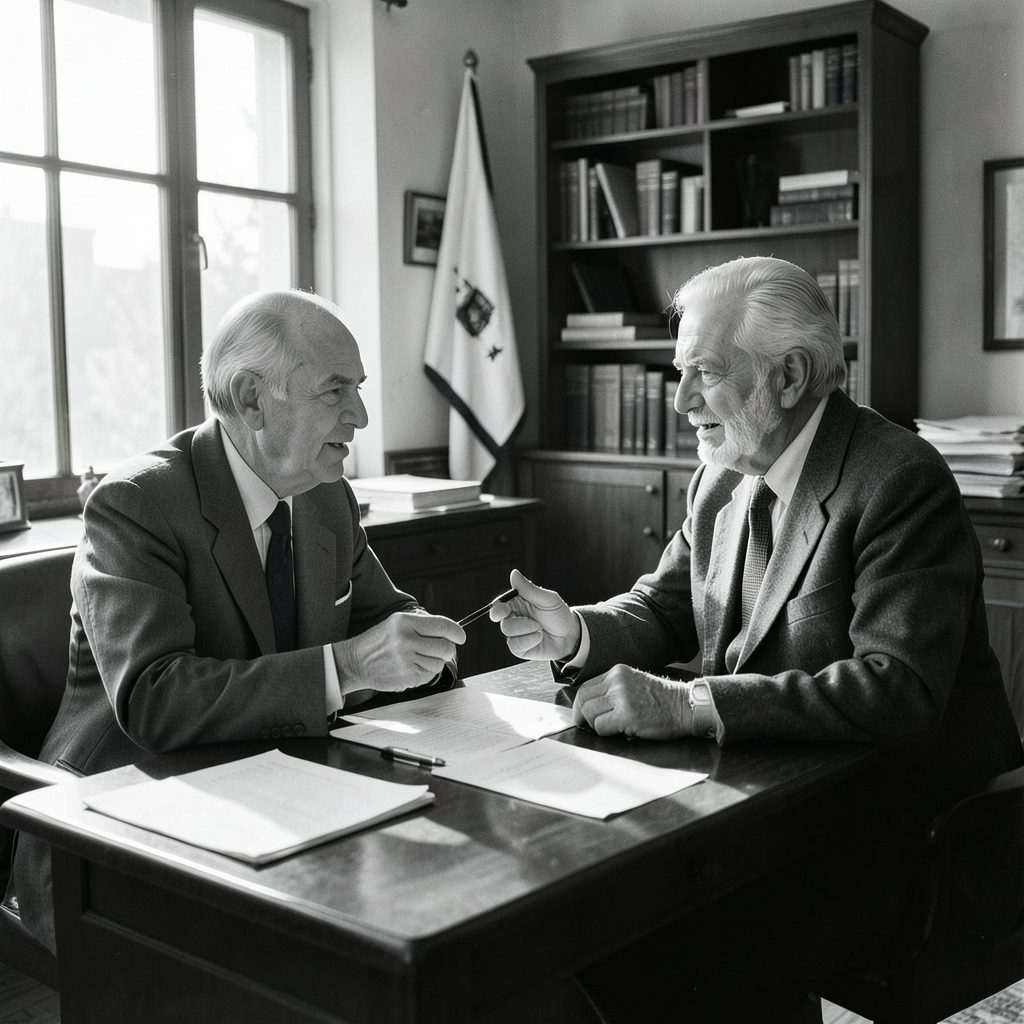
Israeli cinema found a distinctive voice in the decades after the country’s establishment, when filmmakers began moving away from polished national myths and toward lived experience. Their cameras entered homes, streets, military spaces and political gatherings, recording uncertainty as carefully as heroism. Micha Shagrir belonged to this transformation as a filmmaker, producer, photographer and journalist whose work connected personal stories with the pressures shaping Israeli society.
How Shagrir’s Films Captured the Spirit of the Israeli New Wave can be understood through this tension between the intimate and the historical. His documentaries did not treat politics as something confined to parliament or official announcements. They followed its effects through family life, public debate, conflict, memory and the everyday behaviour of people trying to make sense of a changing country.
For Australian viewers, the archive offers a useful point of comparison. Audiences familiar with the social documentaries broadcast by the ABC or SBS, the observational tradition of Australian film, and debates around public memory can recognise the value of Shagrir’s direct, human-scale approach. His films ask how national history is experienced in ordinary places, much as a story filmed in Melbourne, Sydney or a remote regional town can reveal more than a formal news report.
A cinema shaped by social change
The Israeli New Wave emerged as filmmakers challenged the heroic, often collective image that had dominated earlier national cinema. Instead of presenting society as unified, they explored disagreements over war, class, ethnicity, religion, migration and political power. The result was a cinema that felt less ceremonial and more immediate, with rougher textures and a stronger interest in contradiction.
Shagrir’s work reflected this shift through documentary methods that valued observation. His camera could stay with a face, a pause or an unsettled conversation rather than rushing towards a neat explanation. This attention to small gestures gave public events a personal dimension: a political argument became a family concern, while a national crisis could be seen in a worker’s routine or a young person’s uncertainty.
That approach also made his films historical records without reducing them to archival illustrations. The people on screen were not simply examples of a period. They were participants with competing memories and incomplete knowledge. Their words, silences and disagreements preserved the atmosphere of a society still negotiating its identity.
The everyday as a political record
A central feature of Shagrir’s filmmaking was the movement between public life and private experience. Demonstrations, military settings, election campaigns and political debates mattered because they entered kitchens, workplaces and relationships. The camera captured the emotional residue of events: anxiety after a broadcast, pride attached to service, anger about inequality or fatigue with official language.
This method is especially valuable when viewed through today’s digital culture. Australians now record political reactions on phones, share clips on social media and follow live updates during elections or crises. Shagrir worked in a slower media environment, yet his interest was similar: to preserve how people spoke, listened and responded before events were flattened into headlines.
The archive’s audio material makes that connection especially clear. Voices carry accents, interruptions and changing political vocabularies that a transcript cannot fully reproduce. The collection’s account of preserving political recordings shows why sound preservation matters: debate is also performance, with hesitation and tone revealing how power operates in a room.
Film form, memory and national identity
Shagrir’s films captured the New Wave spirit through form as well as subject matter. Documentary images could feel unfinished, open-ended and close to the instability of real life. Rather than imposing a single authoritative voice, this style allowed competing accounts to remain visible. Viewers were invited to assess evidence, mood and behaviour for themselves.
His background across journalism, photography and production strengthened this sensitivity to framing. A still photograph isolates a moment, while film places that moment in time; a journalist notices the significance of an exchange, while a documentarian must decide when to let it continue. Shagrir moved between these perspectives, creating work that could be immediate in the present and valuable as historical evidence later.
This relationship between image and memory is important for researchers in Australia, where screen archives often preserve stories about migration, Indigenous rights, protest movements and local politics. The meaning of an image can change as later generations revisit it. Materials held by the Shagrir Collection similarly gain depth when photographs, negatives, recordings and papers are studied together rather than treated as isolated objects.
Preservation turns films into living history
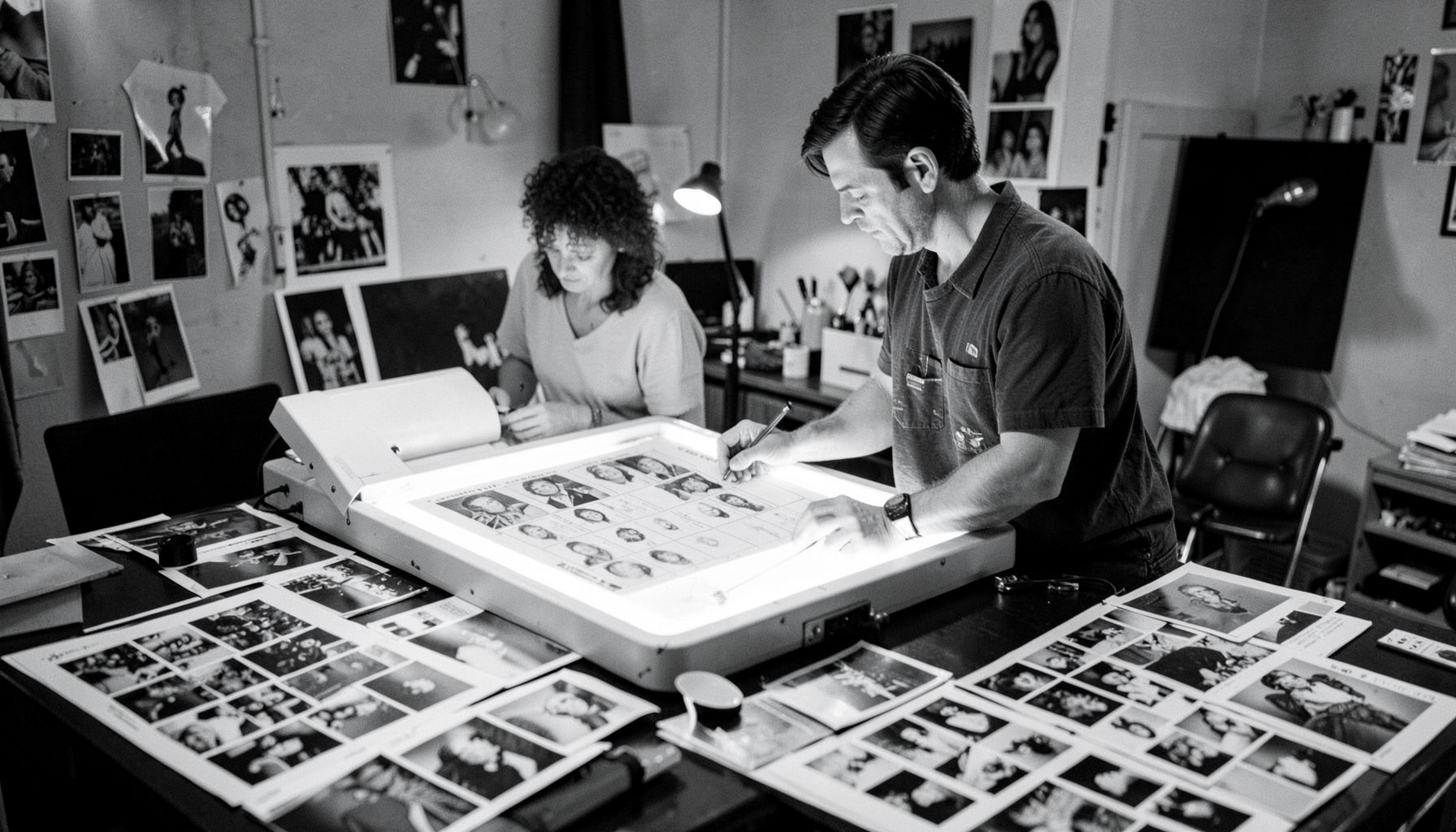
An archive does more than store finished films. It preserves the conditions in which those films were made: production notes, contact sheets, personal papers, sound reels, negatives and photographs. These materials can reveal what was omitted from the final edit, how a scene was prepared and which visual choices shaped the audience’s understanding.
For an institution working across formats, preservation is a practical and legal task. Film stock needs stable storage, magnetic recordings can deteriorate, and digitisation requires careful documentation. In Australia, collecting organisations also work within copyright law, privacy expectations and cultural permissions. Public access must be balanced with the rights of creators, participants and communities, particularly when older footage contains sensitive political or personal material.
The archive’s public role extends to exhibitions and education. A researcher may study a sequence frame by frame, while a student may encounter the same material as an entry point into Israeli history. Australian audiences accustomed to gallery programs at ACMI in Melbourne, the Australian Centre for the Moving Image, or film retrospectives at the Sydney Film Festival can appreciate how contextual display changes the experience of documentary work.
Practical ways to read an archival film
- Notice who speaks, who remains silent and who controls the setting.
- Compare official statements with gestures, pauses and background activity.
- Ask how editing shapes sympathy, suspicion or emotional distance.
- Consider what the camera reveals about class, gender, work and public authority.
- Separate the film’s historical evidence from its later interpretation.
Why the work still speaks to Australian audiences
The political geography is different, but the documentary questions are recognisable. Shagrir’s films examine how citizens respond to institutions, how families carry public conflict and how national stories include some experiences while excluding others. These concerns resonate in Australia, where debates over migration, military history, constitutional change and Indigenous sovereignty continue to influence everyday conversations.
The local media environment provides another useful comparison. Australians often encounter public affairs through the ABC, SBS, commercial television, podcasts and online video, with audiences divided across metropolitan and regional markets. A documentary that resists simple answers can therefore feel especially valuable. It creates room for context at a time when news cycles reward speed and short reaction.
There is also a practical connection with exhibition culture. A Melbourne gallery, a Sydney university or a community arts venue may need to measure walls and plan displays around existing architecture before presenting archival photographs. Even a small technical aid, such as using an iPhone measuring tool, can support the careful installation of materials whose scale and spacing affect interpretation. Preservation becomes public history when people can encounter the objects thoughtfully.
What the collection makes possible
- Film scholars can trace changes in documentary style and political language.
- Teachers can connect screen evidence with broader lessons in modern Israeli history.
- Curators can pair moving images with photographs, papers and recorded testimony.
- Families and communities can investigate links between private memory and public events.
- General audiences can encounter history through voices rather than abstract dates.
An archive with an expanding public life
The continuing importance of Shagrir’s work lies in its ability to connect several kinds of attention. His films observe people closely, his journalism responds to events, and his photographs preserve visual details that might otherwise disappear. Together, these practices create a record of Israeli life that is emotionally specific as well as politically significant.
The collection’s background and mission place that record within an ongoing program of preservation, research and access. Such work matters because historical footage can deteriorate or become difficult to interpret without supporting documents. A well-maintained archive gives future viewers the chance to question inherited narratives and discover voices that were once peripheral.
Shagrir’s place in the Israeli New Wave is therefore larger than a stylistic label. He helped make documentary cinema a meeting point between journalism, personal testimony and national memory. By filming uncertainty rather than concealing it, he captured a society in motion. For audiences in Australia and elsewhere, the films remain compelling because they show history as something lived through faces, voices, rooms and ordinary choices.