
Shagrir, Entebbe, And The Evidence Of Film
The Entebbe hostage rescue remains one of the most recognisable operations in modern Israeli history. On 4 July 1976, Israeli commandos flew to Uganda to free passengers and crew held at Entebbe Airport after the hijacking of Air France Flight 139. The operation became a subject of news reports, documentaries, books and feature films, yet its meaning depends heavily on how the event was recorded and later remembered.
A date needs correcting at the outset. The rescue did not occur in 1974; the hijacking took place in June 1976 and the raid followed in July. That distinction matters when examining Micha Shagrir’s work, because an archive is built from precise relationships between film reels, production notes, photographs, broadcasts and historical events.
Shagrir’s significance lies in the way he worked across journalism, documentary filmmaking and visual culture. His materials can be read as evidence of a particular Israeli media environment: urgent, politically charged and shaped by the expectation that moving images would help explain national experience. His record of Entebbe is therefore valuable both for what it shows and for the circumstances under which it was created, edited and preserved.
The Date And The Historical Record
The Entebbe crisis began when Palestinian and German militants diverted an Air France flight travelling from Tel Aviv to Paris via Athens. The hijackers landed at Uganda’s Entebbe Airport, where passengers were separated according to nationality and many were held in the old terminal. Israel’s government faced pressure to negotiate while preparing a long-distance military response.
The rescue force travelled thousands of kilometres, landing at night and using a black Mercedes resembling the vehicle associated with Uganda’s President Idi Amin. The commandos killed the hijackers, freed most of the hostages and destroyed Ugandan aircraft before departing. Lieutenant Colonel Yonatan Netanyahu was killed during the assault, and the raid quickly became a defining story of Israeli military capability, courage and vulnerability.
Shagrir’s documentation should be understood within this dense news environment. Footage of the airport, released hostages, military briefings and public reactions did not offer a neutral sequence of facts. Each image participated in a national argument about sovereignty, rescue, terrorism and the responsibilities of a state towards its citizens.
Reading Shagrir’s Archival Materials
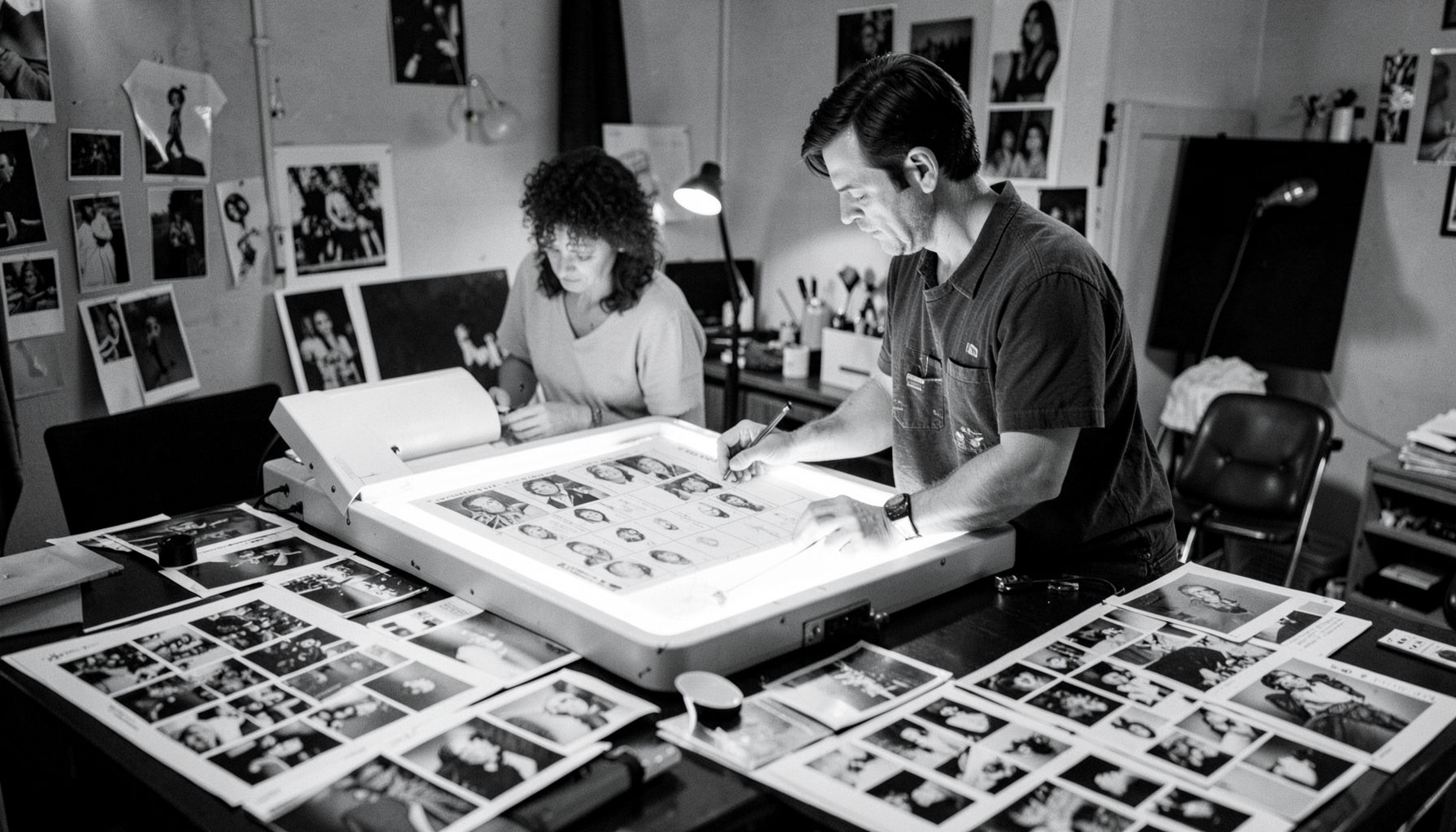
A film archive rarely consists of a single finished documentary. It may include rushes, alternate takes, unedited interviews, sound recordings, contact sheets, production correspondence, captions and reels whose original order has been disturbed. These fragments allow researchers to compare the public story with the decisions made during filming and editing.
The Shagrir Collection brings together negatives, prints, films, recordings and personal papers connected to Israeli political and social history. In the Entebbe material, the relationship between image and context is especially important. A close-up of a former hostage, a military statement or an airport exterior can change meaning when placed beside a script page, date stamp or production note.
His work on other historical subjects shows why this method matters. The collection’s account of the Dead Sea Scrolls film demonstrates how research, location filming and historical interpretation could develop together. Entebbe can be approached in the same way: as a constructed documentary record whose layers reveal both the event and the filmmaker’s response to it.
Clues Researchers Can Follow
- Film leader, edge codes and reel numbers that help establish sequence
- Interview sound, narration drafts and translated statements
- Still photographs showing locations, people and production conditions
- Press material revealing how the rescue was presented to audiences
These details are useful because memory changes over time. A later interview may contain retrospective interpretation, while an unedited shot may preserve gestures, pauses or surroundings that disappeared from the broadcast version. The archive allows those differences to remain visible.
Filming Urgency Under Pressure
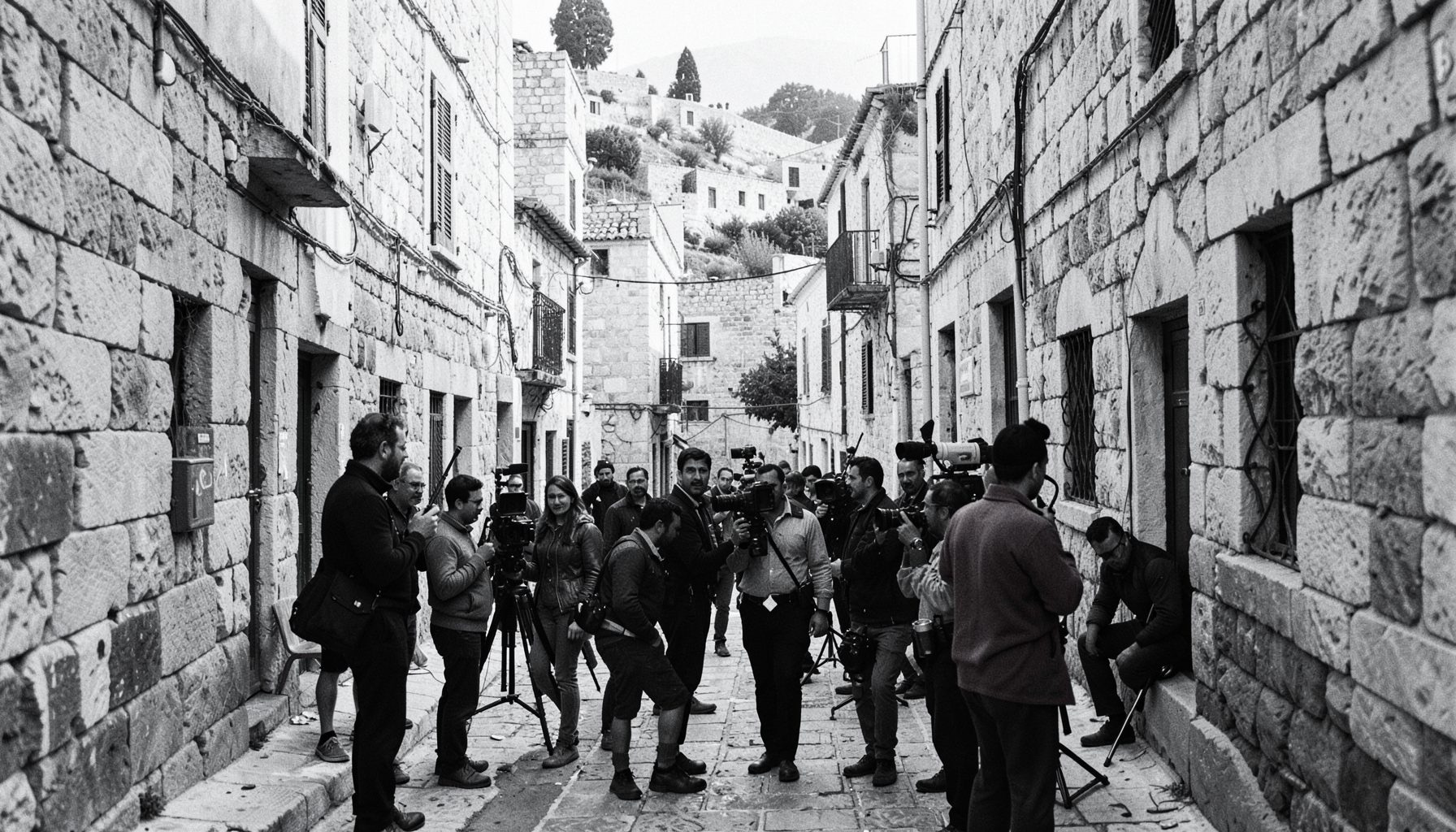
A filmmaker covering a military rescue operates within severe practical limits. Access may be restricted, information may arrive through official briefings and the most dramatic action may already be over by the time a camera crew reaches the relevant location. Shagrir’s approach belongs to a tradition of documentary journalism that combined direct observation with interviews, narration and carefully selected archival footage.
The available technology also shaped the result. Cameras, lenses, film stock, sound recorders and editing equipment imposed limits on exposure, mobility and recording time. Contemporary readers can gain a useful sense of how equipment influences visual storytelling through this camera equipment review, although the tools of the 1970s demanded far more manual control and physical preparation.
The resulting images should not be judged by today’s expectation of continuous live coverage. In 1976, viewers often encountered an event through edited evening broadcasts, newspaper photographs and delayed documentary reports. Shagrir’s work translated a rapidly unfolding international crisis into a form that audiences could watch, interpret and remember.
Images, National Memory And The New Wave
The rescue generated a powerful visual vocabulary: the aircraft on the runway, the old terminal, the returning hostages, the commandos and the grieving family of Yonatan Netanyahu. These images could communicate triumph and loss within the same programme. They also encouraged viewers to understand the operation as a chapter in Israel’s broader history of insecurity and resilience.
That framing connects with the wider Israeli New Wave, in which filmmakers explored social tension, political identity and the gap between public mythology and private experience. The collection’s discussion of Israeli New Wave films offers a valuable context for considering how Shagrir balanced national events with human detail.
His documentary language was not limited to military spectacle. Personal testimony, ordinary surroundings and the physical presence of people affected by the crisis could complicate a heroic narrative. A survivor’s hesitation, a family member’s silence or an apparently routine airport image might carry historical weight precisely because it resists a simple dramatic reading.
Preserving Film For Public Research
Preservation changes what can be known. Film stock may shrink, acquire vinegar syndrome or lose colour, while magnetic sound recordings can become difficult to play as equipment disappears. Digitisation protects access, but it does not remove the need to retain original carriers, document technical interventions and maintain trustworthy metadata.
The collection’s value extends beyond specialist film studies. Teachers can use the material to discuss documentary ethics, while historians can compare visual records with diplomatic documents, press coverage and personal testimony. Curators may also build exhibitions that place a camera negative beside a finished broadcast image, showing how an event moves from observation to public narrative.
Public programming can broaden the archive’s reach. A screening, lecture or performance responding to documentary footage might involve artists working across movement, sound and projected image, with organisations such as Ampersand Dance offering a useful example of how performance can create new pathways into archival material without replacing its historical specificity.
Preservation Priorities For Entebbe Materials
- Stabilising original film, photographic negatives and audio carriers
- Recording dates, locations, participants and copyright information
- Creating access copies without discarding the source materials
- Linking images to scripts, correspondence and published accounts
- Protecting sensitive personal information in interviews and papers
These priorities are especially important for a story involving trauma, military operations and identifiable individuals. Access should support research while recognising that archival openness carries ethical responsibilities.
Why The Story Matters In Australia
Australian audiences may encounter Entebbe through SBS, ABC programming, streaming services, university courses or weekend documentary viewing. The story also has particular resonance in Sydney and Melbourne, where large Jewish communities, migration histories and active film cultures create several overlapping audiences for Israeli historical material.
The local documentary market is shaped by Screen Australia funding, public broadcasters, festivals and educational licensing. A restored Shagrir film could circulate differently across these channels: as a television programme, a museum installation, a classroom resource or a special screening at an event such as the Jewish International Film Festival. Each setting encourages a different relationship between historical evidence and viewers’ expectations.
Australian law adds practical considerations. The Copyright Act 1968 affects reproduction, screening and online publication, while the Privacy Act 1988 may be relevant when personal information appears in accessible records. Researchers working through Australian libraries, universities or the National Archives of Australia also expect clear permissions, stable catalogue records and reliable statements about provenance.
For audiences accustomed to checking a phone during a commute, listening to podcasts while driving or watching short clips before a full documentary, the archive provides a useful counterpoint. It asks viewers to slow down and examine how images were made, selected and circulated. Enquiries about access, permissions or research visits can be directed through the collection’s contact information, where the practical conditions of using the material can be clarified.