
Digitizing Shagrir’s Slide Collection
Micha Shagrir’s slide collection offers a vivid record of Israeli life across several decades. The images sit between personal memory and public history: streets, political gatherings, military environments, cultural events and ordinary encounters can all appear in a single sequence of transparencies.
Digitizing Shagrir’s Slide Collection is therefore more complex than scanning a box of photographs. Each frame carries information in its colour, border markings, sleeve, sequence and relationship to neighbouring images. The work must preserve the visual object while making its content searchable and useful to researchers, students and the public.
For an Australian audience, the project has familiar parallels. Collections held in Sydney, Melbourne, Canberra and regional libraries often combine fragile analogue materials with incomplete descriptions, uncertain copyright and limited staff time. Climate-controlled storage, careful handling and long-term digital preservation are essential in both countries.
The Shagrir Collection approaches the material as an archive rather than a gallery of isolated pictures. Its slides can connect photographic practice with documentary filmmaking, journalism and the political history of Israel, allowing researchers to study how an image was made, circulated and remembered.
| Material | Main risk | Digitisation priority | Research value |
|---|---|---|---|
| Colour slides | Fading, colour shifts and dust | High-resolution calibrated scanning | Visual evidence of places, people and events |
| Black-and-white transparencies | Scratches and silver deterioration | Detail-preserving capture | Documentary and photographic history |
| Sleeves and labels | Loss of handwriting or sequence | Capture alongside the image | Dates, names, locations and original order |
| Duplicate frames | Confusion over selection | Record relationships between copies | Evidence of editing and working methods |
| Mixed-format boxes | Misidentification and handling damage | Survey before scanning | Links between film, photographs and papers |
Why Slides Matter As Historical Evidence
A slide is both an image and a physical object. Its mount may reveal a manufacturer, processing date or handwritten note, while the arrangement of a group can indicate how Shagrir edited a story before publication or presentation. These details disappear when a scan is separated from its original housing.
The transparency format also reflects a particular professional culture. Slides were used for editorial selection, lectures, exhibitions, television production and personal documentation. Their colour and contrast can show what the photographer considered publishable, even when the final newspaper or film used only one frame.
Digitised copies broaden access, but they should not replace the original entirely. Researchers may need to inspect edge markings, emulsion damage or colour fading. A preservation master, a high-quality access file and a record of the physical item provide different layers of evidence.
The Technical Work Behind A Faithful Scan
The first challenge is assessment. Staff must identify film type, mount condition, mould, vinegar syndrome, dust and colour deterioration before placing anything in a scanner. Some slides may be stable enough for batch processing, while others require individual treatment and a slower capture workflow.
Colour management is particularly important. Aged Ektachrome, Kodachrome or similar materials may have shifted towards magenta, yellow or cyan. The aim is not to invent a fresh-looking image, but to create a faithful digital representation while retaining an untouched scan for future interpretation.
High-resolution capture also reveals information that was difficult to see through a lightbox. Faces, street signs, uniforms and background activity can become legible. At the same time, excessive sharpening can turn grain and scratches into false detail, so technical decisions must be documented rather than hidden.
Preserving Order, Context And Metadata
A box of slides often contains an implicit narrative. Frames may be arranged by assignment, journey, year or person, and breaking that order can weaken the collection’s meaning. Digitisation teams therefore photograph or record the box, dividers, labels and sequence before individual files are created.
Descriptive metadata can include names, dates, locations, events, language, image rights and links to related records. Uncertainty should be recorded honestly. A note such as “possibly Jerusalem, late 1990s” is more useful than an unverified exact location presented as fact.
Australian collecting institutions commonly use controlled vocabularies and persistent identifiers to keep large catalogues consistent. Similar discipline helps this archive serve international researchers, including students comparing Israeli documentary practice with visual records held by the National Film and Sound Archive in Canberra or state collections in Melbourne and Sydney.
Discoveries Within The Frames
Digitisation often changes what an archive can reveal. Once images are searchable and displayed in sequence, repeated visits to the same location, recurring collaborators and changes in visual style may become visible. A frame that seemed incidental can provide a link between a personal series and a major public event.
Shagrir’s photographic record of the peace process is one example of how images can be read across time. The collection’s 1990s peace process chronicle places individual photographs within a wider political and social story, showing why dates, captions and neighbouring frames matter.
Unexpected discoveries may also be small. A shopfront, newspaper headline, vehicle registration or passing figure can help establish a location or date. These clues should be described carefully, with space for later researchers to correct or expand the catalogue.
Working With Fragile And Uneven Materials
Preservation begins before scanning. Clean hands, nitrile gloves where appropriate, non-abrasive supports and a stable work surface reduce handling damage. Slides should be kept away from direct light and stored in inert enclosures, with temperature and humidity monitored rather than guessed.
Australian conditions make this especially relevant. Heat and humidity in Brisbane, salt air around coastal Sydney and Melbourne’s variable weather can affect storage planning, just as dry dust and large temperature swings create different risks in inland repositories. A collection travelling between institutions needs protective packaging and clear environmental requirements.
A practical workflow may include:
- Surveying every box before opening individual mounts
- Separating damaged, mouldy or chemically unstable items
- Capturing labels and original sequence
- Creating preservation files in an open, well-documented format
- Checking colour and focus through regular quality control
- Recording scanner settings, operator decisions and file checksums
The archive also needs a disaster plan. Water leaks, power failures and equipment breakdowns can interrupt digitisation, while bushfire smoke and evacuation risks affect Australian institutions particularly strongly. Multiple digital copies in separate locations are part of preservation, not an optional technical extra.
Access, Rights And Public Interpretation
Making a scan available online does not automatically make it free to reuse. Rights may involve Shagrir’s estate, commissioning organisations, publishers, filmmakers, people depicted in sensitive settings and restrictions attached to original assignments. Each record needs a clear rights statement and a process for handling corrections or takedown requests.
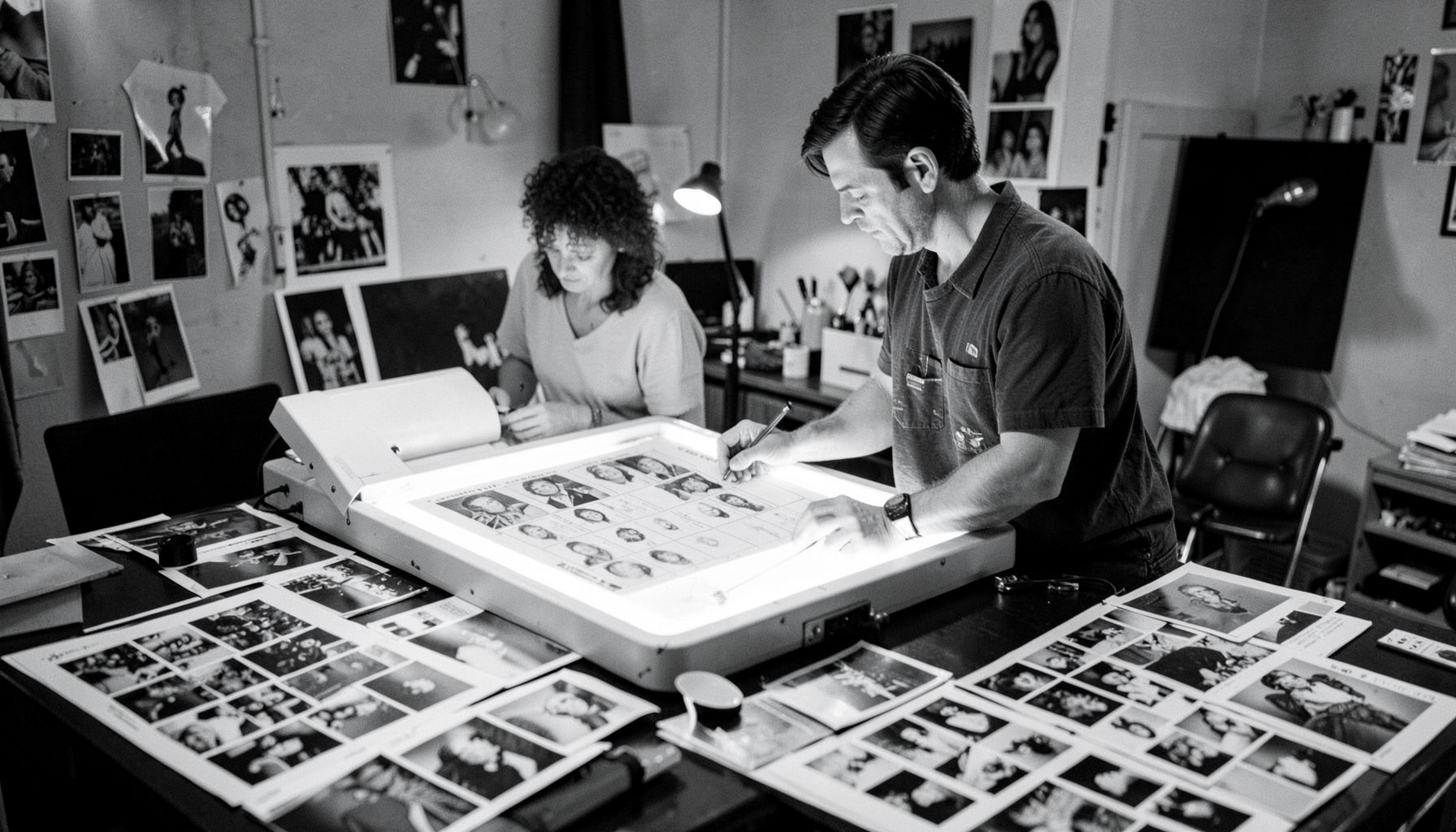
Public access can take several forms. Researchers may need large files and downloadable metadata, while schools may benefit from curated sets with plain-language captions. Exhibitions can pair a slide with contact sheets, production notes or excerpts from related film and audio, helping visitors understand the process behind the finished image.
The archive’s press resources can support journalists and cultural organisations seeking accurate background. Australian institutions face similar expectations from local media, universities and community groups, especially when archival images touch on conflict, migration, religion or political identity.
Interpretation should avoid treating documentary photographs as neutral windows. Shagrir selected where to stand, when to press the shutter and which frames to retain. Captions can acknowledge that viewpoint while still allowing the images to function as valuable primary sources.
Building A Living Digital Archive
A successful digitisation project is measured by more than the number of slides scanned. It depends on stable storage, searchable records, clear permissions and a way for new information to flow back into the catalogue. Researchers may identify a person or location years after the initial upload, so records should be designed for revision.
The collection can also connect with wider visual culture. Fashion, street photography and editorial imagery often overlap in archival series, and specialist communities may notice details that a general cataloguer misses. A conversation with publications such as Fashionista In Suburbia can place documentary images within broader discussions of style, identity and everyday life.
Educational programmes offer another route into the material. Students can compare an original slide, an uncorrected scan and an access image, then consider how colour, cropping and metadata influence interpretation. Researchers can map locations, study photographic sequences or examine how political events were represented across different media.
Over time, the archive becomes a shared research infrastructure. Its value lies in preserving the physical slides, exposing their hidden relationships and making careful discoveries available without flattening the uncertainty that belongs to historical evidence.