A Technical Look At Shagrir’s Camera Equipment Over The Decades
A technical look at Shagrir’s camera equipment over the decades begins with the archive rather than a catalogue of famous brands. Micha Shagrir worked across filmmaking, television, photography and journalism, so his working kit would have changed with the assignment, the available stock and the distribution format. A political interview, a military field report and a personal still-photography project demanded different combinations of camera, lens, sound recorder and support.
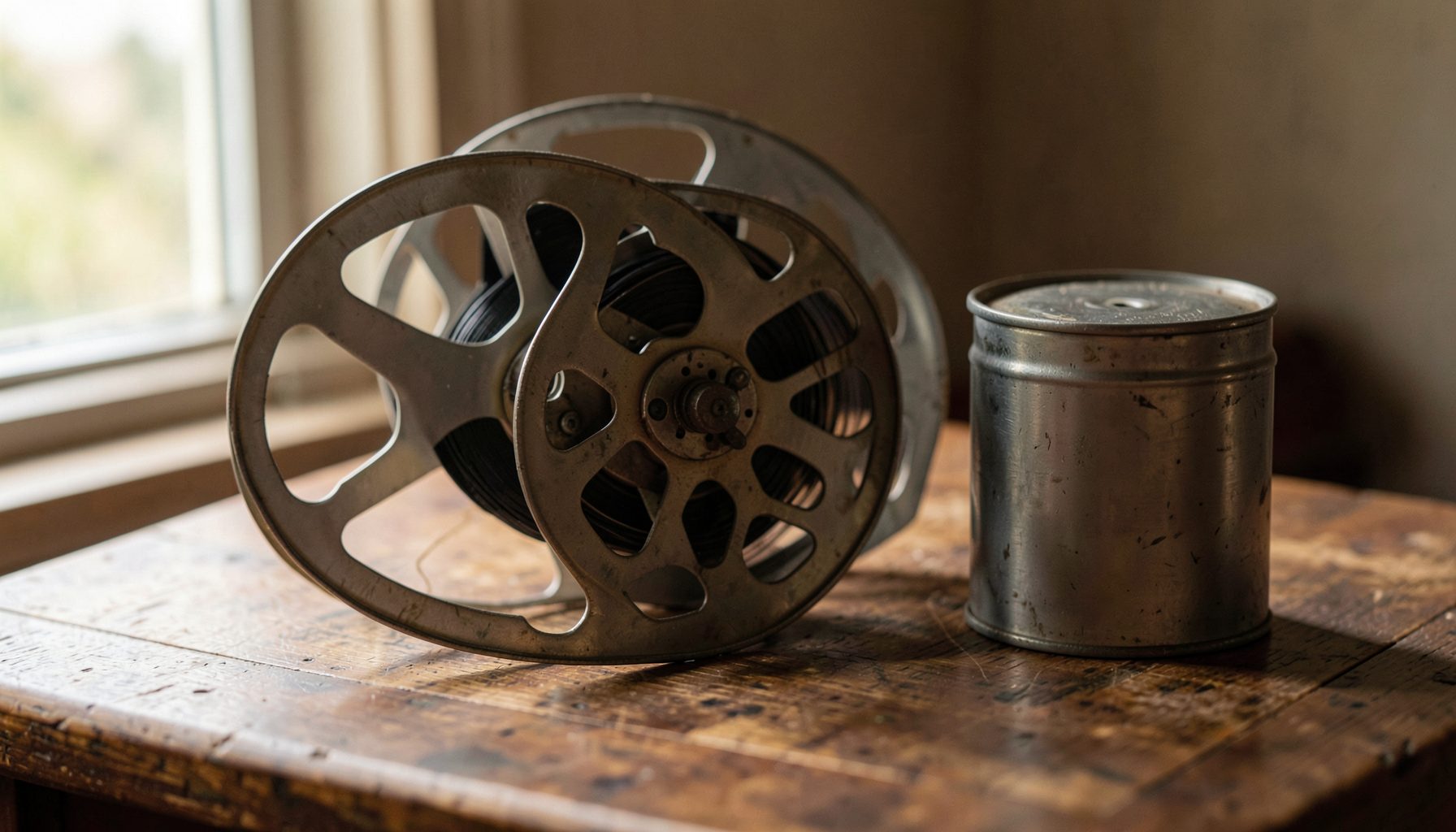
The surviving collection can reveal those changes through negatives, contact sheets, film cans, production papers, photographs and recordings. A camera body may be absent, while its technical signature remains visible in frame edges, perforation patterns, lens rendering, exposure notes or the physical dimensions of a reel. This evidence allows researchers to reconstruct a practical equipment history without guessing at a model number that the records do not confirm.
For an Australian audience, the comparison is especially useful because many local viewers know the difference between film-era production and later electronic news through ABC documentaries, SBS current affairs and archival programs screened in Sydney or Melbourne. The shift from 16mm production to portable videotape followed a broadly recognisable international path, yet Israeli working conditions gave that equipment a particular urgency: fast deployment, limited crew sizes and the need to record events as they unfolded.
Reading The Evidence In Film Materials
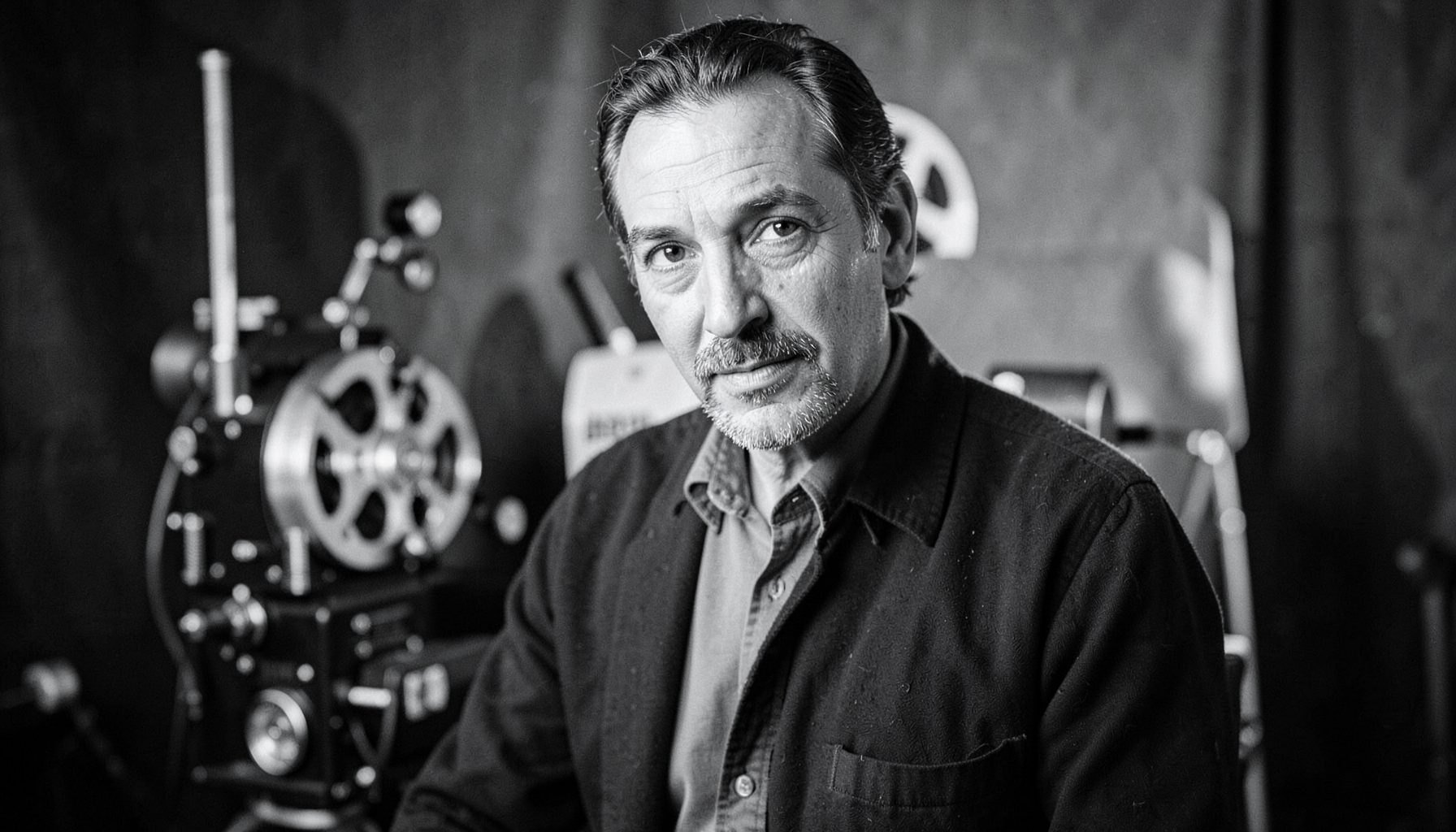
During the earlier decades of Shagrir’s career, 16mm was a highly practical documentary format. It offered a useful balance between image quality, portability and processing cost, allowing a small crew to work in streets, offices, border areas or military environments. A compact spring-wound or motor-driven camera could be carried with several film magazines, while a tripod, shoulder support or monopod helped stabilise interviews and observational footage.
The film gauge provides the first technical clue. Standard 16mm has a relatively narrow image area and often carries a single row of perforations, while later Super 16 expands the image for widescreen transfer. Researchers can inspect edge markings, sprocket-hole placement and frame proportions to identify how footage was exposed. Scratches, registration instability and splice patterns also show how frequently material was handled in the field and laboratory.
Film stock matters as much as the camera. Faster black-and-white or colour emulsions made available-light shooting possible in interiors and at dusk, but they could introduce grain, contrast or colour shifts. A documentary image with pronounced grain is not automatically evidence of inferior equipment; it may reflect a deliberate choice of stock, pushed processing or an urgent decision to keep filming rather than wait for better illumination.
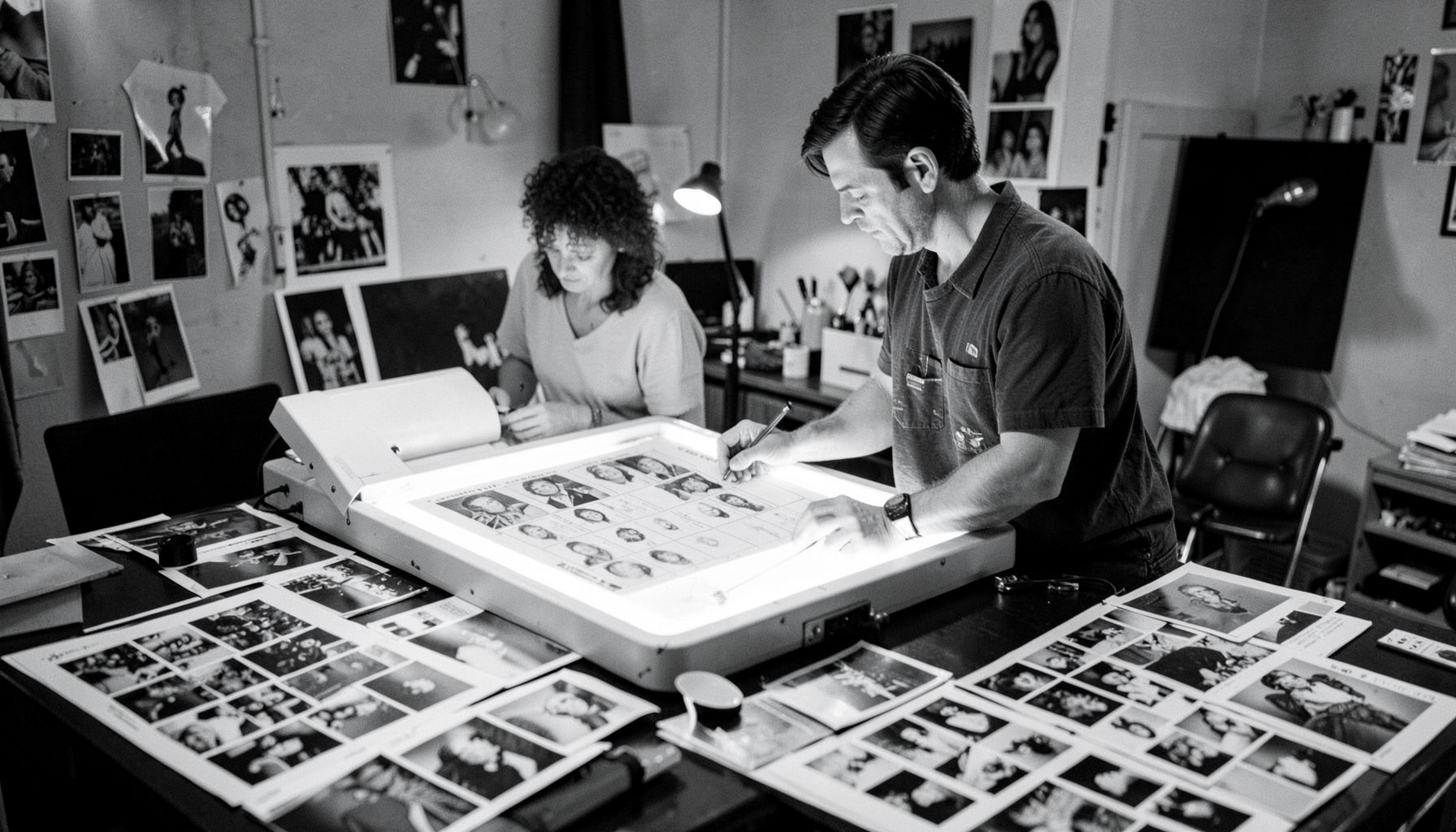
The Shagrir Collection brings these different forms of evidence together, making it possible to compare original photographic materials with finished films and related paperwork. For preservation specialists, that relationship is essential: a can label may identify a shoot, while the negative itself confirms the camera format and the final transfer shows how cropping or grading altered the image.
From Deliberate Framing To Mobile Coverage
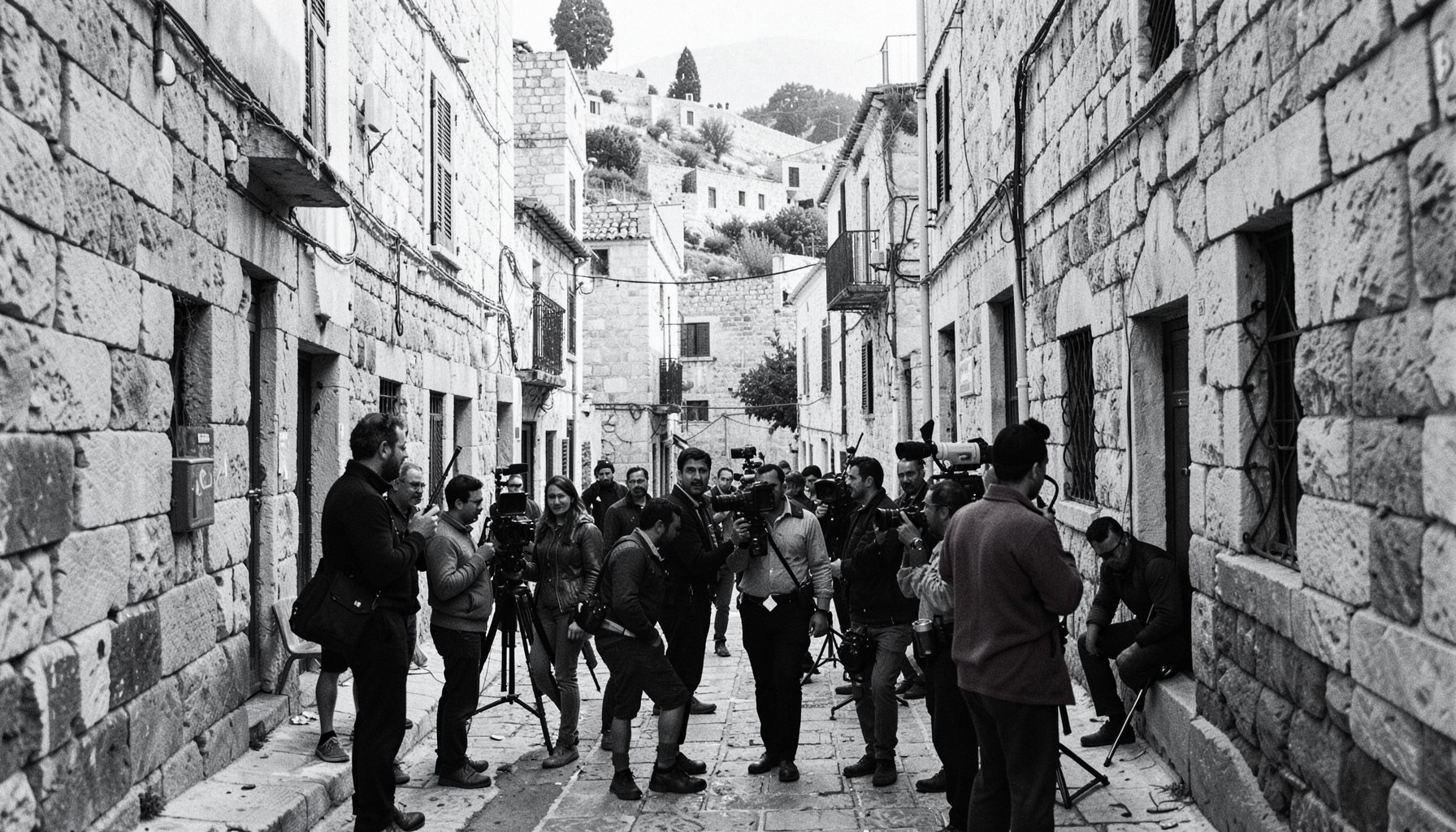
A film camera imposed a particular rhythm on production. Magazines had finite running times, changing stock required care, and every shot carried processing costs. Those constraints encouraged deliberate framing, economical coverage and close coordination between camera and sound crew. Interviews often benefited from a locked-off tripod position, while documentary sequences could alternate between carefully observed compositions and fast handheld movement.
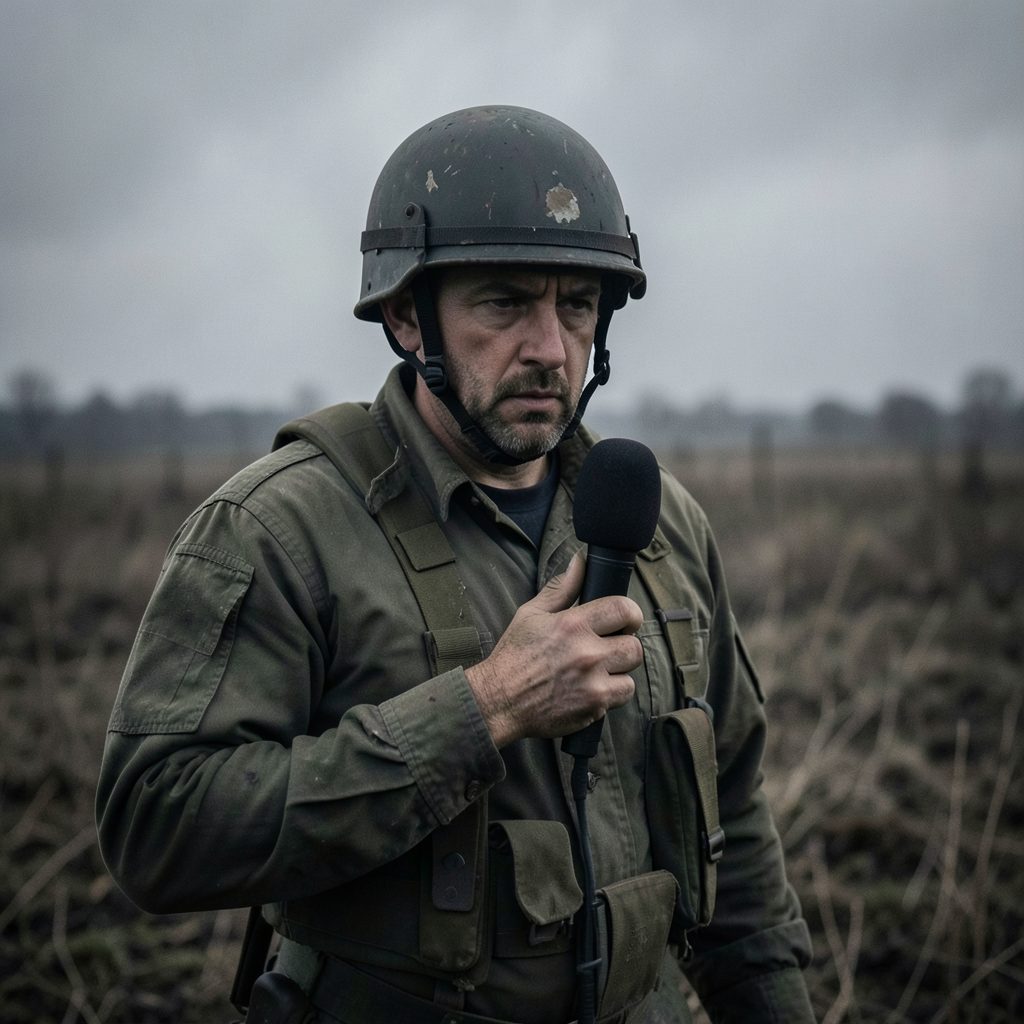
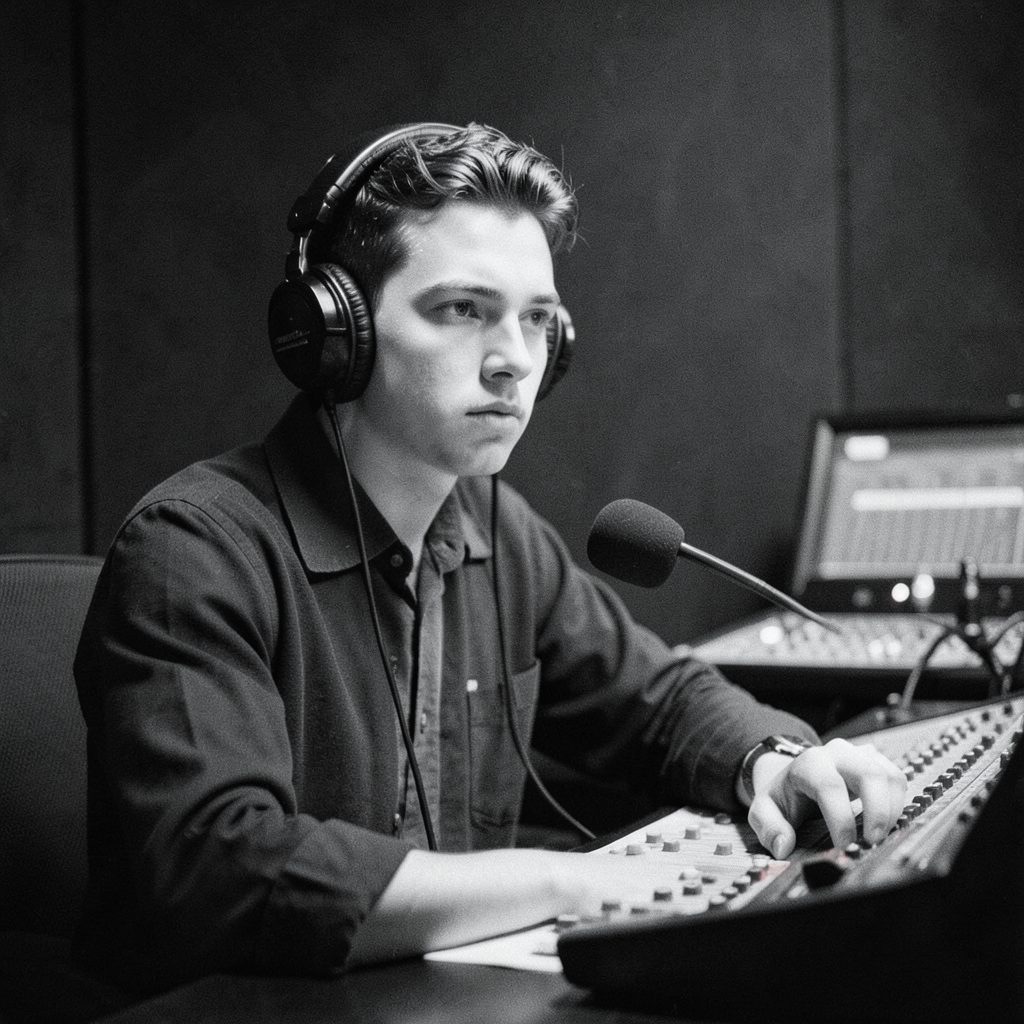
Sound was a separate technical problem. A camera might record a guide track, but broadcast-quality speech commonly required a portable reel-to-reel or cassette recorder, a microphone, cables and a person monitoring levels. Synchronisation could depend on a clapper board, crystal control or later editing alignment. Any surviving rushes, sound reels or production notes can therefore reveal more about the recording system than a still photograph of the camera itself.
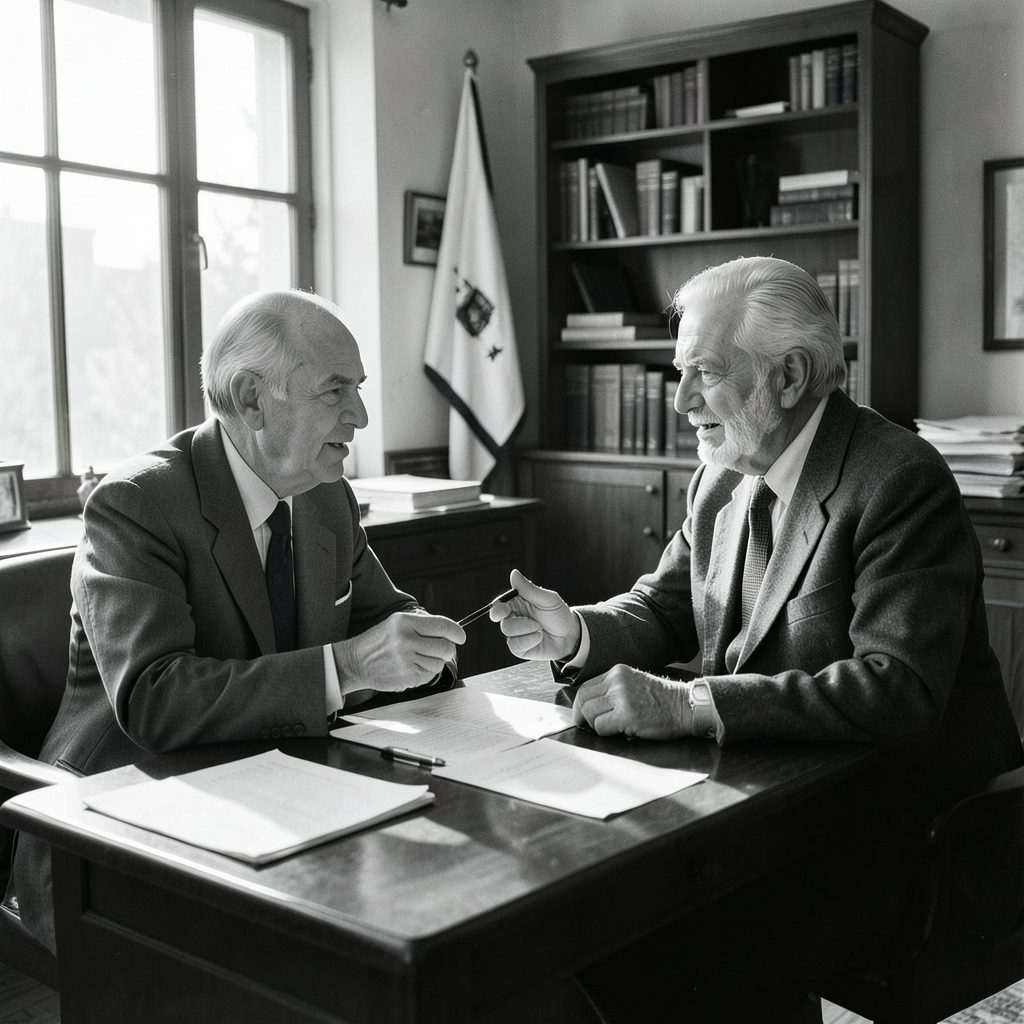
A useful case study is Shagrir’s work connected with Moshe Dayan. The archive’s Dayan documentary record helps place equipment decisions within a real television assignment rather than treating cameras as isolated objects. An interview with a senior political or military figure might require a stable lens position, clean dialogue, discreet lighting and a camera package that could be transported and set up quickly.
These working habits have parallels in Australia, where a small documentary unit travelling between Canberra, Sydney and regional locations has long needed equipment that fits into a vehicle, survives rapid changes of plan and can be operated by a compact crew. The Australian preference for practical location production, combined with the distances between capital cities, makes portability just as significant as maximum resolution.
The Move Into Electronic Video
The arrival of portable video changed the relationship between camera operator, recording medium and newsroom. Videotape removed the need to process every take before viewing it, allowing crews to check exposure and focus immediately. It also supported longer continuous recordings, a major advantage for interviews, demonstrations, speeches and unfolding news events.
Early systems could still be bulky. A camera might connect to a separate recorder carried by a shoulder strap or placed in a vehicle, and battery life, cable length and tape capacity shaped the day’s coverage. Image quality varied by format, from professional broadcast systems to more compact industrial or consumer equipment. The archive may show the transition through cassette dimensions, timecode conventions, video labels and the changing appearance of field recordings.
Electronic Video Clues
- Full-size reel or cassette dimensions can identify broad recording generations
- Timecode and date displays may indicate later professional video workflows
- Dropouts, head-switching noise and tape wear help distinguish analogue formats
- Interlacing and field movement reveal how footage was captured and transferred
- Connector types and cable notes can identify portable recorder arrangements
For Australian researchers, PAL is an important point of comparison. Israel and Australia both used 50 Hz television systems for much of the analogue era, so broadcast transfers may show familiar field rates and interlaced motion. A tape digitised in Melbourne or Brisbane can still contain artefacts from the original camera, the studio dub, the international transfer and the modern capture deck; each stage needs to be separated before judging the camera’s performance.
The practical result was a more responsive visual style. Operators could stay with an event for longer, reposition quickly and review material without waiting for a laboratory. That did not eliminate the need for careful exposure or focus, especially with early tube cameras and modest low-light performance, but it changed the balance between planning and immediacy.
Lenses, Support And The Human Operator
Lens selection often tells more about a documentary’s working conditions than the camera body. A wide-angle lens could place a subject within a crowded room or follow movement at close range. A normal lens produced a more restrained perspective for interviews, while a telephoto lens allowed filming from a distance in politically sensitive or physically dangerous situations. Zoom lenses reduced the need to change lenses but could be slower, heavier and less consistent across the frame.
Support equipment also shaped the image. A tripod delivered stable interviews and formal compositions; a shoulder mount allowed the operator to move through crowds; a vehicle mount or improvised support could help during travel. Handheld footage is therefore not simply a visual style. It may reflect the need to work discreetly, travel light or respond to an event before a full production setup was possible.
Physical Details Worth Tracking
- Filter rings and matte boxes indicate control of glare, contrast and exposure
- Tripod heads reveal whether pans were planned for documentary or broadcast use
- Camera bags can preserve labels, initials and location markings
- Lens cases may connect still photographs with moving-image assignments
- Battery packs show the likely duration and mobility of field work
Lighting provides another layer of evidence. Documentary crews often mixed available daylight with small tungsten units, reflectors or practical room lights. In Israel’s strong sunlight, exterior contrast could be severe, while interiors might demand fast film or additional illumination. The same issue appears in Australia, where harsh summer light in Perth, Adelaide or inland New South Wales can make a light meter, diffusion and a reliable exposure strategy more valuable than a newer camera body.
The archive’s still photographs may show operators, assistants or subjects near equipment, but such images should be treated carefully. A camera visible in a behind-the-scenes photograph may have belonged to a broadcaster, a visiting crew or a temporary rental. Matching it to a negative, call sheet or production date is the sounder method.
Preserving A Working Camera History
Digitisation can make Shagrir’s films accessible, yet a high-resolution scan does not erase the technical history of the original object. Preservation teams need to retain the film’s edge information, original reel order, labels, splices and accompanying documents. For videotape, the playback deck, signal path, time-base correction and capture settings can significantly influence the resulting file.
Australian institutions such as the National Film and Sound Archive in Canberra provide a useful local reference for this work. The country’s climate also makes storage a practical concern: heat, humidity and dust can accelerate deterioration, particularly when private collections have moved between coastal cities, garages and air-conditioned offices. Stable temperature, controlled humidity and careful handling are as important as the scanner or digitisation software.
Cataloguing should record uncertainty rather than conceal it. “Likely 16mm handheld camera” is more responsible than an unverified model name. A database can connect a reel to a photograph, a broadcast script, a sound recording and a known location, then leave room for later research. Multilingual description is valuable here, especially when names and captions move between Hebrew and English; a concise language reference illustrates why register and context matter when translating archival material.
The equipment story ultimately belongs to a wider record of labour. Cameras, lenses, film stock, microphones and tape decks mattered because Shagrir and his collaborators used them to preserve political encounters, military history and everyday social experience. Ongoing archive support helps maintain the physical materials and the research infrastructure needed to interpret them, ensuring that technical clues remain available alongside the images they helped create.