Shagrir's Editing Hand: A Guide to the Cut in the Archive
Filmmakers leave two kinds of evidence behind. One is the frame they chose to hold; the other is the material they removed. The Shagrir Collection preserves both in volume: negatives, prints, sound recordings, film reels, correspondence and working papers belonging to Micha Shagrir, a central figure in Israeli journalism and documentary film from the 1960s through the 1990s. Read as a whole, these holdings describe a working practice — an edit in the literal sense, assembled from celluloid and magnetic tape and then, often decades later, taken apart again.
Shagrir moved between stills photography, newspaper reporting, television documentary and political filmmaking, so his editing techniques sit across formats rather than inside a single genre. The archive includes his 1972 film on the Sinai desert monasteries, coverage of the 1977 Egyptian peace initiative, and material touching the Vietnam War and the 1967 Six-Day War. Each project raises the same craft question: how does a sequence of disparate images become an argument that a viewer will accept?
Australian researchers already handle the same raw stock in a different national context. The National Film and Sound Archive in Canberra holds war and immigration footage, including its Memories of the Vietnamese War collection, while ACMI in Melbourne curates the history of the moving image. Australian viewers of SBS and the ABC are used to archival composites on the small screen. Local editors know the drill, as they say: cut the picture to carry the point, and keep the source credit visible.
What follows reads the collection for technique — montage, cutaway, continuity, sound bed, caption card — and asks what each decision actually does. It also considers preservation, because an edit is only as good as the integrity of the reel beneath it, and restoration, cataloguing and handling matter as much as rhythm and timing. The aim is practical: to give students, researchers and working editors a vocabulary for describing Shagrir's film editing techniques and a method for testing them against the archive itself.
Montage as Argument
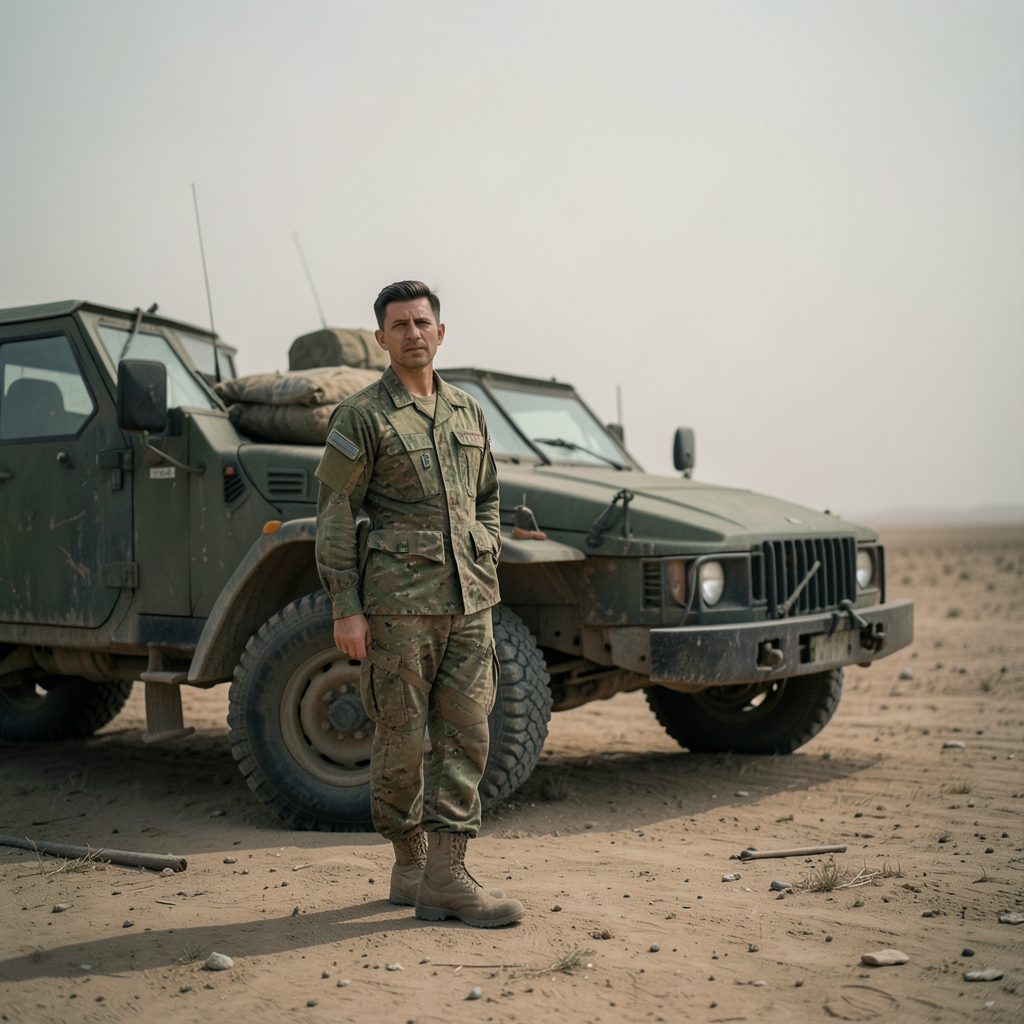
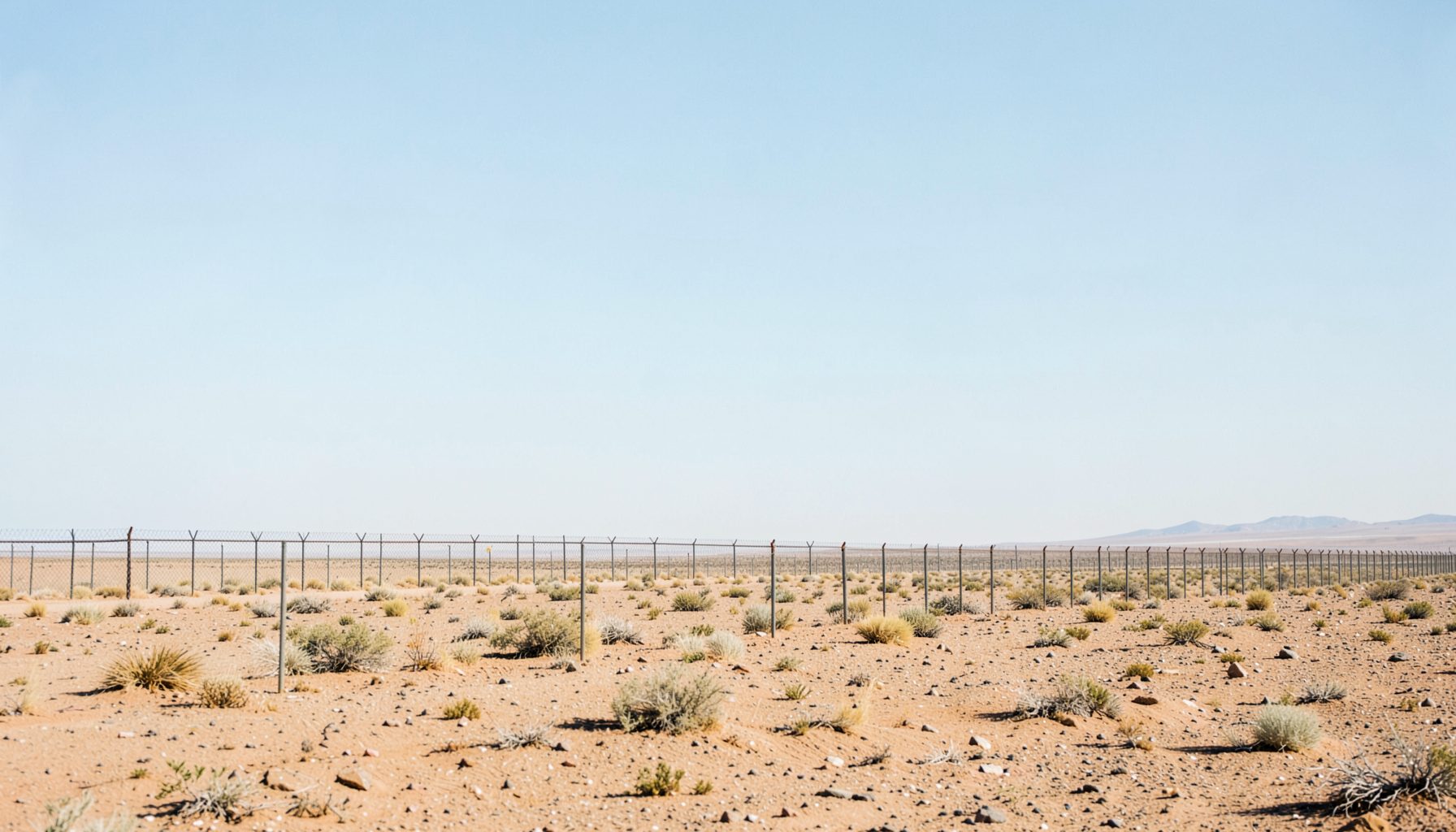
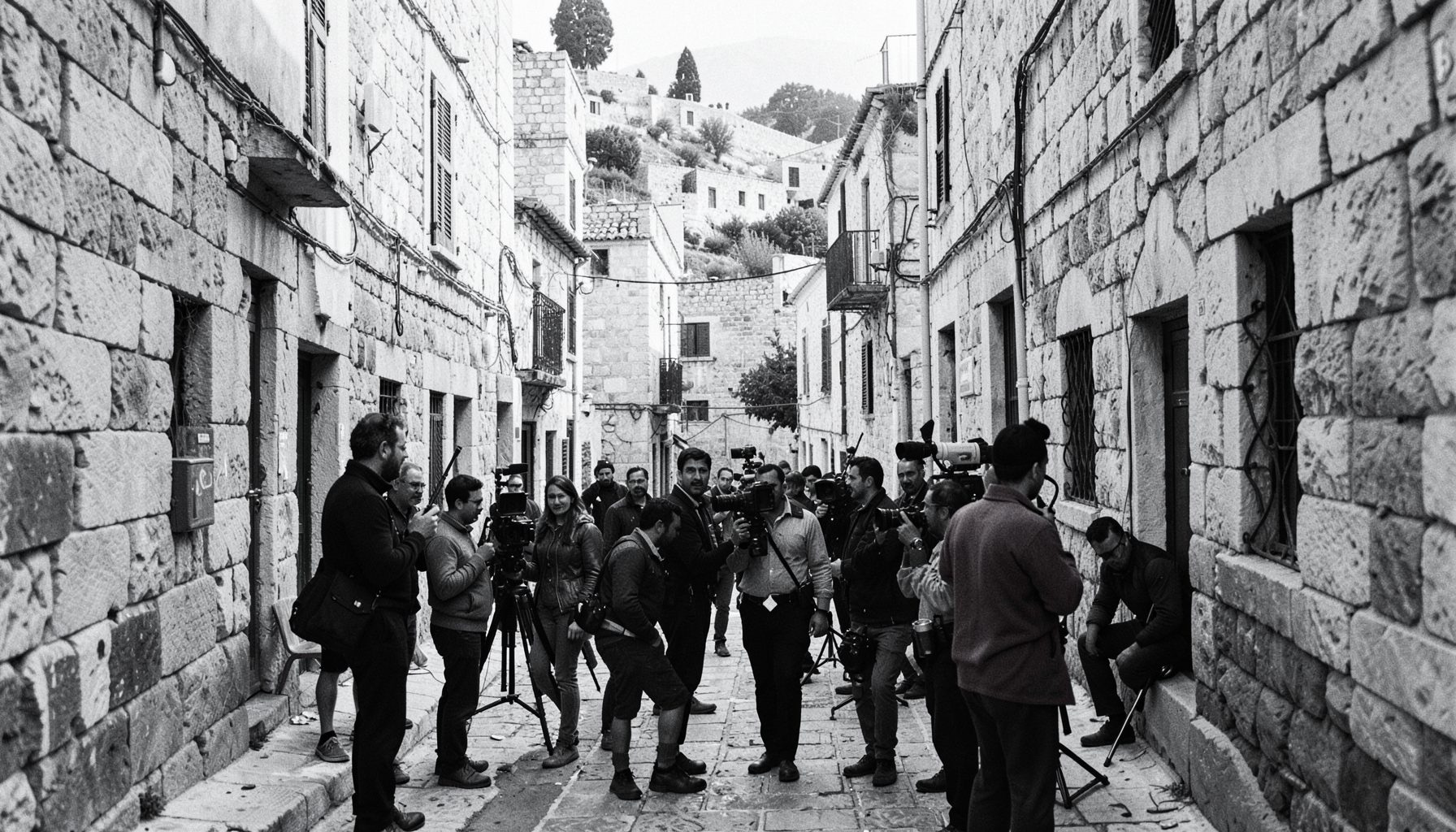
Montage in Shagrir's films is argumentative. Rather than letting a single scene carry a location, he assembles fragments: a dune ridge, a truck crossing sand, a monastery wall, a figure walking. Placed in sequence, these pieces create geography that no one shot could hold on its own. The archive's production notes on the Sinai desert monasteries film explain how those sequences were assembled, and they make the logic unusually legible.
The construction resembles the making of a newsreel, where the cut supplies continuity of knowledge rather than continuity of action. A viewer understands that a desert monastery belongs to a wider ridge system because the edit has placed it there. Australian documentary crews cut the same way when a sequence must cover distance in the outback: hold the establishing shot long enough to establish scale, then let the closer material act as evidence. Shagrir's fragments are chosen for what they prove, not for how they fill a gap.
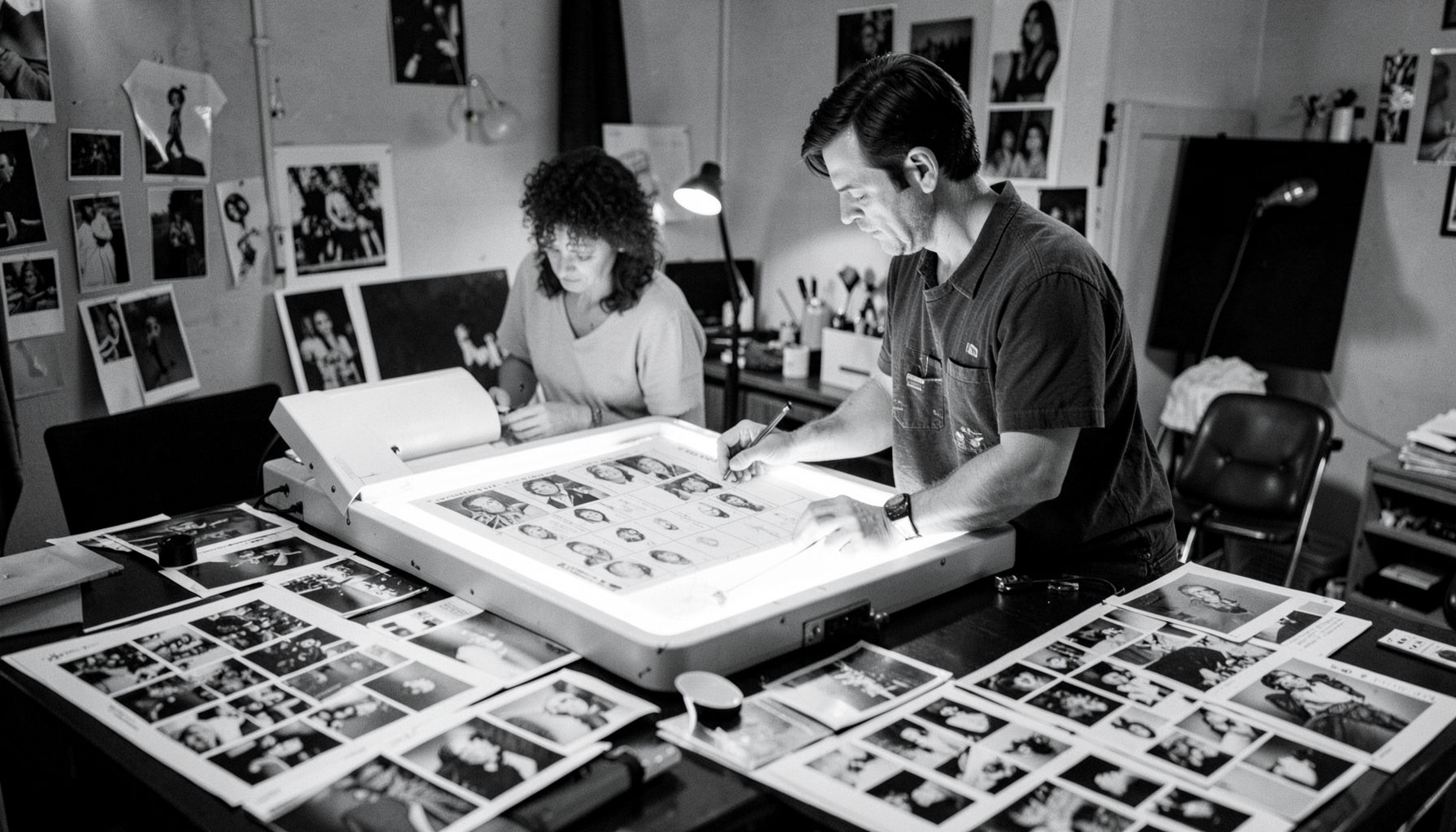
Because the collection preserves negatives, prints and contact sheets in 16mm and 35mm, the sequence can be audited. A researcher can compare the assembly cut with reel order and see where a transition was built, where a piece was skipped, where the cut does the explanatory work. That kind of evidence turns technique from folklore into method, and it is why the negatives matter more than the polished print.
Rhythm, Long Takes and the Editing of Place
Rhythm in Shagrir's documentary work alternates between accumulation and restraint. The long take — a camera held on desert light, a convoy on a road, a room of negotiators — survives far more often than it would in fiction, because the value lies in duration and in the incidental detail inside it. A single cutaway then inserts one strong image, usually a face or a detail of terrain, to keep attention without dissolving the sense of place.
This produces a distinctive pacing signature: sequences that seem slow until the edit tightens, then open out again. It sits closer to the tempo of a field report than to a suspense sequence, and closer still to what Australian viewers expect from a bush documentary, where the camera is allowed to sit with a landscape and the narrator steps in afterwards. Shagrir's timing is often built around that moment of release.
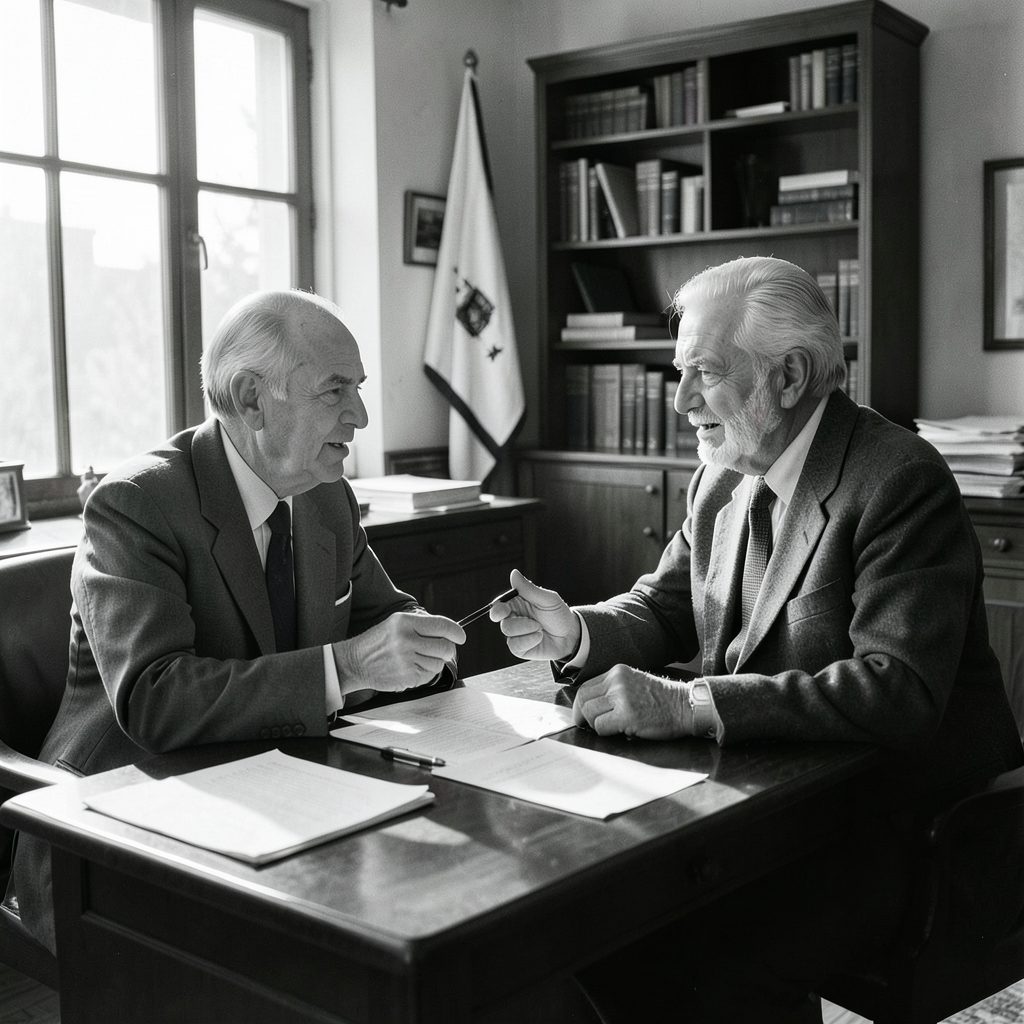
Because he came from photography, Shagrir treats every frame as a still worth composing. Compositions are frequently built so a cut can happen anywhere inside them, giving the editor room to place cutaways without exposing the seam. Prints from the same shoot in the archive show this preparation plainly: the same horizon photographed with different subjects, the same position waiting for a tighter version. The edit and the photographic session were planned together, not one after the other.
Narration, Sound and the Work of Titles
Sound carries as much of the argument as the picture. Shagrir's films often run a narration thread across observational material, letting a voice supply context while the image stays ambiguous. The result is a sound bed binding otherwise unrelated fragments, and the archive's recordings let a researcher hear how the mix was assembled: room tone under the cut, a beat of silence before a key line, music entering only where the picture cannot carry the meaning alone.
Caption cards and titles do similar work. In a news context, a dated title functions as an anchor of fact, and Shagrir uses titles to mark shifts of time and place with economy. The collection's account of his 1977 Egyptian peace initiative coverage shows a chronology carried by titles and interview fragments rather than by one continuous scene, which puts a great deal of editorial labour onto the order in which those cards appear.
Australian editors recognise the pattern without difficulty. SBS and ABC productions on the Vietnam War or the Whitlam years routinely carry a voice-over across archival images, with on-screen credits naming the source, and Australian audiences read those credits as part of the story rather than as an interruption. Shagrir's reliance on the same conventions reflects the working standards of Israeli news television in the same period.
War Footage and the Test of Verification
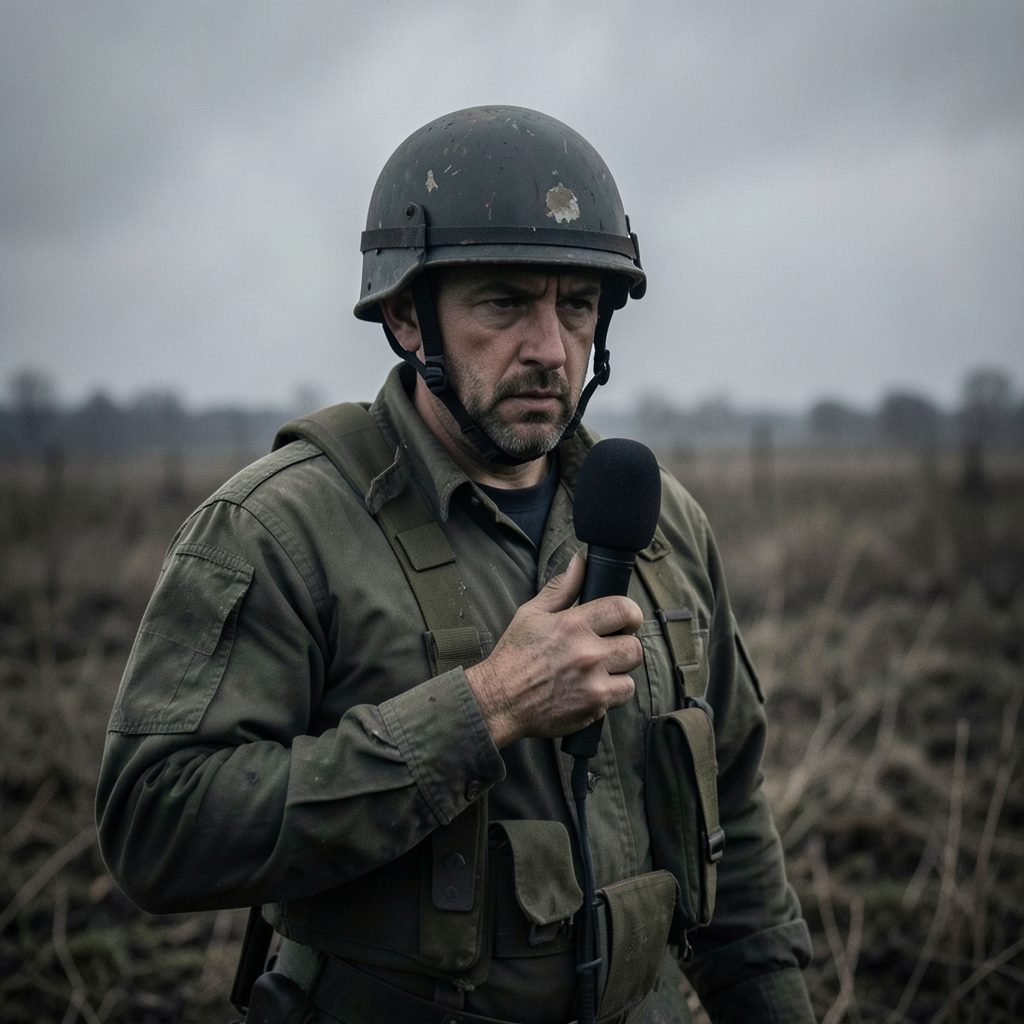
War material is where editing technique becomes a question of evidence. Shagrir's holdings include military footage with immediate evidentiary weight, and the temptation to compress such images for dramatic effect is precisely what a careful editor resists. A companion guide to the 8th MP Group aftermath is useful background for the kind of aftermath footage that circulated in newsreels of the period, and for the distortions that creep in when held material is reused to support a new argument.
Australian memory of that war sits close to home in a way it does not in Tel Aviv. Long Tan, the Anzac trail, and the Vietnamese community now settled across Sydney's west — Fairfield, Cabramatta, Hoxton Park — live inside family archives. Australian broadcasters commission reconstructions and archival composites for anniversaries and Anzac Day coverage, so editors here rarely have the luxury of treating contested footage as neutral illustration. The stakes of the cut are higher, and accuracy is harder to fake.
Shagrir's handling reflects an older discipline: state the date, the unit and the place; let the sequence show what happened before commentary explains it. That principle — image first, attribution second, interpretation third — remains legible in his edited films and in his working notes, and it is among the most transferable lessons in the archive for anyone cutting archival material today.
Preserving and Applying the Edit
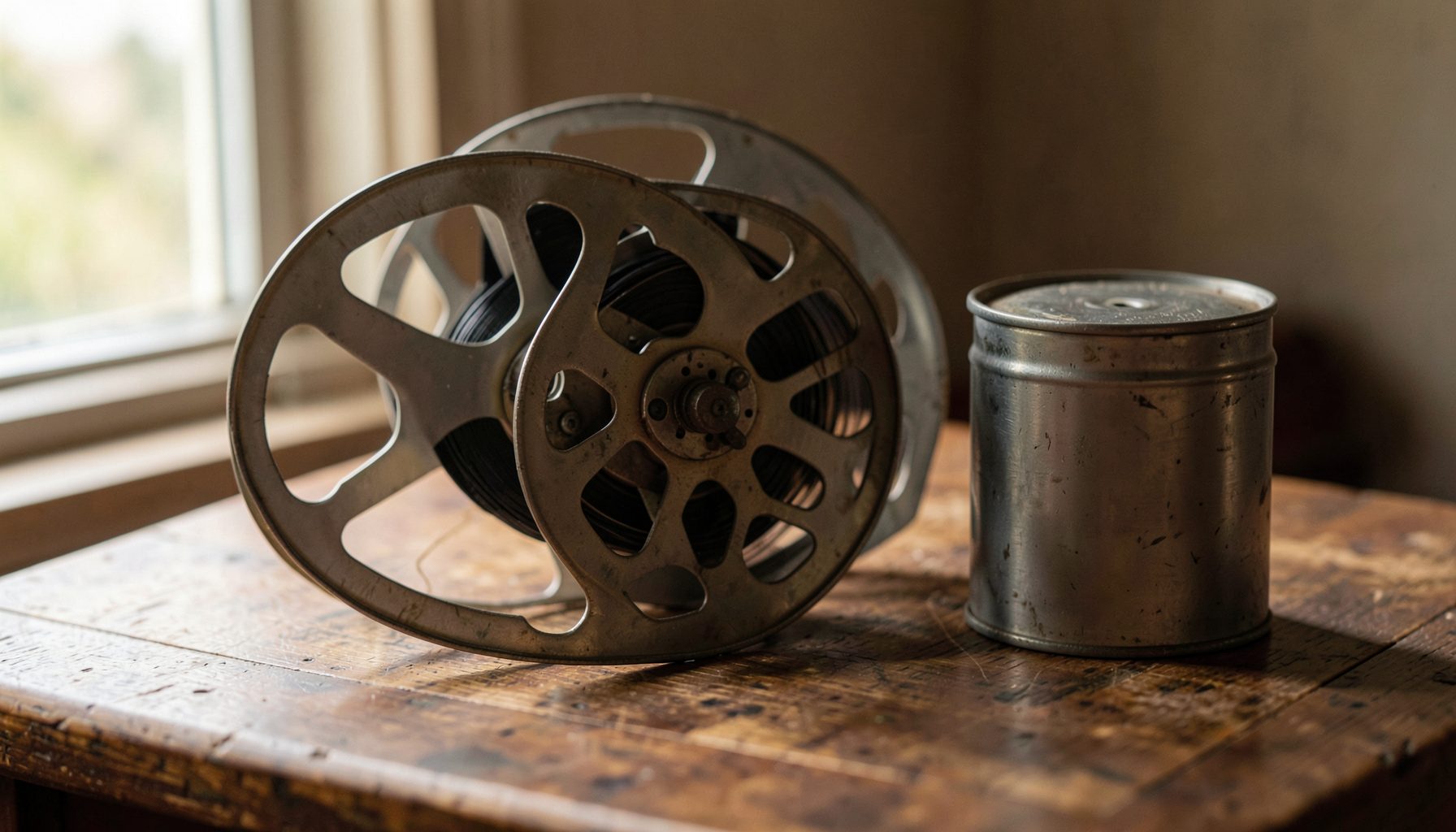
Technique survives only if the material beneath it survives. The collection's preservation work — cold storage, digitisation, cataloguing and careful handling of acetate stock — is what makes an edit reproducible decades after it was made. Working with Shagrir's sequences suggests the following practices for anyone hoping to read or rebuild them.
- Start with reel order, then edit order: compare assembly cuts, contact sheets and final prints to identify where a cut altered the meaning.
- Keep frame references: log timecode, frame numbers and slide position so a cutaway can be rebuilt exactly as the original editor intended.
- Treat sound as evidence: preserve narration, ambience and room tone separately, so the mix can be reconstructed rather than guessed.
- Caption every source: credit unit, date and location on screen, the way Shagrir's titles anchored his sequences.
- Record the seams: label splices, transitions and re-edits in the catalogue, so a later editor knows where the archive was altered and why.
- Compose for editability: plan framings that tolerate a cutaway without exposing the join.
Applying those steps turns a storage problem into a working tool. In Australia, the National Film and Sound Archive's cataloguing and licensing conventions already offer a ready model for source crediting and public access, and Melbourne's ACMI and Sydney's Chau Chak Wing Museum run public programmes built on this kind of material. Shagrir's sequences reward that attention: read closely, the archive reveals not simply what was filmed, but how the picture was made to mean what it means.