Shagrir's Early Eye at Davar
Shagrir's early work as a photojournalist for Davar Newspaper survives not as a smooth sequence of celebrated pictures, but as a layered working archive. Negatives, prints, personal papers and recordings held by The Shagrir Collection allow researchers to examine the practical business of picture-making: selecting an assignment, framing a scene, editing images for publication and carrying evidence home. The material also opens a view of Israeli political, military and social history as it was experienced day by day.
For Australian readers, the collection offers a way to understand an unfamiliar newspaper culture through familiar acts of research and preservation. A search through image sequences or a handwritten caption can reveal who had authority to record events, what editors believed audiences could see, and how private memories were later separated from public history. The result is more than a biography of one photographer. It is a history of photojournalism at a moment when newspapers were building the visual language of a new state.
Davar and the making of a photographic career
Davar was a Hebrew-language daily published from 1948 to 1953 and closely associated with the Haganah. Its position gave the newspaper an important role in the formation of Israel's public culture. Coverage included national politics, military affairs, settlements and the everyday lives of communities living through rapid change. Photography occupied a central place in that coverage, but a press image had to function quickly, clearly and within the conventions of newspaper production.
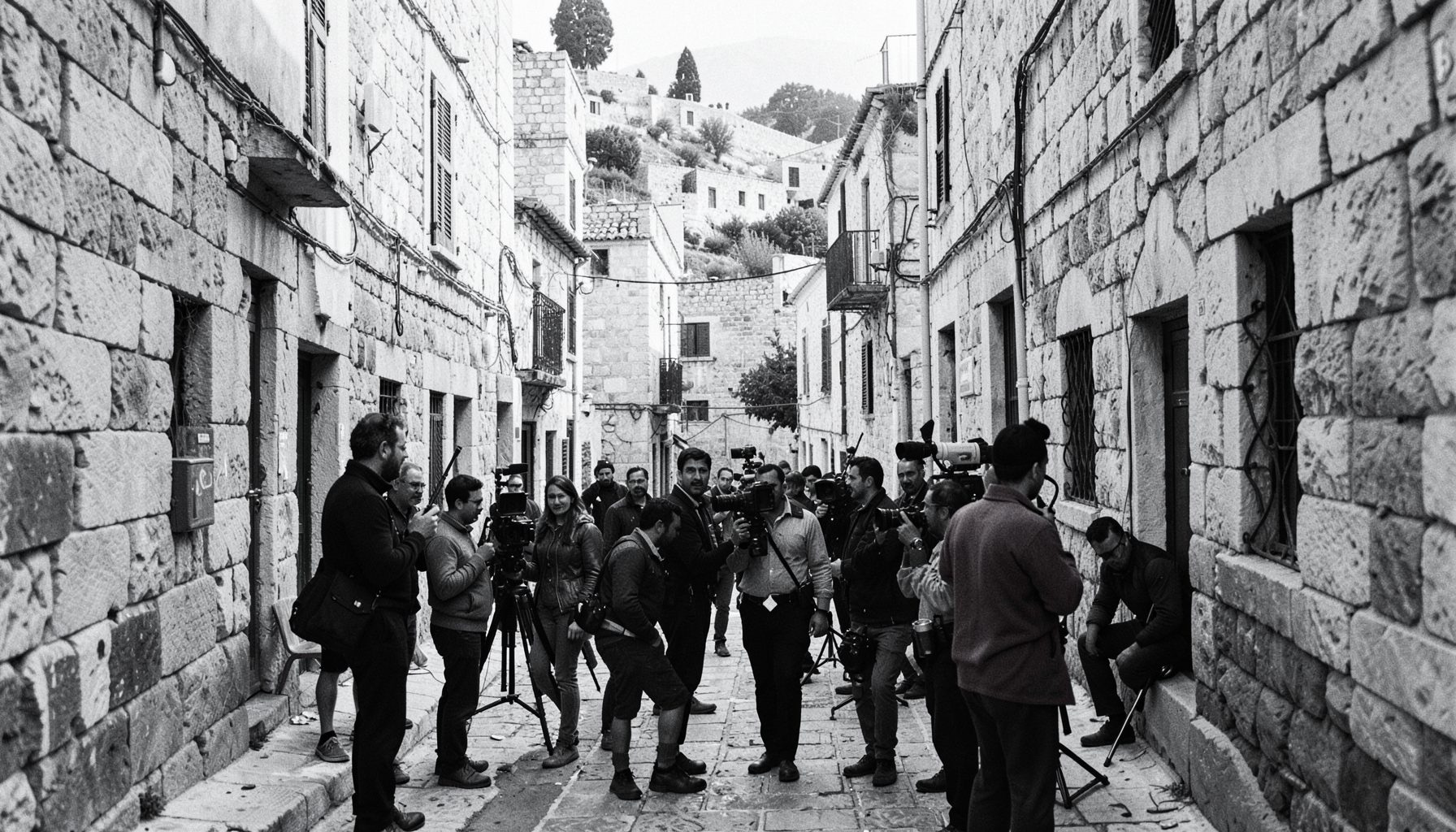
Shagrir's early pictures reveal a reporter working within those constraints. Rather than posing scenes for later historical significance, he had to identify an event, find a position and make a usable frame before the moment disappeared. The archive raises productive questions about those decisions. Which details were included to establish place? How were soldiers, officials and civilians distinguished? When did a photograph move beyond the news page and become part of a collective historical memory?
This context also complicates any simple distinction between information and persuasion. A photograph published by a politically connected newspaper could still document something with documentary force. Negative sequences, prints and related papers make it possible to examine that distinction rather than assuming it. They reveal photography as an active editorial contribution, shaped by access, timing and the needs of readers.
Reading negatives as newspaper evidence
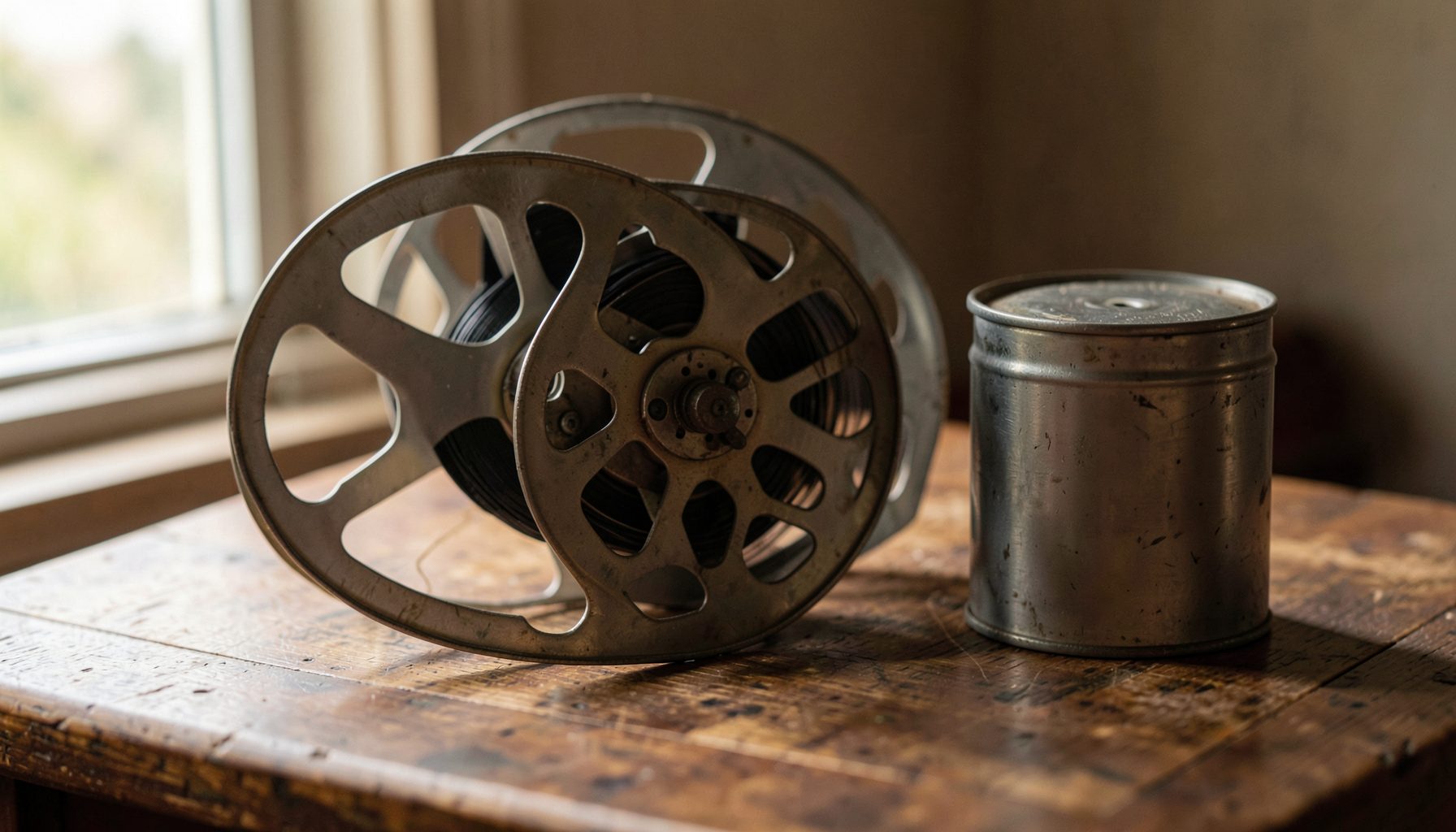
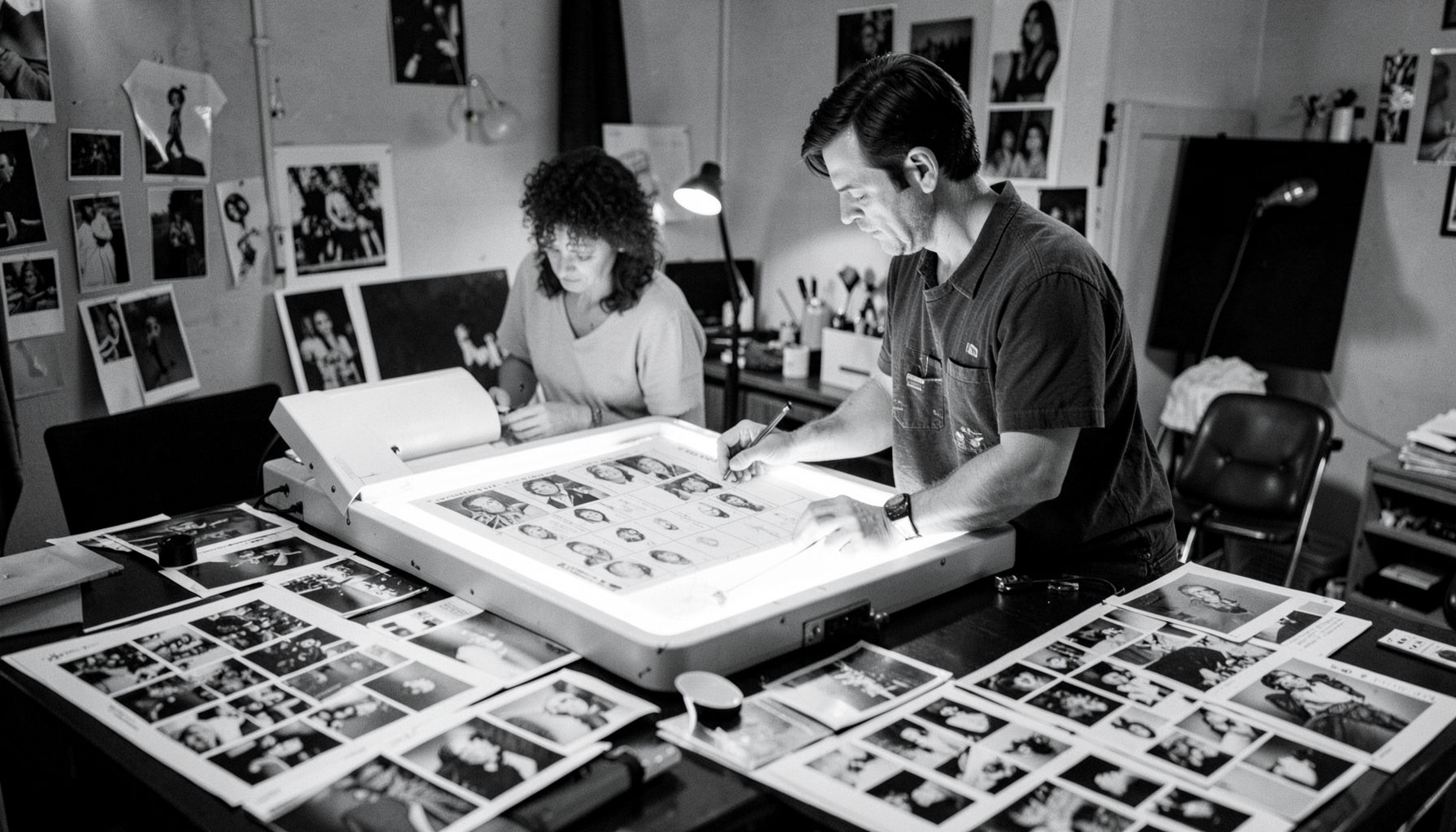
Unearthing an early newspaper archive often begins with material that looks disappointingly ordinary: sleeves of negatives, partial contact sheets, discarded prints and notes attached with paper clips. Read together, these objects expose the stages between seeing and publishing. A whole roll may preserve several attempts at the same subject, while a print carries crop marks, caption fragments or editing instructions made in the newsroom.
For many Australians, this kind of investigation is already familiar. Trove, operated by the National Library of Australia, has made searching historic newspapers part of everyday research, while institutions such as the State Library of New South Wales in Sydney provide access to digitised photographs and related records. The same habits of comparison work well with Davar: locate a date, follow a sequence, compare versions and question why one image was selected while another was withheld.
The collection’s online browse the photo gallery provides a useful starting point for this process. Images can reveal recurring locations, visual habits and subjects that gain meaning when placed in sequence. A cropped detail may match a wider negative; a caption may preserve a place name absent from the visible scene; a repeated background feature may connect photographs assigned to different editors. The gallery is therefore not separate from the research material but another route into it.
The visual grammar of an early press photographer
Early newspaper photography depended on immediate decisions. Available light, hard shadows, crowds, dust, military vehicles and hurried movement all shaped the available compositions. Shagrir's work demonstrates how a photographer could turn such uncertainty into a coherent visual account. The decisive moment was important, but so were foreground obstructions, horizon lines and the placement of one recognisable figure within a larger event.
Australian readers may also recognise the double meaning of a “shoot”. It can refer to a photographic assignment or to the filming of a documentary, linking Shagrir's newspaper beginnings with the motion-picture work that followed. The transition involved a change in pace and production, yet the underlying skills remained similar: anticipating action, establishing a location and gaining the confidence of people in front of the camera.
The political and military context also demands careful interpretation. Shagrir's proximity to events gave photographs uncommon immediacy, but immediacy is not the same as neutrality. A crowded frame may privilege one faction simply by deciding where the camera stood. Comparing images with captions, papers and other witnesses helps researchers identify those choices. The broadsheet histories of The Age in Melbourne and the Sydney Morning Herald offer a parallel for studying how Australian newspapers also combined local knowledge, political outlook and the visual conventions of the press.
Tracing assignments through surviving paper
A photograph becomes easier to understand when it remains connected to the work that produced it. The Shagrir Collection's negatives, prints and personal papers create several complementary trails for unearthing assignments and establishing provenance.
- Sequence and order reveal repetitions, alternative frames and changes in light that may belong to the same assignment.
- Caption fragments show how editors described a scene and which details they considered essential for publication.
- Working prints expose cropping, retouching, annotations and the physical process of preparing a newspaper image.
- Personal papers can connect photographs to journeys, schedules, correspondence and the people who supplied access to events.
Each trail requires corroboration. A typed caption may be accurate, abbreviated or later reconstructed, while the negative sequence can include frames the editor never saw. Dates written on the reverse of a print need to be checked against newspaper issues, visual evidence and other records. This triangulation is where an archive moves beyond illustrating history and begins explaining how that history was assembled.
The evidence also restores forgotten labour. Editors, desk workers, printers, couriers, fixers and sources all participated in turning field observations into public journalism. Shagrir's photographs were never entirely self-contained. Studying the surviving paper makes the collaborative structure behind them visible and places the photographer back within a functioning newsroom.
Preserving fragile evidence for new audiences
Photography carries risks that are easy to overlook when an image appears crisp on a screen. Emulsion can scratch, fade or stick; paper can absorb moisture; annotations can detach; and unstable colour can shift during scanning. Preservation therefore begins with physical condition rather than visual appeal. Each object needs appropriate housing, careful handling and a stable environment before it is photographed or digitised.
A practical preservation programme can be understood through a sequence of careful stages. Catalogue records identify creators, dates, locations, subjects and relationships between objects. Digitisation captures the item at sufficient resolution for close study, while selection and metadata determine how it can be found and reused.
The collection's support the archive page invites assistance for this work, including the expansion of access to material that has never been catalogued or displayed online. That model is familiar in Australia, where community newspapers, local historical societies and regional museums often sustain their collections through grants, memberships, donations and volunteer labour. Fundraising and public participation are not peripheral to an archive's survival; they determine which stories can be preserved and studied.
Bringing the archive into public memory
An archive becomes most valuable when its holdings can be encountered beyond a specialist catalogue. Exhibitions can place a photograph beside the newspaper page that carried it. Educational programmes can connect military and political imagery with the experiences of younger audiences, while researchers can use the same records to revisit familiar events through documents that had previously been overlooked.
Presentation is a delicate balance. Too little context leaves an image open to misleading readings; too much turns it into an illustration of a conclusion the archive has already imposed. Creative partners can help with that balance, and the work of Happy Chameleons shows how archival material can be presented with clarity, warmth and respect for its subjects.
For Australian visitors, the collection ultimately expands the ways public memory is understood. Its photographs reveal a young press system learning to represent conflict, migration, settlement and civic life, while the papers around them show the people who made those representations possible. Seen together, the artefacts transform Shagrir's early career from a familiar biographical outline into a detailed account of observation, responsibility and the craft of telling news through pictures.