
Shagrir and the 1992 Buenos Aires Embassy Bombing
In the early afternoon of 11 March 1992, an explosive-laden vehicle detonated outside the Israeli embassy in Buenos Aires. The attack killed 29 people and injured more than 120, destroying the embassy façade and scattering debris across the surrounding Palermo streets. Micha Shagrir covered the disaster as an Israeli journalist and photographer, recording the ruined diplomatic mission, the emergency response and the public mourning that followed.
The bombing is widely described as the first Palestinian suicide bombing in the Americas. Its effects extended far beyond the casualties: Argentine authorities changed security arrangements around Jewish institutions, while communities throughout the country confronted a new form of political violence. Shagrir’s negatives and associated records preserve the event as experienced by a working correspondent, rather than reducing it to a distant historical episode.
The attack that reshaped Buenos Aires
The explosion occurred outside the Israeli diplomatic mission, where embassies were embedded in busy urban streets rather than isolated behind defensive barriers. Emergency workers, police, journalists and bystanders converged on the site as dust and fragments covered the neighbourhood. For anyone arriving in the immediate aftermath, the contrast between ordinary city life and the wrecked embassy was immediate.
Three Israeli embassy staff members were among those killed, alongside Argentine civilians and other people caught near the blast. injured passengers and pedestrians were treated in hospitals and at the scene, while survivors described confusion, broken glass and the sudden loss of familiar landmarks. The scale of the attack prompted extensive security changes in Buenos Aires and led many Argentine Jews to reassess their place in the country.
Shagrir’s coverage belongs specifically to the 1992 embassy bombing and should not be confused with the 1994 bombing of the Argentine Jewish Mutual Aid Association building. The earlier photographs show how the first attack altered daily life, diplomacy and public security before the more extensive investigations and commemorations associated with the later tragedy.
A correspondent inside the aftermath
A photographer arriving after an explosion faces a particular challenge: the central event is over, but its consequences remain active. Shagrir’s work documents people dealing with what has happened—rescue personnel, police cordons, damaged buildings, grieving relatives and representatives of the Jewish community. The images therefore extend the story beyond the single image of destruction.
Sequence is especially important in such a body of work. A photograph of the embassy damage gains meaning when read beside images of streets, hospitals, memorials or public gatherings. Conversely, a portrait of a mourner becomes more informative when the associated caption, date and location are retained. The archive’s visual and documentary elements allow researchers to examine not only what Shagrir saw but also how he selected and arranged a narrative from the scene.
Broader accounts of photographic practice and image circulation can be found through Kiflimally photography resources. That wider context helps explain why frame order, publication crops, captioning and technical quality matter. Shagrir’s photographs circulated as journalism, but their original negatives retain a different kind of authority: they preserve the visual choices and observations that existed before an editor selected, placed or shortened the story.
Preserving the photographic evidence
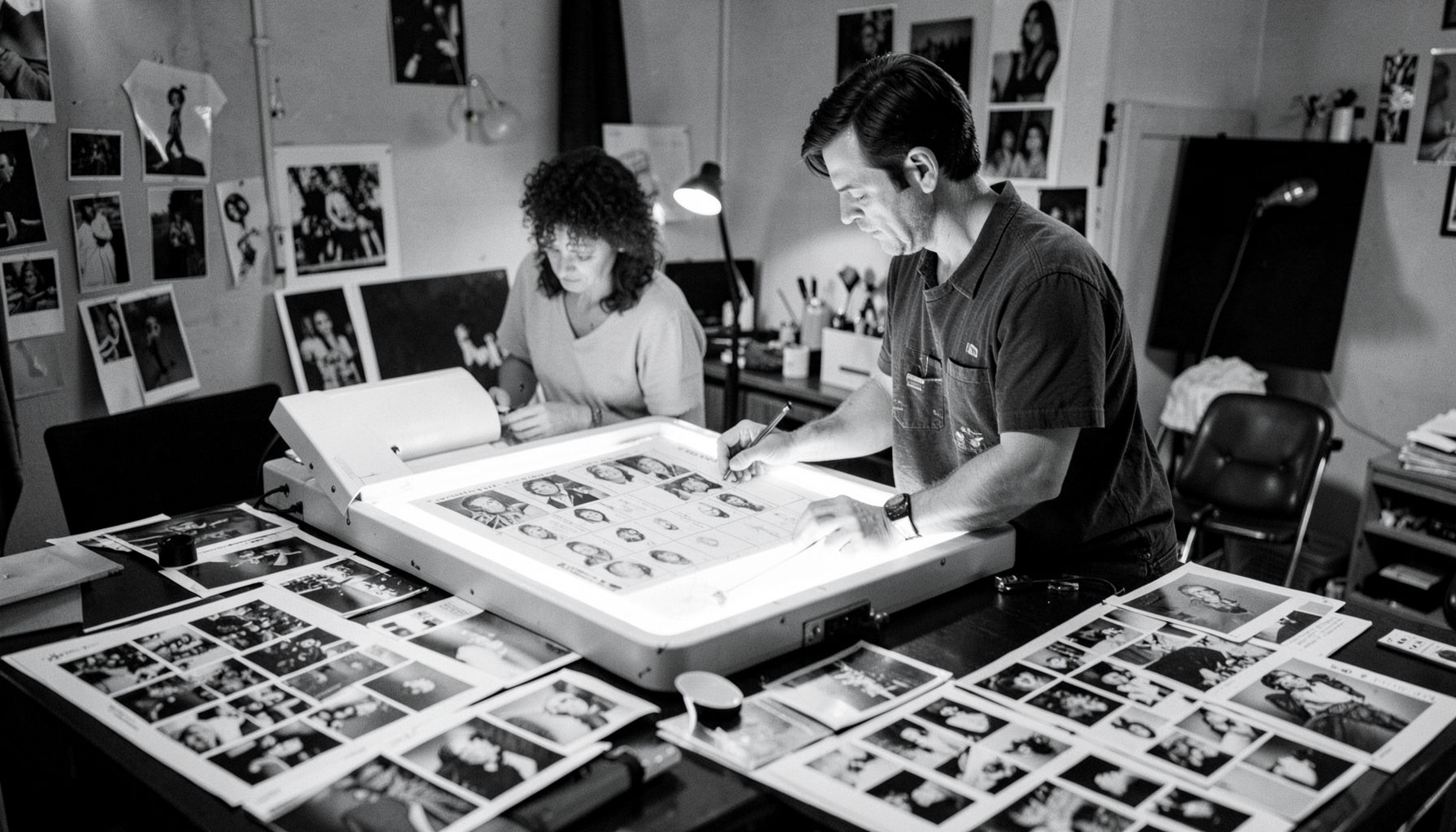
The Shagrir Collection includes negatives, prints, contact sheets, recordings and personal papers gathered across a long photographic career. Its holdings allow the Buenos Aires material to be studied alongside Shagrir’s coverage of military and social history in Israel. Rather than presenting isolated pictures, the collection supports the reconstruction of working methods, assignments and historical context.
The technical decisions involved in preserving this material are explained in scanning the negatives. Medium-format originals can contain subtle tonal information that survives differently from smaller negatives or reproduced newspaper images. Dust, scratches, fading and earlier scanning attempts may also become part of the object’s visible history, making careful restoration a process of interpretation rather than simple cleanup.
For researchers, filenames are only the beginning. A useful account may require the original negative number, contact sheet, publication caption, field notes and corroborating material from Argentine archives. Comparing Shagrir’s images with Buenos Aires newspapers, diplomatic records and survivor testimony can reveal what was published, what was omitted and how distant readers were asked to understand an attack against a foreign embassy.
Australian points of reference
Digital access to the archive begins at the Shagrir Collection website, where visitors can encounter Shagrir’s career through photographs, films and documentary records. For an Australian audience, the material has particular value because international news is often consumed through a distance shaped by local time, media systems and community experience.
Several Australian realities help frame that encounter:
- Time and season: Buenos Aires was 14 hours behind Sydney and Melbourne during daylight saving time. March is late autumn in both countries, but an attack unfolding in the afternoon could reach Australian newspapers and television news late at night or during the following morning.
- Jewish communities: Sydney and Melbourne have long-established Jewish populations and institutions, including communal centres around areas such as Bondi and St Kilda. The bombing therefore speaks to security debates familiar to Australian Jewish life as well as to Argentina.
- Media culture: ABC, SBS, The Guardian Australia, The Age and the Sydney Morning Herald provide contemporary forums for international coverage. Their predecessors in 1992 also carried translated reports and wire material about events such as the embassy bombing.
- Preservation institutions: The National Film and Sound Archive in Canberra, state libraries, university collections and the Australian Centre for Photography provide Australian models for retaining, describing and exhibiting photographic history.
- Photography markets: Fine-art photography fairs, gallery programmes and specialist camera collectors create a local market for prints and equipment. Overseas purchases may involve GST, customs assessment and cultural-goods checks, making provenance and rights documentation especially important for high-value material.
The Buenos Aires sequence is also more than a record of the explosion itself. Its surviving frames and related records can be understood through several recurring elements:
- The damaged embassy frontage and the streets surrounding the diplomatic mission.
- Emergency, medical and public-service activity around the blast site.
- Police cordons, investigations and the new security presence in central Buenos Aires.
- The response of Jewish community members, diplomatic personnel and the wider public.
- Memorial gatherings and political responses that transformed the attack into a lasting event.
Australian readers may initially encounter the story through headlines, retrospective television reports or institutional collections. Shagrir’s original photographs restore location, scale and human presence to that compressed account. They also invite comparison with other attacks on embassies and Jewish civic spaces, while requiring care about the distinct political, legal and historical circumstances surrounding Buenos Aires.
Access and continuing memory
Researchers, families and institutions seeking information about the Buenos Aires photographs, their sequence or related documentation can direct specific requests through archival enquiries. Such enquiries can clarify which materials relate to the 1992 assignment, whether captions or field notes accompany particular negatives, and what rights information is required for reproduction.
Presentation of the archive also involves responsible decisions about identification, privacy and emotional impact. Exhibitions can place Shagrir’s images beside diplomatic documents and survivor testimony, while educational programmes can explain the history of the embassy, Argentina’s Jewish community and the changed security environment that followed the attack. Digitisation expands access, although preserving the physical originals remains essential.
The lasting value of Shagrir’s coverage lies in its combination of immediacy and scrutiny. His photographs show a city absorbing a violent shock, while the archive allows later viewers to investigate how that moment was witnessed, transmitted and remembered. Together, these materials provide a durable contribution to the public history of the 1992 Israeli embassy bombing and its place in Argentina, Israel and the wider world.