
Cataloging Micha Shagrir’s Personal Papers Online
Building an online archive around Micha Shagrir’s personal papers involves much more than scanning documents and placing images on a website. The collection brings together photographs, negatives, films, recordings, correspondence, production notes, notebooks, press material and other primary sources connected with Israeli media and public life. Each item carries information about its creation, use, ownership and relationship to other records.
A useful catalogue must make those relationships visible while remaining clear to visitors who may know little about Israeli history, Hebrew terminology or archival practice. For researchers in Australia, including students and family historians using resources from Sydney, Melbourne or Canberra, thoughtful description can turn a distant collection into a practical source of evidence.
From Personal Papers To Structured Evidence
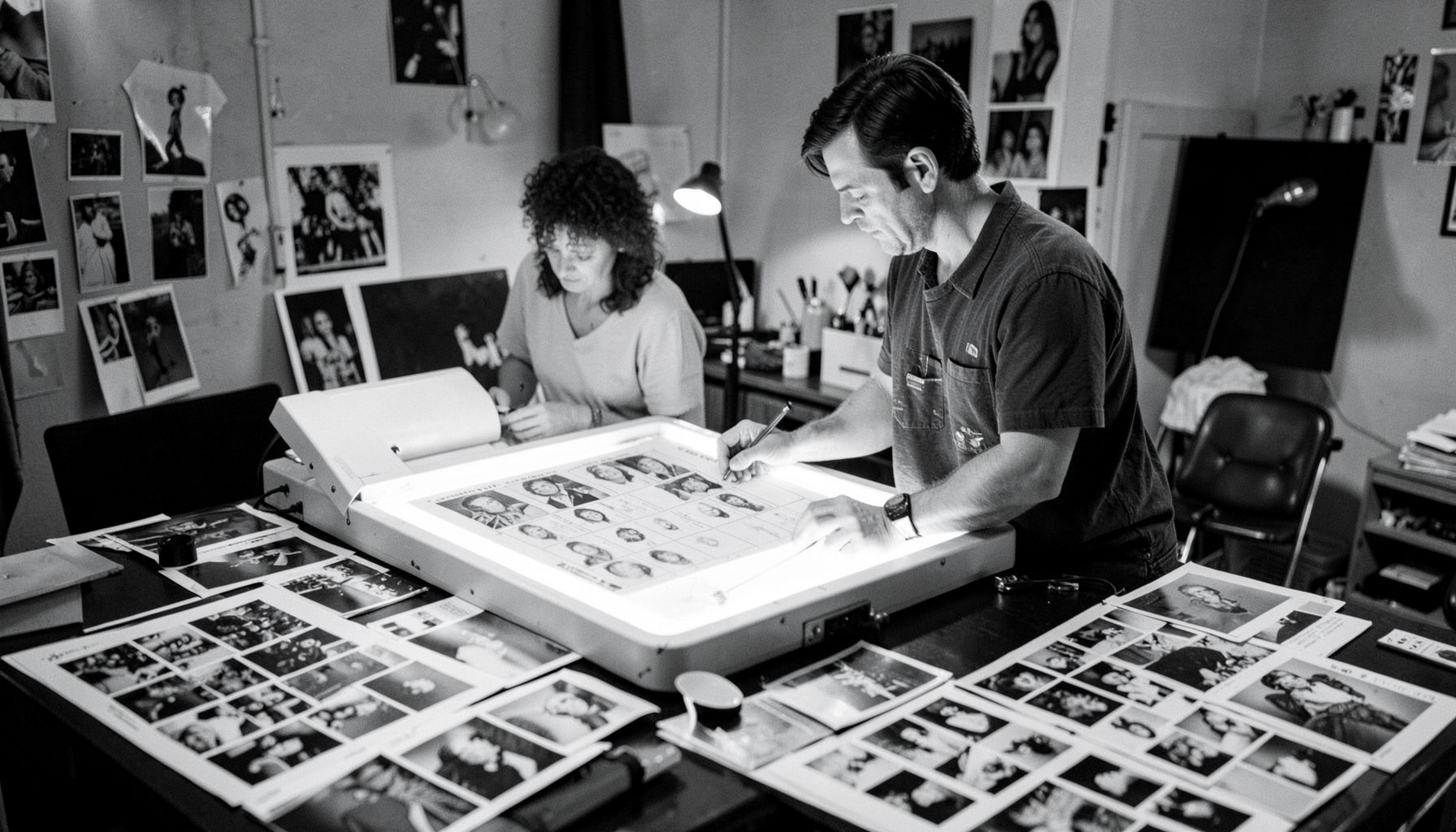
Personal papers rarely arrive in neat chronological order. A folder may contain a handwritten note, a contact sheet, a newspaper clipping and a production memo relating to the same event. A photograph may have several dates: when it was taken, when it was printed, when it was published and when it entered the archive. Cataloguing needs to preserve this complexity rather than flattening every record into a title and a date.
The first stage is an inventory that records physical location, format, condition and apparent relationships. A stable identifier should be assigned to every item or group of items, such as a folder of production documents or a sequence of negatives. The catalogue can then distinguish between an individual object, a series and a collection-level description. This hierarchy helps visitors understand whether they are viewing one photograph, a complete programme file or a broader body of work.
Context is especially important for a filmmaker and journalist. A production file may document creative decisions, while a press pass or travel notebook can reveal the practical circumstances around reporting. Descriptions should identify people, places, organisations, programmes and events where the evidence supports those statements. Uncertainty should be recorded openly through terms such as “approximately”, “possibly” or “unidentified”, rather than hidden behind false precision.
A Metadata Model That Reflects Context
A strong metadata scheme combines basic fields with descriptive notes. Core fields might include title, creator, date, language, format, dimensions, subject, geographic location, rights status, source and digital file identifier. More specialised fields can record the original container, related production, publication history, interview participants or links to other records in the same sequence.
Standards such as Dublin Core, Encoded Archival Description and PREMIS can support interoperability and preservation management. The aim is not to make every record feel technical. Public-facing descriptions can remain readable while structured data works behind the scenes to support filtering, harvesting and long-term management. If the archive later shares selected records with cultural discovery services or an Australian research platform, consistent fields will make that process easier.
Names and subjects need authority control. One person might appear under a Hebrew name, an English transliteration, a professional name or a spelling used by a newspaper. A controlled vocabulary can connect those variations without erasing the forms found on the original documents. Geographic terms also need care, particularly where place names have changed over time or carry different political meanings for different communities.
Making Hebrew And English Searchable
A bilingual catalogue should treat Hebrew and English as connected access points rather than placing one language in a secondary role. Titles and notes may be supplied in both languages when resources allow, while original wording can be preserved in transcriptions or image captions. Transliteration rules should be documented so that a researcher can search for a name even when spelling varies between systems.
Optical character recognition may help with typed Hebrew, English newspapers and printed reports, but it should not be treated as a perfect transcript. Handwriting, poor carbon copies, ageing paper and mixed-language pages will produce errors. A catalogue can identify machine-generated text as provisional and invite review by staff or qualified volunteers. Search results should still lead users to the original scan, where they can assess the evidence themselves.
Australian audiences are accustomed to discovering heritage records through broad search services such as Trove, as well as through university libraries and state archives. Clear English summaries, Hebrew keywords, dates in an unambiguous format and place names with alternative spellings can help the Shagrir material fit those research habits. A teacher in Brisbane or a postgraduate researcher at the University of Sydney should be able to begin with a familiar English term and reach the relevant primary source.
Digitisation, Preservation, And File Integrity
Digitisation begins with a survey of the physical collection. Fragile prints, nitrate or acetate film, magnetic recordings and tightly bound notebooks require different handling and technical treatment. A preservation copy should be created at a high quality, with access derivatives made separately for web delivery. This separation protects the archival master from repeated editing, compression and format conversion.
Every digital file should carry technical metadata describing resolution, colour profile, bit depth, duration, codec, equipment and creation date. Checksums can verify that files have not changed or become corrupted during storage or transfer. At least one additional copy should be held in a separate location, with routine fixity checks and a documented plan for migrating formats as software and hardware become obsolete.
The visual presentation also affects interpretation. A scan should include enough of the page or object to show edges, annotations, stamps and verso information where relevant. Cropping may create an attractive website image but remove evidence. For photographs, captions should distinguish between information written on the back, details supplied by a collaborator and facts inferred from surrounding records.
Australian users may access the archive on a fast connection in Melbourne or through a slower regional service in Western Australia. Responsive image sizes, captions, transcripts and downloadable research versions make the collection more equitable. Accessibility features such as keyboard navigation, meaningful alt text and audio descriptions can extend the archive’s reach beyond specialist researchers.
Rights, Privacy, And Responsible Access
Cataloguing personal papers involves legal and ethical decisions at every level. Copyright may belong to Shagrir, a commissioning organisation, a broadcaster, a photographer or another rights holder. A catalogue should record the known rights position, permission status and restrictions rather than assuming that possession of a physical item equals permission to publish it online.
Some records may contain personal addresses, medical information, private correspondence or identifying details about people who were never public figures. Access levels can separate open records from material available only in a reading-room setting, to approved researchers or after redaction. Sensitive descriptions should use respectful language and avoid exposing personal information merely because it appears in an original document.
Australian copyright law, privacy expectations and cultural protocols may differ from the rules applied in Israel or elsewhere. Australian universities, libraries and museums often require a documented rights assessment before reproducing collection material in teaching platforms or exhibitions. The catalogue should therefore explain what users may view, download, cite and reuse. Researchers who need clarification can contact the archive team with the item identifier and intended use.
Description itself can reproduce harm if it repeats discriminatory language without context or presents contested historical claims as settled fact. Original terms may need to remain searchable, while notes explain their historical setting. A transparent editorial policy gives users confidence that the archive is preserving evidence with care rather than silently rewriting it.
Practical Priorities For A Usable Archive
An effective public catalogue grows through staged work. The first release does not need to describe every box in full detail, but it should establish reliable identifiers, clear scope notes and a search experience that supports browsing by person, date, place, format and subject. The collection’s public website can then connect individual records with biographies, exhibitions, educational material and related documentary work.
For Australian institutions and audiences, partnerships may be especially valuable. A university archive in Canberra could support student cataloguing projects; a Jewish museum in Melbourne might develop a public programme; and a film society in Sydney could use selected records to explain documentary production and media history. These partnerships should strengthen the archive’s control over description and rights rather than creating duplicate, disconnected databases.
Practical priorities include:
- Create a collection hierarchy that links items, folders, series, productions and broader archival groups.
- Assign stable identifiers before scanning, moving or publishing any material.
- Record Hebrew and English names, transliteration variants, original wording and reliable authority references.
- Separate preservation masters from web derivatives, and maintain checksums with geographically separate backups.
- Publish clear rights, privacy, citation and reuse statements for every access level.
- Build accessibility into the interface through alt text, transcripts, captions, keyboard navigation and readable downloads.
- Invite qualified researchers, family members and subject specialists to suggest corrections while retaining editorial review.
The Shagrir Collection can become more than a searchable image repository when its catalogue explains how records were created and how they relate to one another. Personal papers gain research value through provenance, careful description and responsible access. With a bilingual metadata model, preservation planning and a user-centred interface, the archive can support Israeli historical research while remaining approachable to classrooms, cultural organisations and independent researchers across Australia.